
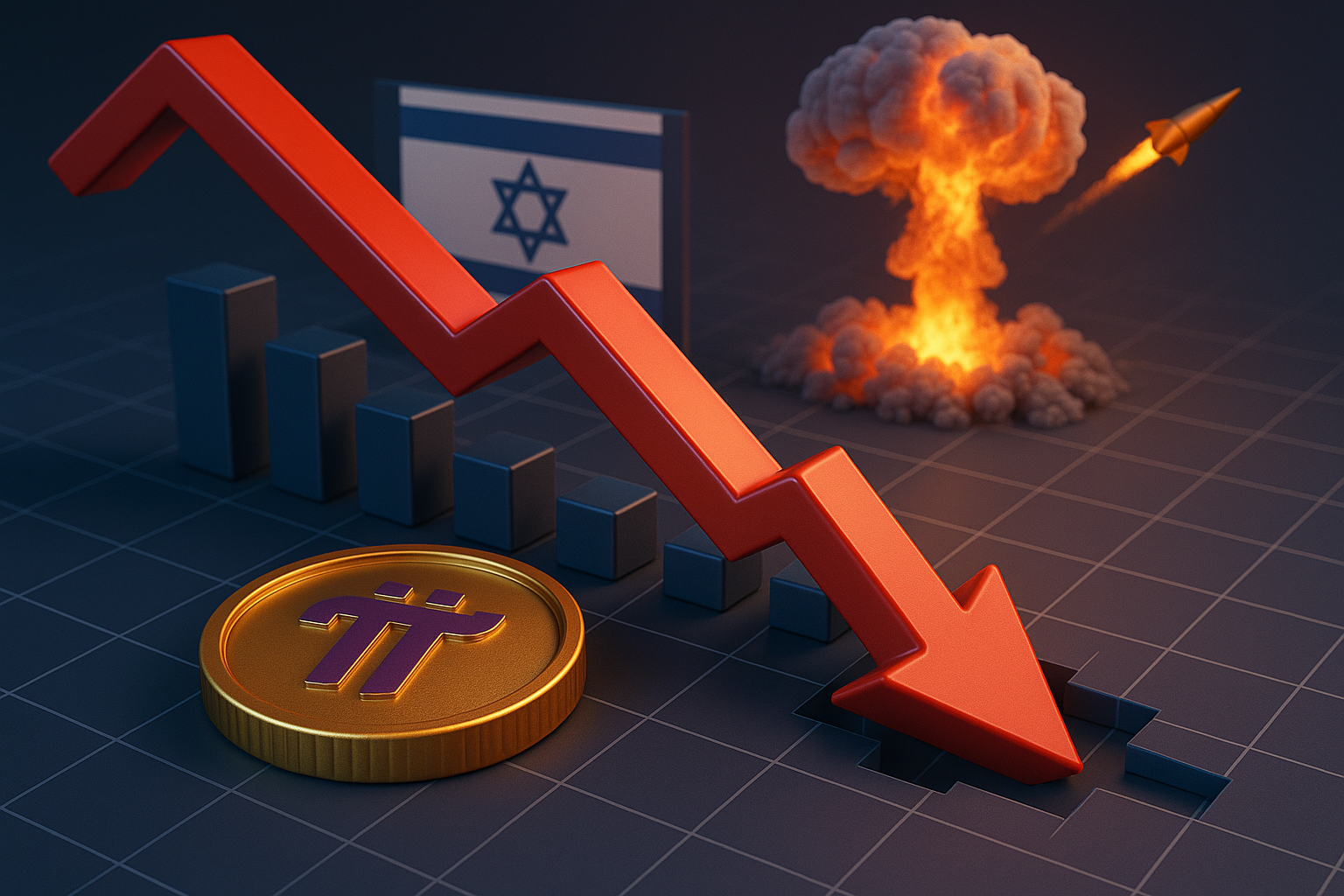
Geopolitical Tensions Spark Market-Wide Sell-Off
The cryptocurrency market turned sharply bearish after Israel’s recent strike on Iran, triggering a wave of fear-driven selling across digital assets. As of today, Bitcoin is down 3.5% to $104,209, while many altcoins have slipped between 6% and 9%.
Pi Coin saw the steepest decline among top tokens, falling 13% in the past 24 hours to trade at $0.5506.
The drop reflects both macro-level geopolitical instability and specific concerns tied to Pi’s development roadmap.
Analyst Outlook: More Downside Possible
Analysts believe the Israeli-Iranian conflict is adding serious pressure to already weak market sentiment. Dr. Altcoin noted that any retaliatory actions by Iran could push prices even lower. Over the past week, Pi is down 11%, and over the past month, it has lost more than 56% of its value.
The broader technical structure of Pi Coin remains bearish, with no major signs of reversal yet.
Technical Indicators Point to Extended Bearish Trend
Current price action reveals significant weakness in Pi Coin’s chart. The token is now trading below all major EMAs and SMAs—from the 10-day to the 100-day—each signaling a continued sell.
The RSI has fallen to 32, nearing the oversold zone, while the MACD and momentum indicators point to further losses.
Additional headwinds include ongoing delays in Pi mapping migration, particularly in Chinese-speaking markets, which may be compounding the price decline.
GCV Model Criticized as Unrealistic
Another growing concern is the controversy surrounding the Global Consensus Value (GCV). Dr. Altcoin called the model an “economic impossibility,” further shaking confidence among community members.
Many are now looking to the upcoming Pi2Day event on June 28, 2025, for clarity from the Core Team regarding GCV and open mainnet activation.
Price Forecast and Recovery Potential
Without a strong update or shift in sentiment, analysts warn Pi Coin could fall toward $0.40 by late August. However, a recovery could follow later as token unlocking slows, reducing selling pressure.
Announcements related to merchant tools, exchange listings, or mainnet launch could trigger a turnaround.
Additionally, rising social media engagement and potential exchange activity might fuel a short-term price bounce.