

Deceptive Airdrop Pops Up on Cointelegraph Website
On Sunday, users visiting the Cointelegraph website were confronted with a deceptive pop-up message claiming they had won 50,000 “CTG” tokens, valued at more than $5,000. The message mimicked legitimate crypto promotions, using branded elements, countdown timers, and wallet connection prompts to build credibility.
The entire interface appeared authentic — but the promotion was completely fabricated, part of a frontend exploit designed to steal users’ funds.
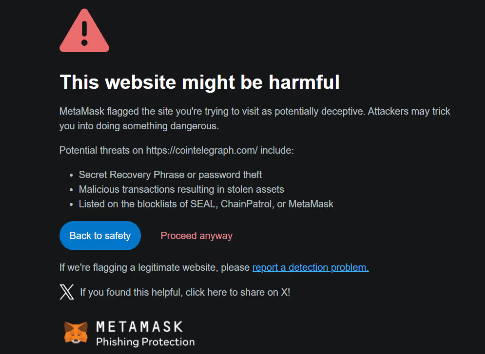
Security Firm Identifies the Attack Source
Blockchain security experts flagged the breach quickly. The malicious JavaScript code responsible for the pop-up was traced to the site’s third-party advertising system, not its main infrastructure. This distinction is critical: attackers bypassed the site’s core protections by embedding wallet-draining scripts within ad delivery code.
Security teams warned users not to interact with the fake CTG token offer and confirmed Cointelegraph has never launched any token by that name.
Dangerous New Trend: Ad-Based Exploits
This incident highlights a growing threat in the crypto space — malicious scripts delivered through trusted platforms’ ad partners. Unlike traditional phishing attacks via email or social media, ad-based exploits target users on legitimate, well-known websites, making them far more convincing.
The fake CTG token was not listed on any major exchange or blockchain, including Ethereum or BNB Chain. Yet, for less experienced users, the design and messaging were realistic enough to provoke trust — a key tactic in wallet-draining schemes.
Similar Attacks Hit Other Crypto Platforms
Cointelegraph is not alone. In recent weeks, CoinMarketCap experienced a similar front-end breach involving a fake token airdrop embedded through promotional banners. Both cases involved third-party code injections, raising concerns across the industry about the lack of vetting and sandboxing in ad systems.
Call for Stricter Third-Party Security Audits
With the increasing reliance on external ad networks, crypto platforms are facing broader attack surfaces. Security experts are calling for tighter auditing, stricter ad integration policies, and better isolation of third-party scripts to protect users.
Until then, crypto users are advised to verify token authenticity, avoid connecting wallets to pop-ups, and treat airdrops with extreme caution, even on familiar websites.
Disclaimer
This content is for informational purposes only and does not constitute financial, investment, or legal advice. Cryptocurrency trading involves risk and may result in financial loss.