
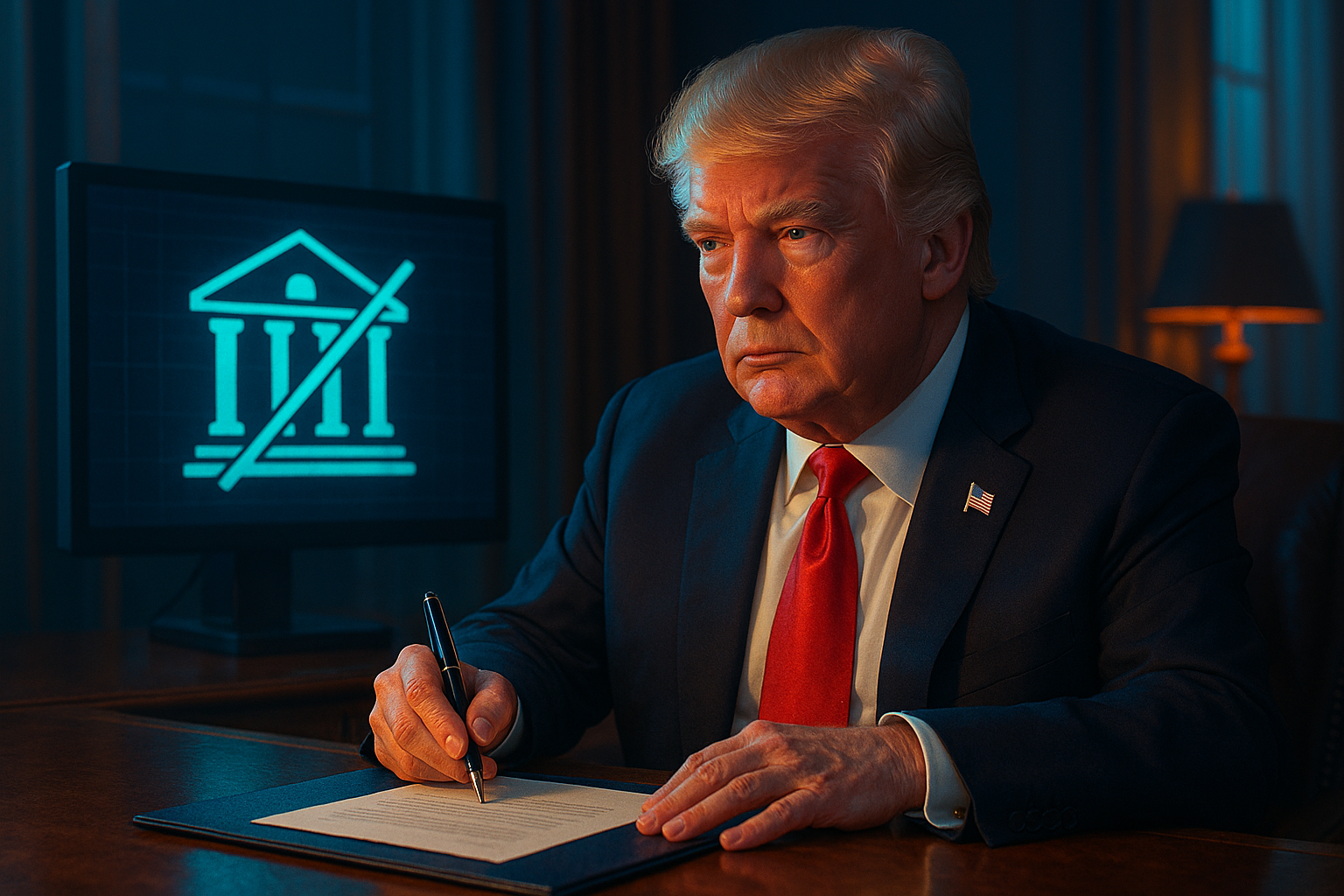
The Trump administration is reportedly considering a new executive order aimed at stopping banks from discriminating against politically disfavored industries—including cryptocurrency firms—according to sources familiar with the matter.
This move could effectively end what critics have called “Operation Chokepoint 2.0,” a debanking campaign that allegedly targeted crypto companies under the previous administration.
What Is Operation Chokepoint 2.0?
The term refers to the alleged coordinated effort by regulators and banks to cut off financial services to crypto startups, firearms businesses, and fossil-fuel firms. The crackdown intensified after the collapse of three major crypto-friendly banks in 2023:
- Silicon Valley Bank
- Silvergate Bank
- Signature Bank
More than 30 tech and crypto founders were reportedly denied bank access during this period, raising concerns of industry-wide bias.
Executive Order Under Review
According to recent reports, the Trump administration is actively drafting an executive order that would prohibit banks from denying service based on political or industry affiliations. This measure seeks to ensure that access to banking is fair and unbiased, regardless of one’s business type or beliefs.
Banking giants like JPMorgan Chase, Citigroup, and Wells Fargo have met with state officials in Texas and Oklahoma to defend themselves against accusations of politically motivated service denials.
Elizabeth Warren and Bipartisan Attention
Surprisingly, Democratic Senator Elizabeth Warren has also urged action against politically selective banking, stating:
“People shouldn’t be arbitrarily denied access to their banks, locked out of accounts, or stripped of privileges.“
The bipartisan pressure highlights the growing urgency to reform financial discrimination practices across sectors.
Challenges Remain Despite Promises
While Trump has pledged to end Operation Chokepoint 2.0, experts like Custodia Bank CEO Caitlin Long warn that true regulatory change may not arrive until 2026, when new appointments to the Federal Reserve become possible.
“It’s premature to say debanking is over… if the OCC and FDIC overturn their guidance but the Fed does not, we’re still stuck,” said Long.
Her bank was directly affected, suffering millions in losses due to delayed approvals.
Conclusion
If signed, this executive order could mark a major turning point for crypto in the U.S., protecting access to banking services and boosting industry stability. Until then, the fight over crypto debanking is far from over.
Disclaimer
This content is for informational purposes only and does not constitute financial, investment, or legal advice. Cryptocurrency trading involves risk and may result in financial loss.