
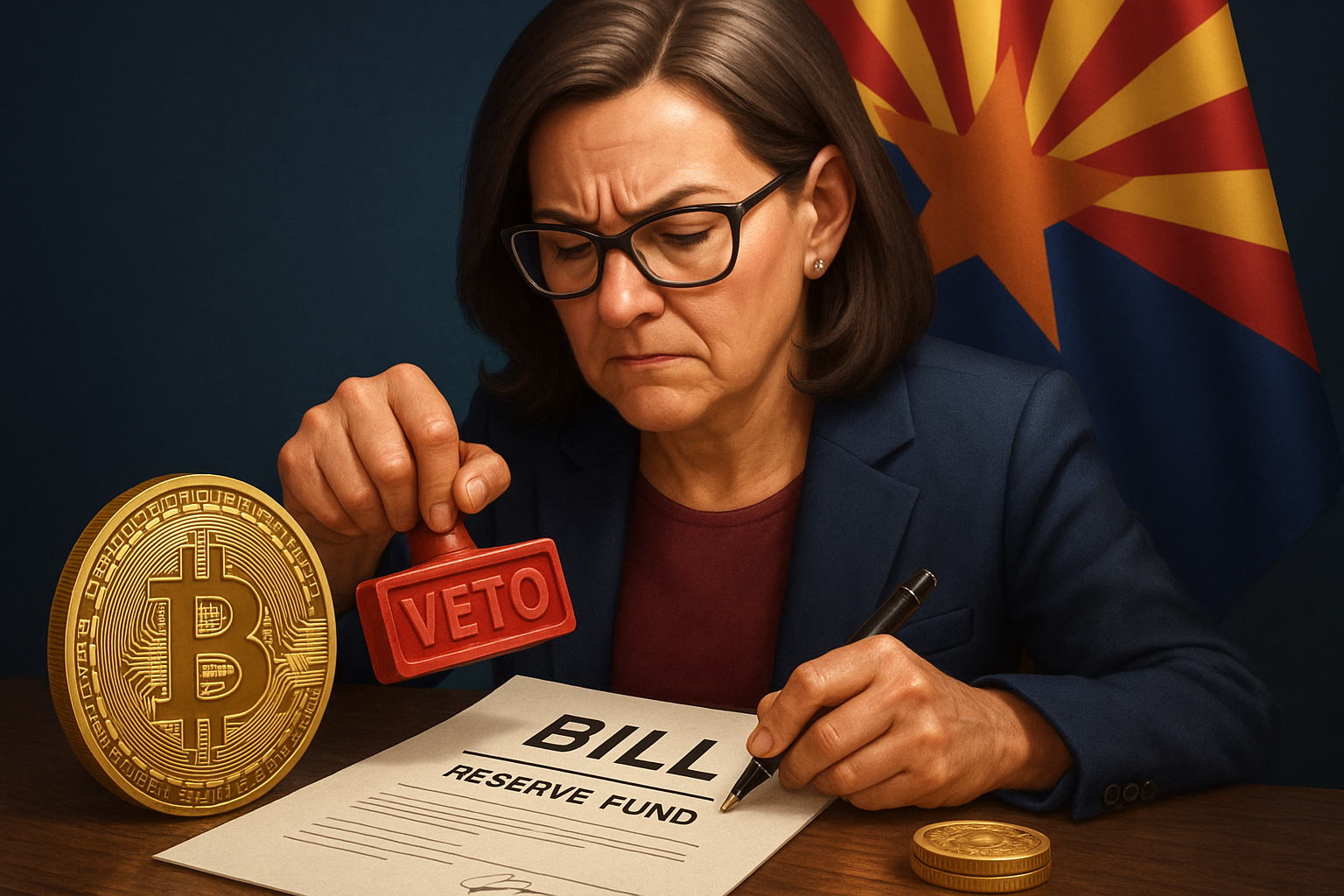
Governor Katie Hobbs Rejects Crypto Reserve Bill HB 2324
In a move that signals caution toward cryptocurrency integration in state finance, Arizona Governor Katie Hobbs vetoed House Bill 2324 on July 1, 2025. The bill proposed the creation of a “Bitcoin and Digital Assets Reserve Fund” to manage crypto assets seized through criminal forfeiture.
The veto prevents Arizona from becoming one of the first states to create a state-controlled crypto reserve backed by forfeited digital assets.
What HB 2324 Proposed
House Bill 2324, which passed the Arizona House with a 34-22 vote, sought to:
- Grant the State Treasurer authority to manage a reserve fund holding crypto assets obtained via forfeiture.
- Allow the fund to invest, reinvest, and divest assets in cryptocurrencies or exchange-traded funds (ETFs) tied to digital assets.
- Establish a legal framework for state-level crypto asset management, separate from local jurisdiction control.
However, in her veto message, Governor Hobbs argued that the bill would “disincentivize local law enforcement” by shifting control of seized digital assets away from the local agencies that helped secure them.
“This bill removes seized assets from local jurisdictions, reducing cooperation with the state,” Hobbs wrote.
Arizona’s Mixed Approach to Crypto Policy
Arizona has taken a nuanced stance on crypto legislation. In May 2025, the state enacted HB 2749, a separate bill that permits the state to manage unclaimed digital assets, becoming the second U.S. state to adopt such a law after New Hampshire.
However, HB 2749 focuses only on unclaimed or abandoned crypto, whereas HB 2324 targeted seized assets obtained during criminal investigations.
Additionally, Arizona lawmakers are reviewing SB 1062, a separate proposal that could expand the definition of legal tender to include cryptocurrencies—suggesting that crypto adoption remains a legislative priority, even amid vetoes.
Why the Veto Matters
The governor’s rejection highlights the ongoing tension between innovation and governance in U.S. crypto policy. While supporters of HB 2324 viewed the reserve fund as a forward-thinking financial tool, critics raised concerns over:
- Jurisdictional overreach by the state treasurer’s office,
- Potential mismanagement or volatility of seized crypto assets,
- And loss of local law enforcement incentives to participate in seizures.
The veto also suggests greater scrutiny on how public entities interact with crypto—particularly when assets stem from criminal cases.
What’s Next for Crypto Policy in Arizona?
Despite the setback, crypto-related legislation in Arizona is not slowing down. Lawmakers are expected to revisit both asset custody and legal tender frameworks in the coming months. Meanwhile, national debates on how states should handle forfeited or unclaimed crypto continue to evolve.
For now, HB 2324’s veto reinforces that while Arizona is open to crypto innovation, it will not come at the cost of disrupting local law enforcement cooperation.
Disclaimer
This content is for informational purposes only and does not constitute financial, investment, or legal advice. Cryptocurrency trading involves risk and may result in financial loss.