
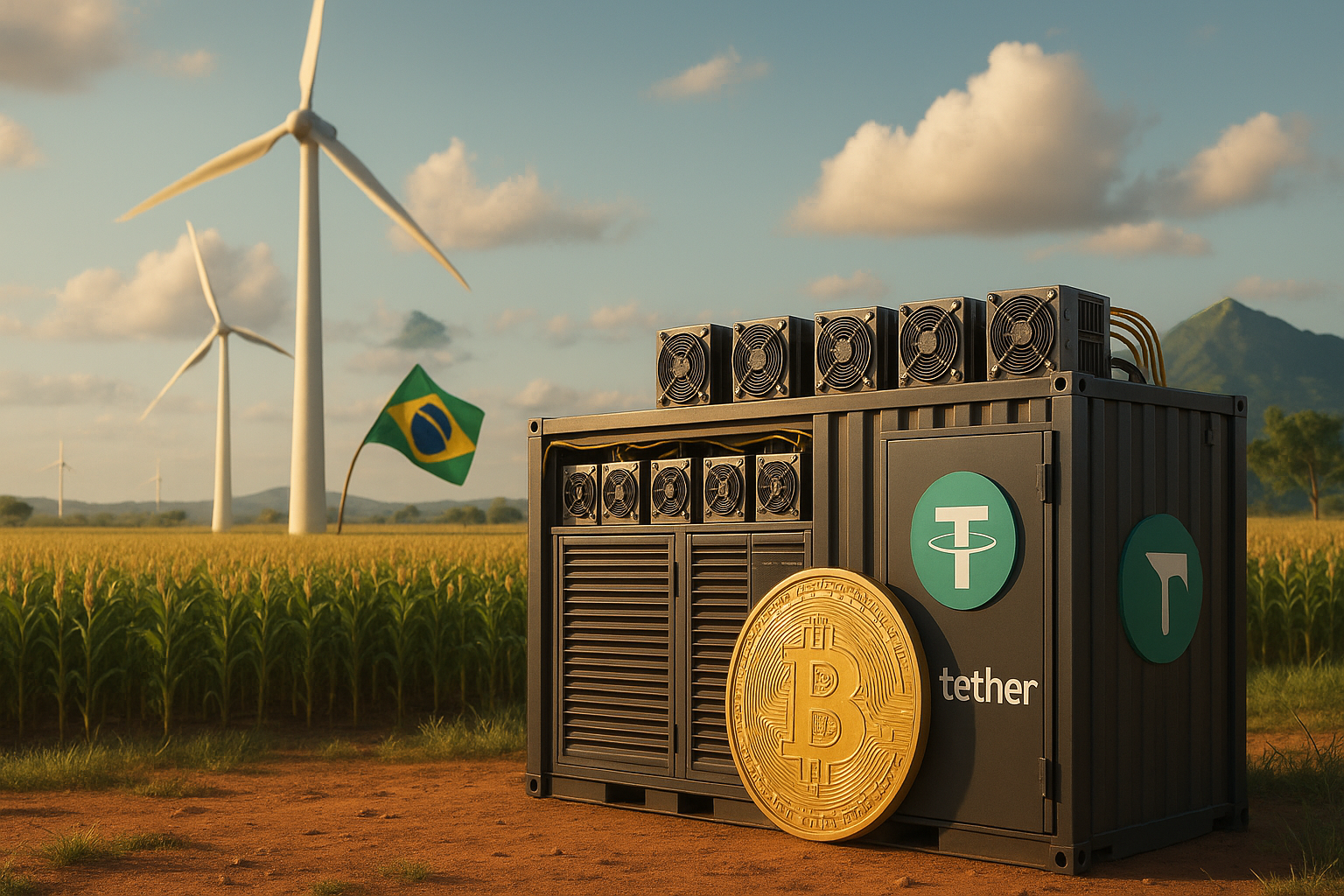
Tether, the issuer of the world’s largest stablecoin USDT, has announced a new Bitcoin mining initiative in Brazil in partnership with agribusiness giant Adecoagro. The collaboration focuses on utilizing surplus renewable energy to power mining facilities — a move that aligns with both companies’ strategic and environmental goals.
Surplus Renewable Energy Powers the Project
Tether has signed a strategic partnership with Adecoagro to launch a pilot project in Brazil aimed at monetizing excess power generated by Adecoagro’s energy infrastructure.
Adecoagro controls over 230 megawatts of power generation capacity across South America, most of it renewable, stemming from sugar mills, rice farms, and other agribusiness operations.
This partnership allows both companies to stabilize energy pricing while tapping into Bitcoin’s upside potential, Adecoagro’s CEO Mariano Bosch said.
Tether’s Growing Bitcoin Mining Ambitions
Tether holds a 70% stake in Adecoagro, giving it significant operational influence. This mining project adds to Tether’s already growing infrastructure footprint across Latin America.
In May, Tether’s CEO Paolo Ardoino revealed that the company had invested $2 billion into energy and mining operations and aims to become the world’s largest Bitcoin miner by year-end.
As part of this vision, Tether has also developed a custom operating system for miners, Tether Mining OS, which the company plans to open-source in the coming months.
Financial Innovation Meets Energy Strategy
This mining initiative highlights how Bitcoin can integrate with traditional industries. Rather than relying solely on power grids or traditional data centers, this model leverages underutilized renewable energy, offering a new monetization stream for agribusinesses.
Adecoagro may eventually hold Bitcoin on its balance sheet, adding crypto assets to its corporate treasury, similar to the growing trend among global firms.
Why It Matters
This partnership represents more than a mining play — it reflects a broader shift toward sustainable and decentralized infrastructure. Tether’s move could reshape Bitcoin mining economics by proving that clean energy + surplus capacity + crypto infrastructure can coexist efficiently.
With global energy markets fluctuating and Bitcoin mining under scrutiny for environmental impact, this model offers a replicable solution for other regions.
Disclaimer
This content is for informational purposes only and does not constitute financial, investment, or legal advice. Cryptocurrency trading involves risk and may result in financial loss.