
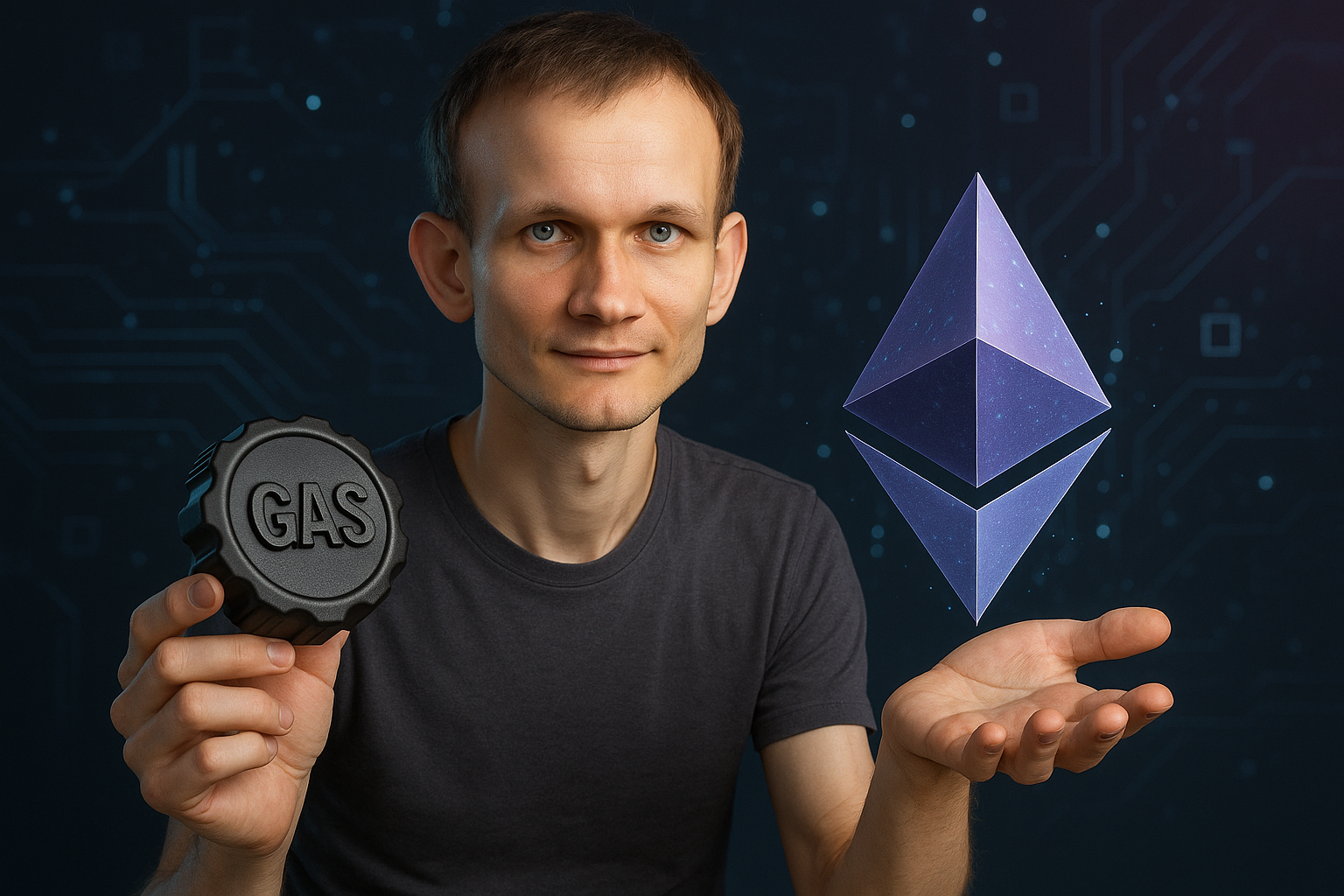
Ethereum EIP-7983 Aims to Cap Gas per Transaction at 16.77 Million
Ethereum co-founder Vitalik Buterin, along with researcher Toni Wahrstätter, has introduced EIP-7983, a new Ethereum Improvement Proposal that seeks to place a hard cap on gas usage per transaction. The proposal aims to enhance Ethereum’s network security, predictability, and compatibility with newer technologies such as zero-knowledge virtual machines (zkVMs).
Currently, a single transaction on Ethereum can theoretically consume the entire block gas limit, which opens the door to Denial-of-Service (DoS) attacks and transaction delays. EIP-7983 addresses this issue by setting a transaction gas ceiling at 16.77 million gas units (or 2²⁴), ensuring no single transaction can dominate a block.
“By capping transaction gas at 16.77 million, Ethereum can prevent unpredictable network behavior and potential DoS vectors,” the EIP draft explains.
Impact on zkVMs and Ethereum Contract Efficiency
The gas cap proposal is also tailored to support Ethereum’s evolving architecture. By enforcing this limit, large transactions would need to be split into smaller, more manageable parts, aligning better with zkVMs, which favor modular execution.
The cap promotes consistent performance, ensuring compatibility with advanced DeFi applications and large smart contracts.
Importantly, this change does not affect the block gas limit, which remains adjustable by validators. The cap only applies to individual transactions, ensuring fair gas distribution across blocks and preventing congestion from a single high-gas interaction.
Backward Compatibility and Network Performance
While EIP-7983 is not backward-compatible for oversized transactions, Buterin and Wahrstätter note that most existing Ethereum transactions already fall well below this threshold. Thus, the change is unlikely to disrupt normal user activity or developer workflows.
This proposal builds upon prior gas management initiatives like EIP-7825, all aimed at increasing transaction execution predictability and improving Ethereum’s performance.
Ethereum’s Shift Toward Simplicity and Stability
Vitalik Buterin has recently emphasized the need to simplify Ethereum’s base protocol, inspired by Bitcoin’s minimalist ethos. With EIP-7983, Ethereum moves closer to a leaner, more secure architecture that remains scalable and developer-friendly.
EIP-7983 marks a pivotal step in making Ethereum more stable, secure, and compatible with future scaling solutions.
As Ethereum continues to evolve, proposals like these will shape its trajectory toward a more resilient and scalable blockchain ecosystem.
Disclaimer
This content is for informational purposes only and does not constitute financial, investment, or legal advice. Cryptocurrency trading involves risk and may result in financial loss