
Major crypto firms unite to demand regulatory clarity in the U.S.
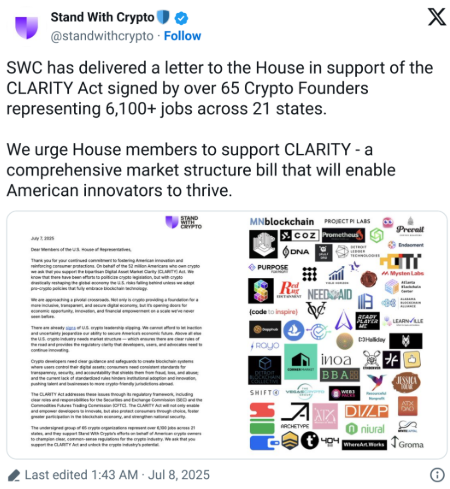
A coalition of 65 blockchain and crypto-focused organizations, including leading crypto exchanges and NFT platforms, has officially urged U.S. House lawmakers to pass the Digital Asset Market Clarity Act (CLARITY Act). The letter, delivered ahead of Crypto Week starting July 14, signals growing urgency within the digital asset sector for federal-level regulation.
What is the CLARITY Act?
The CLARITY Act proposes a regulatory framework that clearly defines oversight responsibilities between the Commodity Futures Trading Commission (CFTC) and the Securities and Exchange Commission (SEC). Under the bill:
- CFTC would oversee the majority of digital asset trading, including non-security tokens.
- SEC would retain authority over crypto-related securities and certain investment products.
This division of oversight is seen as a key step in fostering innovation while protecting investors.
Why the crypto industry supports it
The lobbying group emphasized that the U.S. is at risk of falling behind as other nations adopt pro-crypto legislation. The letter warned that:
“Without clear federal rules, innovation and capital are fleeing to jurisdictions with more certainty.”
It also pointed out that U.S. crypto leadership is slipping, with a lack of standardized rules slowing down institutional adoption and development.
Political momentum and legislative timeline
House leaders have confirmed that the CLARITY Act will be considered alongside two other crypto bills:
- The GENIUS Act, which focuses on stablecoin regulation.
- The Anti-CBDC Surveillance State Act, which seeks to restrict central bank digital currencies.
The GENIUS Act has already passed the Senate, and the CLARITY Act is now heading to a full House vote after advancing through the Financial Services and Agriculture Committees.
Pushback and political challenges
While Republicans support the bill, House Democrats have raised concerns, calling the legislation “rushed” and overly favorable to risky crypto practices. Some critics also point to former President Trump’s increasing involvement in crypto, suggesting a potential conflict of interest.
Still, with growing pressure from the private sector and bipartisan signals in the Senate, the CLARITY Act could soon reach the president’s desk — setting the stage for a more stable U.S. crypto market structure.
Disclaimer
This content is for informational purposes only and does not constitute financial, investment, or legal advice. Cryptocurrency trading involves risk and may result in financial loss.