
Tornado Cash Developer Faces High-Profile Federal Charges
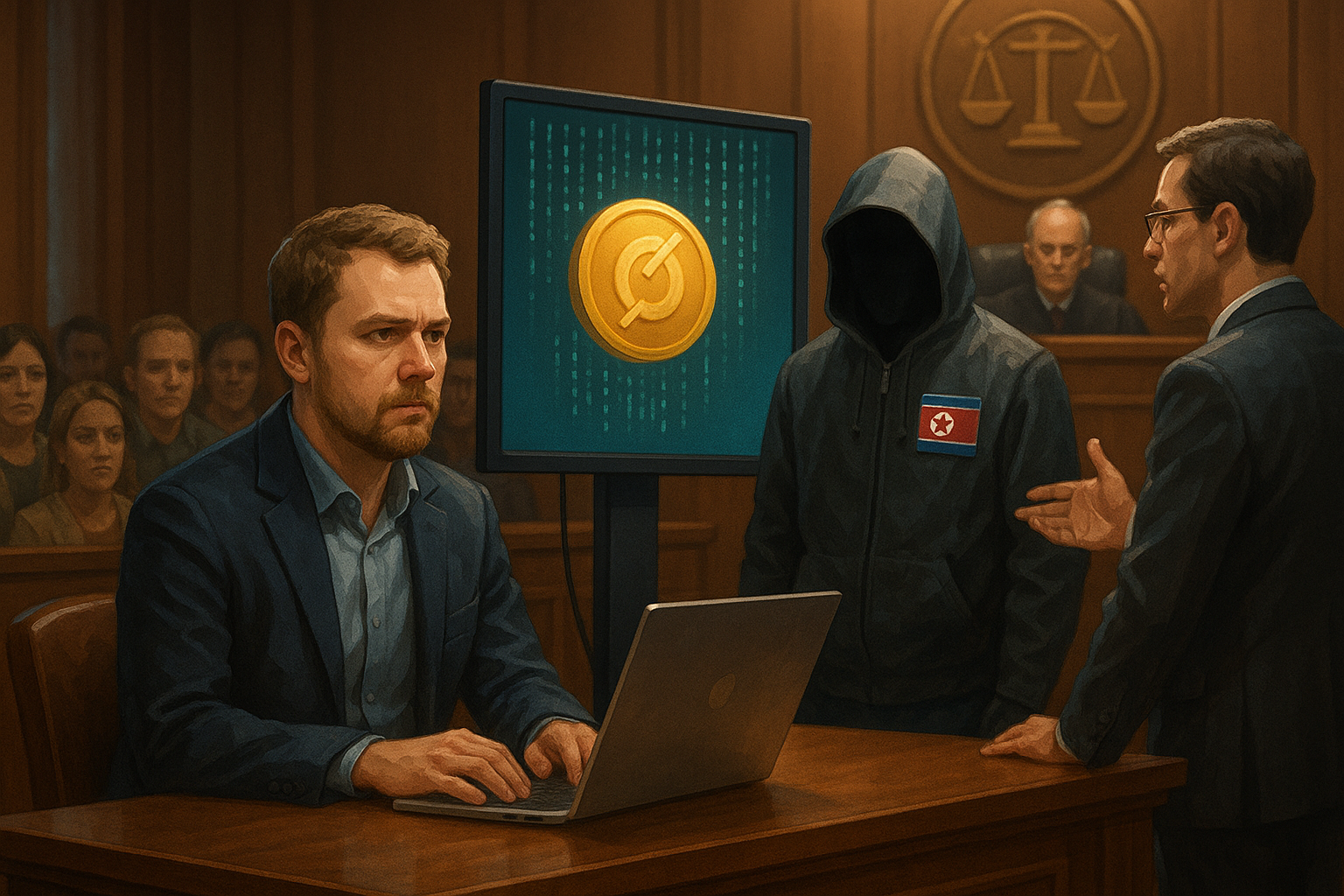
The criminal trial of Roman Storm, co-founder of the Tornado Cash cryptocurrency mixing protocol, officially began this week in the Southern District of New York, with jury selection concluded and opening statements delivered.
Federal prosecutors launched their case by alleging that Storm knowingly allowed the North Korean Lazarus Group to use Tornado Cash to launder stolen crypto assets, directly violating U.S. sanctions laws.
“The defendant was profiting from a giant washing machine for dirty money,” said Assistant U.S. Attorney Kevin Mosley, referencing the $600 million Ronin Bridge hack in 2022, which was attributed to the Lazarus Group.
U.S. Government Focuses on Sanctions Violations
Prosecutors aim to prove that Storm continued to operate Tornado Cash after knowing it was being used by criminal entities, including state-sponsored hackers from North Korea. This forms the core of the prosecution’s argument: that Storm had the opportunity to intervene but allegedly chose to allow the illicit activity to continue.
The U.S. government maintains that Tornado Cash was more than a neutral tool — it was a deliberate vehicle for criminal financial activity, and Storm, as co-creator, is being held accountable for his role in its ongoing use post-sanctions designation.
Defense Argues Tornado Cash Is a Neutral Privacy Tool
Storm’s legal defense, led by attorney Keri Axel, strongly denied the allegations. “Roman had nothing to do with the hacks,” she said. The defense argues that Tornado Cash is an open-source privacy protocol and likened its misuse to everyday tools that can serve both legitimate and illegitimate purposes.
“The world is full of products that have legitimate uses and are misused — like Signal, or even a hammer,” Axel told jurors. She emphasized that Storm did not conspire with any malicious actors and lacked control over how the decentralized pools were used.
Industry-Wide Implications for Crypto Developers
The case is closely watched by the broader crypto industry, as it raises urgent questions about developer liability, open-source software, and compliance in decentralized finance (DeFi). Roman Storm’s colleague, Roman Semenov, remains at large and is also under indictment.
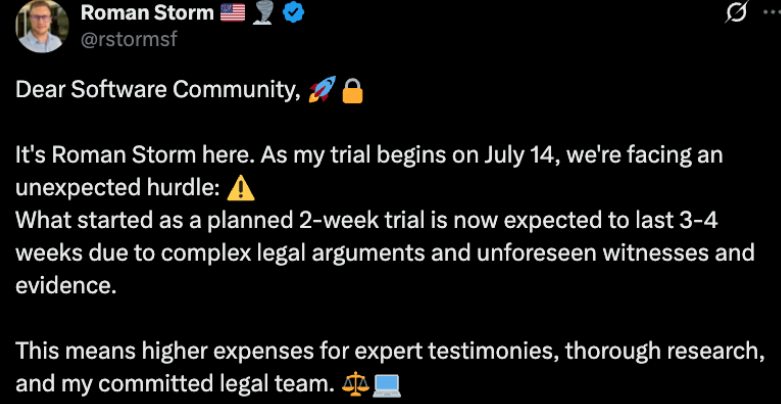
The trial is expected to last up to one month, with key witnesses scheduled to testify in the coming days. A verdict could set a critical precedent for how U.S. law treats developers of blockchain-based privacy protocols.
Disclaimer
This content is for informational purposes only and does not constitute financial, investment, or legal advice. Cryptocurrency trading involves risk and may result in financial loss.