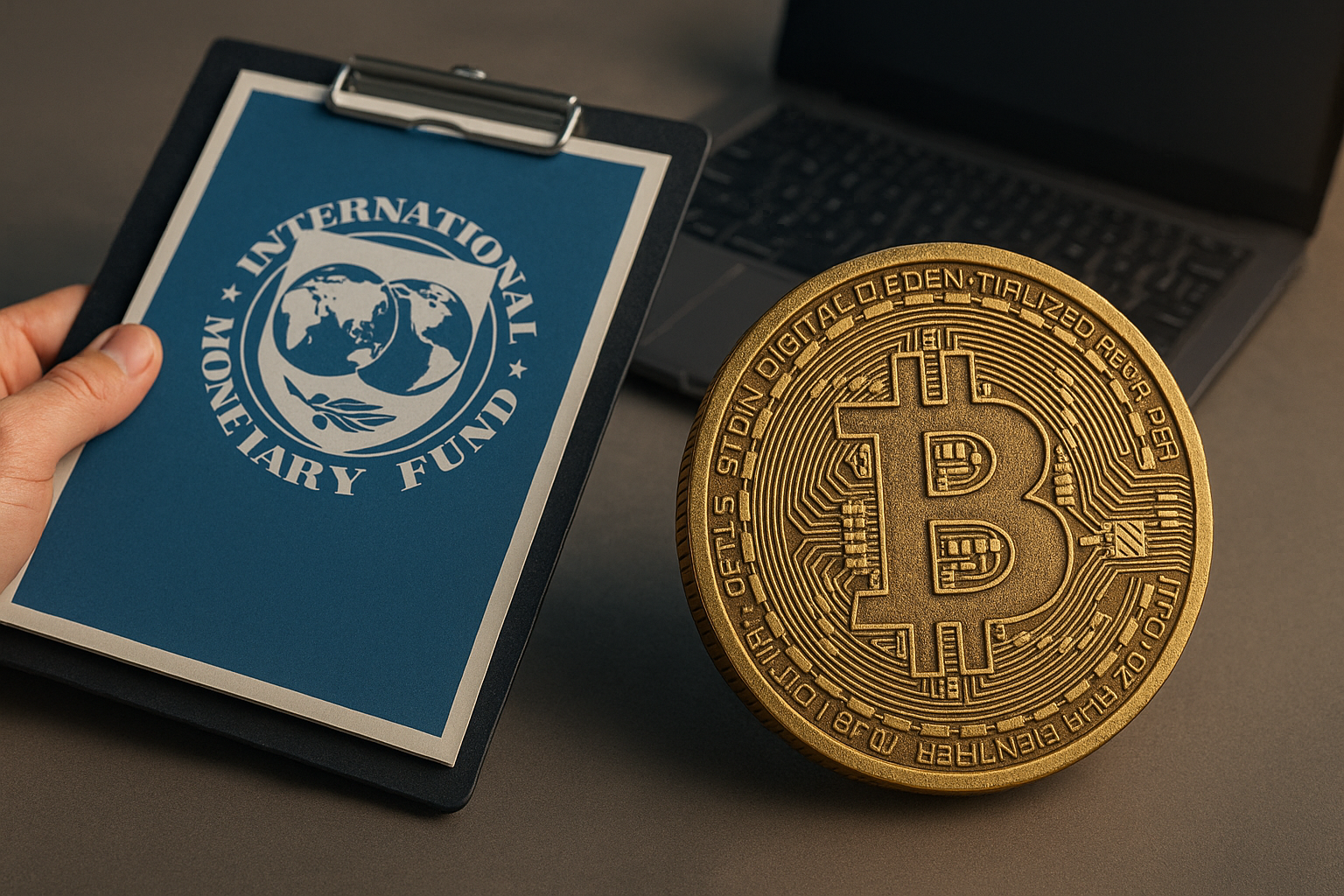
A recent International Monetary Fund (IMF) report has raised eyebrows in the global crypto community by stating that El Salvador has not purchased any new Bitcoin since signing a $1.4 billion loan deal in December 2024. The finding starkly contrasts with El Salvador’s own messaging, which has consistently claimed that the government is accumulating one BTC per day.
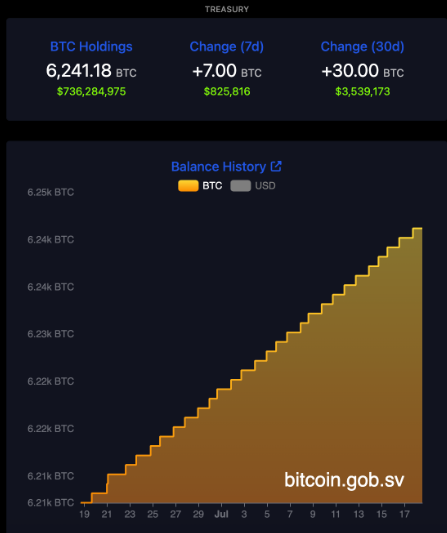
El Salvador’s Bitcoin Office claims to be stacking Bitcoin every day
According to the IMF, El Salvador’s public sector Bitcoin holdings remain unchanged since the loan agreement took effect. The report also clarifies that:
The Chivo Wallet, El Salvador’s state-run Bitcoin platform, does not adjust BTC reserves to reflect customer deposits.
Discrepancies suggesting BTC accumulation are attributed to accounting artifacts, not real purchases.
The government is reducing its role in the Bitcoin project as part of its commitment to fiscal discipline.
“The stock of Bitcoins held by the public sector remains unchanged,” confirms a letter of intent signed by the heads of El Salvador’s central bank and finance ministry.
Despite the IMF’s findings, El Salvador’s Bitcoin Office has repeatedly claimed the country is still buying 1 BTC per day, a strategy previously endorsed by President Nayib Bukele as a long-term national investment.
In a fiery response to IMF warnings in March 2025, Bukele stated on X (formerly Twitter):
“No, it’s not stopping. If it didn’t stop when the world ostracized us and most ‘bitcoiners’ abandoned us, it won’t stop now, and it won’t stop in the future.”
This message appears to directly defy the IMF agreement, further complicating the narrative around El Salvador’s actual BTC strategy.
Revised its Bitcoin law in January 2025, making BTC acceptance voluntary (instead of mandatory).
Pledged to stop buying Bitcoin using taxpayer funds.
Promised to mitigate fiscal risks by reducing public exposure to volatile crypto markets.
While these reforms helped unlock crucial IMF funding, the discrepancy between official commitments and public communications has sparked confusion and mistrust.
Why It Matters: Bitcoin Nation Under Scrutiny
El Salvador made headlines in 2021 as the first country to adopt Bitcoin as legal tender, earning global attention from both crypto advocates and regulators. However, this latest development may impact:
Investor confidence in BTC-backed sovereign strategies
Transparency concerns around state-owned crypto reserves
International relations, especially with financial watchdogs like the IMF
As El Salvador positions itself as a crypto-forward nation, credibility and transparency will be crucial. The IMF’s public contradiction of the government’s BTC-buying claims marks a critical moment for the global perception of Bitcoin nationhood.
Conclusion
While El Salvador’s leadership maintains its pro-Bitcoin rhetoric, the IMF’s official stance suggests otherwise. Whether the nation is truly stacking sats or just projecting optimism remains unclear—but the world is watching.
Disclaimer
This content is for informational purposes only and does not constitute financial, investment, or legal advice. Cryptocurrency trading involves risk and may result in financial loss.
We use cookies to personalize content and ads, provide social media features, and analyze our traffic. In accordance with GDPR/AVG and EU cookie regulations, data is processed only with your consent. We may share information about your use of our website with our social media, advertising, and analytics partners, and you can manage or withdraw your consent at any time. View more
Cookies settings
Accept
Privacy & Cookie policy
Privacy & Cookies policy
Cookies list
Cookie name
Active
Privacy Policy
At BitxJournal.com, we respect your privacy and are committed to protecting your personal data. This Privacy Policy explains how we collect, process, store, and protect personal information in accordance with the General Data Protection Regulation (GDPR) and AVG (EU privacy legislation).
1. Data Controller
BitxJournal.com acts as the data controller for all personal data processed through this website.
2. Personal Data We Collect
We may collect and process the following categories of data:
Personal Data
Name and email address (when you subscribe to newsletters or contact us)
Technical & Usage Data
IP address, browser type, operating system
Device information
Pages visited, referral sources, and interaction data
This data is collected via cookies, log files, and analytics technologies.
3. Legal Basis for Processing
We process personal data only when a lawful basis exists, including:
Consent – when you explicitly agree (e.g., cookies, newsletter sign-up)
Legitimate interest – to operate, secure, and improve our website
Legal obligation – when required by applicable laws
You may withdraw your consent at any time.
4. Purpose of Data Processing
Your data is processed for the following purposes:
Operating and maintaining the website
Improving content, usability, and performance
Sending newsletters or updates (only with consent)
Analyzing traffic and user behavior
Responding to inquiries or support requests
5. Cookies & Consent Management
We use cookies and similar technologies in compliance with EU Cookie Law.
Non-essential cookies are placed only after explicit user consent
Users may accept, reject, or manage cookie preferences at any time
Consent can be withdrawn without affecting prior lawful processing
Detailed cookie information is available in our Cookie Settings panel.
6. Third-Party Data Processing
We may share limited data with trusted third-party service providers, including:
Analytics providers (e.g., Google Analytics)
Advertising partners (for personalized or non-personalized ads)
These third parties act as data processors and process data only under contractual obligations compliant with GDPR/AVG.
7. International Data Transfers
Where data is transferred outside the European Economic Area (EEA), we ensure appropriate safeguards are in place, such as Standard Contractual Clauses (SCCs) or equivalent legal mechanisms.
8. Data Retention
We retain personal data only for as long as necessary to fulfill the purposes outlined in this policy or as required by law.
9. Data Security
We implement appropriate technical and organizational security measures to protect personal data against unauthorized access, alteration, disclosure, or destruction.
10. Your GDPR Rights
Under GDPR/AVG, you have the right to:
Access your personal data
Rectify inaccurate or incomplete data
Request data erasure (“right to be forgotten”)
Restrict or object to processing
Data portability
Withdraw consent at any time
Lodge a complaint with a supervisory authority
11. Changes to This Privacy Policy
We reserve the right to update this Privacy Policy at any time. Any changes will be posted on this page with a revised effective date.
12. Contact Information
For privacy-related inquiries or GDPR requests, contact: