
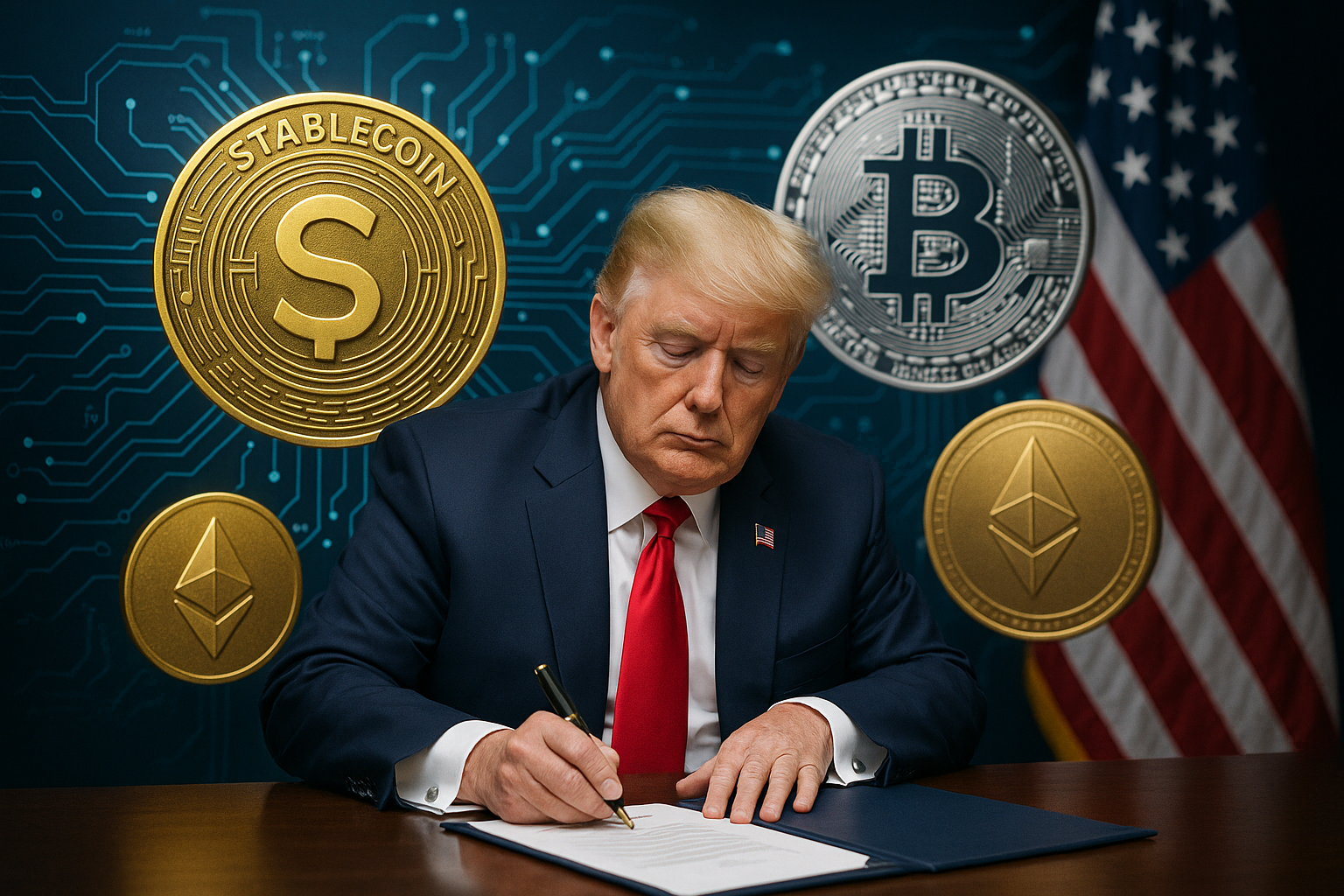
In a landmark moment for digital finance, U.S. President Donald Trump signed the GENIUS Act into law on Friday, officially making it the first major cryptocurrency legislation in the country’s history. The Guiding and Establishing National Innovation for U.S. Stablecoins (GENIUS) Act lays the groundwork for a regulatory framework governing stablecoins, digital assets pegged to fiat currencies such as the U.S. dollar.
This new law signifies a turning point for crypto regulation in the United States, bringing federal agencies such as the Federal Reserve and the Office of the Comptroller of the Currency into more active roles within the digital asset ecosystem.
Legislative Journey: From Gridlock to Breakthrough
The bill’s passage wasn’t without challenges. Earlier in the week, the House Rules Committee met to prepare for debate, but the process hit a snag when members of the House Freedom Caucus opposed a procedural vote, temporarily stalling the initiative.
President Trump intervened directly, using his platform to persuade holdout lawmakers. “I am so tired of making phone calls at 2, 3, 4 o’clock in the morning,” he remarked, reflecting the behind-the-scenes effort it took to rally support.
After a record-breaking 9-hour voting session, the motion to debate was approved, and by Thursday, the House successfully passed the GENIUS Act, along with two other crypto-related bills.
Regulators Set to Shape Stablecoin Oversight
With the GENIUS Act now signed, the responsibility shifts to financial regulators. The Federal Reserve, OCC, and other agencies will begin developing comprehensive rules for stablecoin issuance and oversight.
The law aims to foster innovation in blockchain technology while ensuring financial stability and consumer protection. It also lays the foundation for future bills to regulate decentralized finance (DeFi) and digital asset exchanges.
Crypto Week Delivers Big Win for Industry
Despite initial political friction, Crypto Week concluded with major progress. Congressman Bryan Steil noted that although negotiations were intense, the outcome aligned with early expectations. “Passing GENIUS and placing it on the president’s desk was the goal—and we achieved it,” he said.
This development may open the door for institutional growth, increased public trust, and broader adoption of digital assets across the U.S. financial system.
Disclaimer
This content is for informational purposes only and does not constitute financial, investment, or legal advice. Cryptocurrency trading involves risk and may result in financial loss.