

Banks Face Profitability Challenges Under Strict Basel Standards

The Basel Committee on Banking Supervision (BCBS) has come under scrutiny from industry leaders for introducing capital reserve requirements that make it difficult for banks to engage in cryptocurrency activities. According to investment executives, these rules act as a hidden “chokepoint,” discouraging traditional financial institutions from allocating resources to the digital asset sector.

Chris Perkins, president of digital investment firm CoinFund, explained that the framework significantly reduces banks’ profitability when dealing with crypto. “The rules lower a bank’s return on equity by forcing higher reserve requirements for holding digital assets. It makes crypto-related activities too costly,” Perkins noted.

Capital Rules Suppress Crypto Growth

The BCBS regulations require banks to hold large capital buffers against volatile assets, classifying cryptocurrencies as high-risk. This, in effect, diverts capital away from digital finance and into traditional sectors. Perkins emphasized: “If I have a certain amount of capital to invest, I’ll choose high return businesses over low return ones. With crypto, the cost burden is too high.”

Industry analysts argue that this approach indirectly suppresses innovation by pushing banks out of blockchain adoption. While regulators frame the measures as risk control, executives see them as structural barriers limiting the sector’s growth.

BIS Push for Centralized Alternatives

The Bank for International Settlements (BIS), which coordinates global banking policies, has reinforced its opposition to cryptocurrencies. Recent BIS reports warn that stablecoins and decentralized finance could destabilize financial systems, urging governments to prioritize central bank digital currencies (CBDCs) instead.
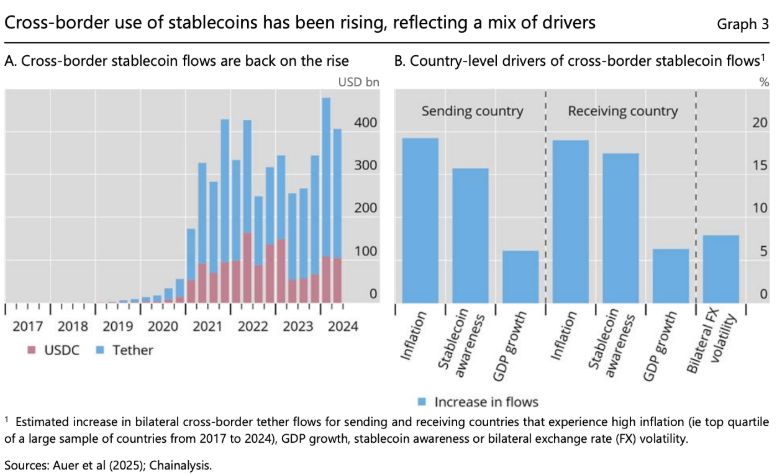
Cross-border use of stablecoins

The report stated: “Stablecoins’ rising market capitalization and interconnections with the traditional financial system have reached a stage where potential spillovers can no longer be ruled out.”

With stricter rules in place, banks may remain hesitant to embrace digital assets, leaving growth largely in the hands of non-bank institutions and sovereign funds. The debate highlights a broader question: whether regulation is protecting the financial system or deliberately slowing the integration of crypto into mainstream banking.

Disclaimer

This content is for informational purposes only and does not constitute financial, investment, or legal advice. Cryptocurrency trading involves risk and may result in financial loss.

logo

blockto.io

info@blockto.io

Blockto.io Copyright © 2025, All rights reserved

News
Rates
Buy
More
We use cookies to personalize content and ads, provide social media features, and analyze our traffic. In accordance with GDPR/AVG and EU cookie regulations, data is processed only with your consent. We may share information about your use of our website with our social media, advertising, and analytics partners, and you can manage or withdraw your consent at any time. View more
Cookies settings
Accept
Privacy & Cookie policy
Privacy & Cookies policy
Cookie name Active

Privacy Policy

At BitxJournal.com, we respect your privacy and are committed to protecting your personal data. This Privacy Policy explains how we collect, process, store, and protect personal information in accordance with the General Data Protection Regulation (GDPR) and AVG (EU privacy legislation).

1. Data Controller

BitxJournal.com acts as the data controller for all personal data processed through this website.

2. Personal Data We Collect

We may collect and process the following categories of data:

Personal Data

  • Name and email address (when you subscribe to newsletters or contact us)

Technical & Usage Data

  • IP address, browser type, operating system

  • Device information

  • Pages visited, referral sources, and interaction data

This data is collected via cookies, log files, and analytics technologies.

3. Legal Basis for Processing

We process personal data only when a lawful basis exists, including:

  • Consent – when you explicitly agree (e.g., cookies, newsletter sign-up)

  • Legitimate interest – to operate, secure, and improve our website

  • Legal obligation – when required by applicable laws

You may withdraw your consent at any time.

4. Purpose of Data Processing

Your data is processed for the following purposes:

  • Operating and maintaining the website

  • Improving content, usability, and performance

  • Sending newsletters or updates (only with consent)

  • Analyzing traffic and user behavior

  • Responding to inquiries or support requests

5. Cookies & Consent Management

We use cookies and similar technologies in compliance with EU Cookie Law.

  • Non-essential cookies are placed only after explicit user consent

  • Users may accept, reject, or manage cookie preferences at any time

  • Consent can be withdrawn without affecting prior lawful processing

Detailed cookie information is available in our Cookie Settings panel.

6. Third-Party Data Processing

We may share limited data with trusted third-party service providers, including:

  • Analytics providers (e.g., Google Analytics)

  • Advertising partners (for personalized or non-personalized ads)

These third parties act as data processors and process data only under contractual obligations compliant with GDPR/AVG.

7. International Data Transfers

Where data is transferred outside the European Economic Area (EEA), we ensure appropriate safeguards are in place, such as Standard Contractual Clauses (SCCs) or equivalent legal mechanisms.

8. Data Retention

We retain personal data only for as long as necessary to fulfill the purposes outlined in this policy or as required by law.

9. Data Security

We implement appropriate technical and organizational security measures to protect personal data against unauthorized access, alteration, disclosure, or destruction.

10. Your GDPR Rights

Under GDPR/AVG, you have the right to:

  • Access your personal data

  • Rectify inaccurate or incomplete data

  • Request data erasure (“right to be forgotten”)

  • Restrict or object to processing

  • Data portability

  • Withdraw consent at any time

  • Lodge a complaint with a supervisory authority

11. Changes to This Privacy Policy

We reserve the right to update this Privacy Policy at any time. Any changes will be posted on this page with a revised effective date.

12. Contact Information

For privacy-related inquiries or GDPR requests, contact:

📧 Email: support@blockto.io
🌐 Website: https://blockto.io

Save settings
Cookies settings