

Thailand is taking a bold step toward integrating digital assets into its economy by launching TouristDigiPay, a nationwide crypto payment sandbox for tourists. The initiative, expected to go live on Monday, will allow foreign visitors to exchange cryptocurrencies for Thai baht and make electronic payments through regulated e-money providers.
How TouristDigiPay Works
Only international tourists visiting Thailand will be eligible for the program. Before using the service, travelers must undergo Know Your Customer (KYC) verification and open an account with both a licensed digital asset business and an e-money provider overseen by the Bank of Thailand and the Securities and Exchange Commission (SEC).
The system will include safeguards such as:
- Monthly spending limits to ensure controlled usage.
- No direct cash withdrawals, meaning crypto can only be spent through e-money channels.
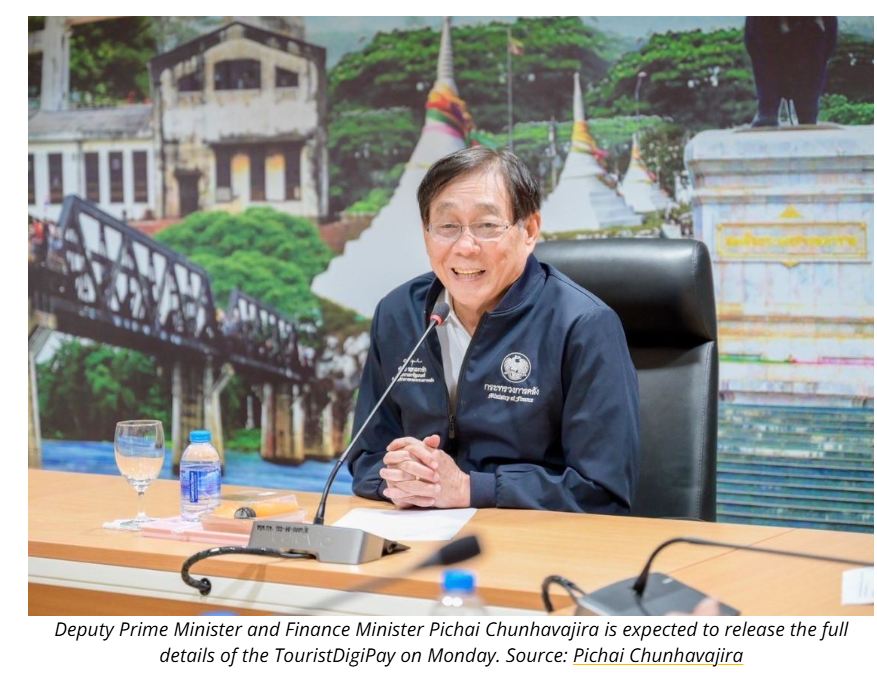
Deputy Prime Minister and Finance Minister Pichai Chunhavajira is set to unveil the full details of the scheme.
Thailand’s economy relies heavily on tourism, but the sector has seen a slowdown in 2025. The World Tourism Institute reported a 5% decline in visitor numbers in the first half of the year, with arrivals dropping to 16.8 million from 17.7 million in 2024. Most concerning is the 34% fall in Chinese tourists, who traditionally make up a large portion of Thailand’s visitors.
By enabling crypto-based payments, officials hope to:
- Attract digital-savvy tourists who prefer using crypto instead of traditional payment systems.
- Differentiate Thailand from regional competitors like Japan and Vietnam, which are becoming more affordable and attractive due to currency dynamics.
The initiative is seen as a strategy to revive foreign interest in Thai tourism by making spending more convenient for global visitors.
Thailand’s Experiment With Digital Assets
This isn’t Thailand’s first experiment with crypto in tourism. Earlier in 2025, the government trialed a program in Phuket, allowing tourists to pay for goods and services using cryptocurrencies. The trial is still ongoing, but TouristDigiPay represents a nationwide expansion of that idea.
In August, the Thai SEC also completed a public consultation on financial innovation, signaling growing openness toward digital assets as part of national economic development.
Global Trend: Crypto Meets Travel
Thailand is not alone in merging crypto with tourism. Other countries and businesses are already experimenting with similar models:
- Bhutan partnered with Binance Pay and DK Bank to let travelers pay with crypto.
- Blue Origin, Jeff Bezos’s space company, now allows customers to pay for space trips in Bitcoin, Ethereum, Solana, and stablecoins.
- The UAE signed a deal with Crypto.com to let passengers purchase tickets and in-flight services using digital currencies.
These examples highlight a growing trend: crypto is becoming a legitimate payment method in global tourism and luxury experiences.
Thailand’s TouristDigiPay initiative represents a strategic push to keep its tourism industry competitive in a shifting global market. By offering a secure, regulated, and convenient crypto payment option, Thailand could position itself as a leading crypto-friendly travel destination in Asia.
If successful, this move may encourage more countries to adopt crypto-driven tourism solutions, reshaping how international visitors spend and experience travel worldwide.
Disclaimer
This content is for informational purposes only and does not constitute financial, investment, or legal advice. Cryptocurrency trading involves risk and may result in financial loss.