

Bitcoin dominance (BTC.D), the metric tracking Bitcoin’s share of the total cryptocurrency market capitalization, has dipped to 58.47%, showing a notable decline in recent weeks. This movement highlights a shifting market dynamic as capital flows increasingly toward altcoins.
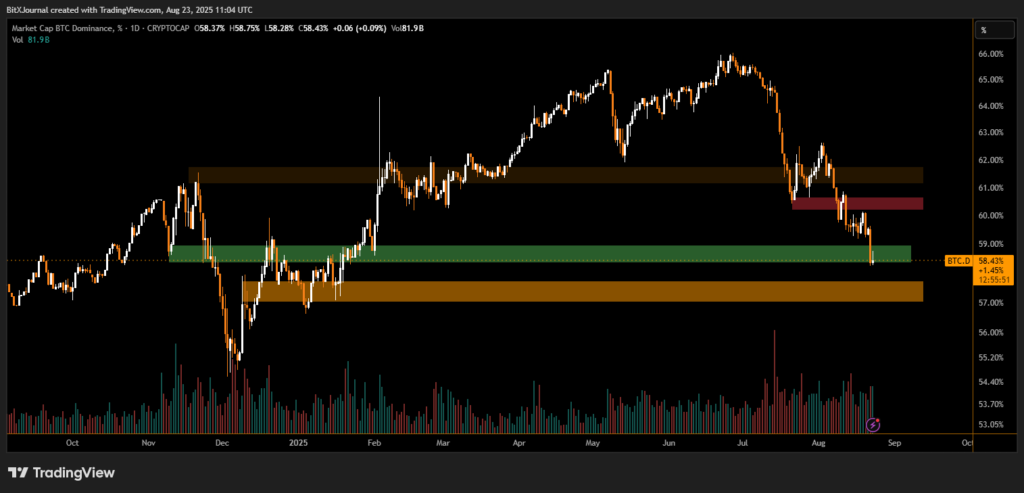
The chart reveals that Bitcoin dominance is now hovering just above a critical support zone near 58%, a level that has historically acted as a pivot for market sentiment. A sustained break below could open the door for a deeper decline toward the 57% range, where buyers previously stepped in to stabilize dominance.
On the upside, resistance remains heavy between 60% and 62%, where BTC.D faced repeated rejections over the summer. Technical analysts point out that reclaiming those levels would be necessary for Bitcoin to reassert its control over the broader crypto market.
Expert Insights
Market strategists emphasize that this trend is worth watching closely. According to BITX analyst, “The decline in Bitcoin dominance signals that altcoins are capturing liquidity again. This often happens during phases when traders are willing to take on more risk outside of Bitcoin.”
According to BITX, “If Bitcoin dominance fails to hold above the 58% mark, we could see an acceleration in altcoin rallies. However, any bounce from this zone may indicate Bitcoin regaining its role as the market’s anchor.”
Broader Implications
The fall in dominance comes as trading volumes show renewed interest across mid-cap and small-cap tokens. Historically, such periods have coincided with increased market volatility and a more speculative environment.
Still, Bitcoin remains the largest player, and its dominance serves as a barometer of risk appetite across the crypto landscape. Traders will be watching closely whether BTC.D can defend this key support area or if altcoins will continue to press the advantage.
Disclaimer
This content is for informational purposes only and does not constitute financial, investment, or legal advice. Cryptocurrency trading involves risk and may result in financial loss.