
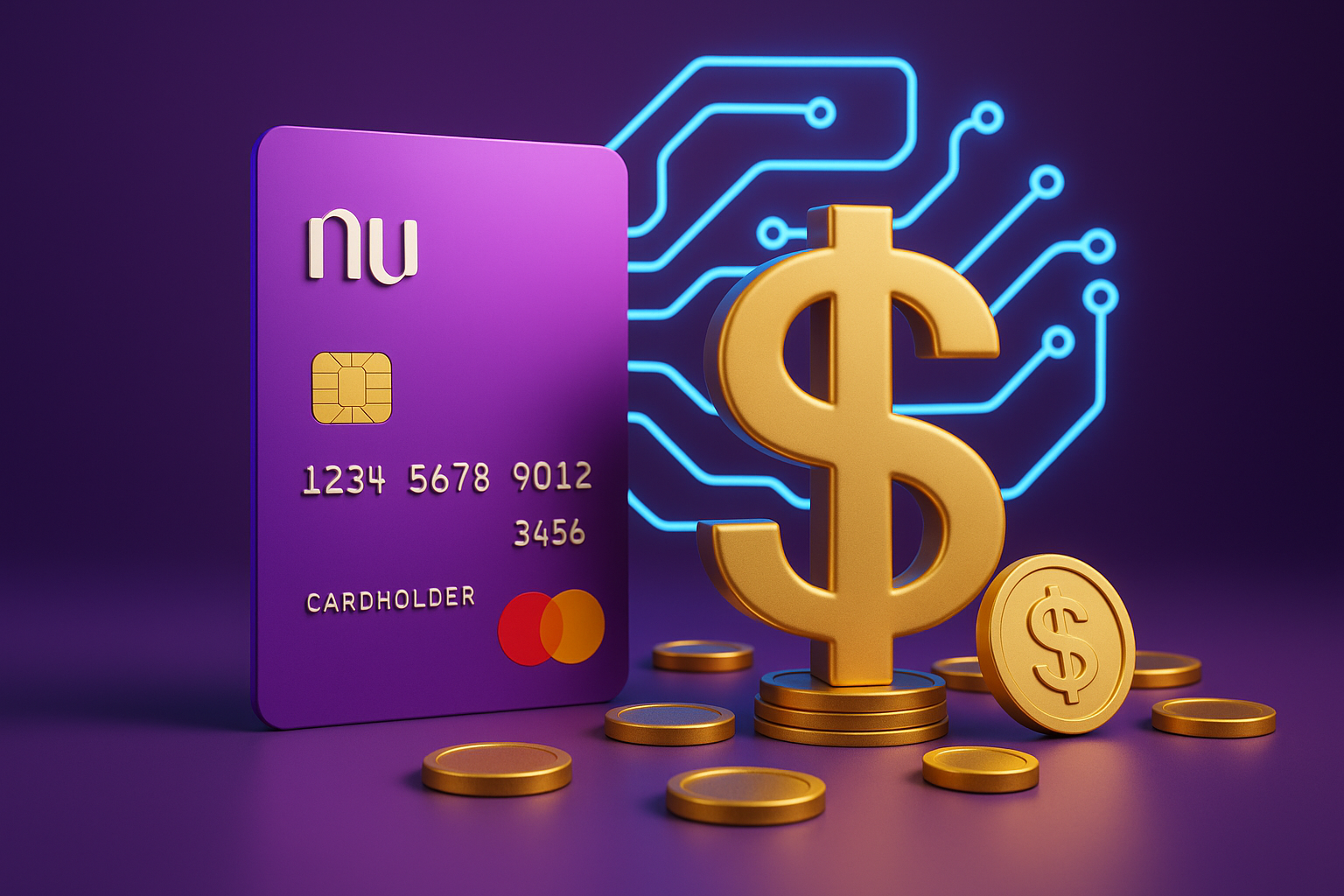
Brazil’s largest digital bank eyes blockchain integration for payments and credit services
Nubank, Latin America’s largest digital bank, is preparing to test stablecoin integration for credit card transactions, signaling another step in the region’s rapid adoption of blockchain-based payments.
The plan was revealed by Roberto Campos Neto, Nubank’s vice-chairman and former governor of Brazil’s central bank, during the Meridian 2025 event. Campos Neto emphasized the role of stablecoins and tokenized assets in bridging the gap between digital assets and traditional financial services.
Stablecoins to Power Banking Innovation
According to Campos Neto, Nubank’s pilot program will allow customers to use dollar-pegged stablecoins for credit card payments. The initiative forms part of a broader strategy to expand the bank’s blockchain footprint and align with shifting consumer behaviors.
“What the data shows is that people aren’t buying to transact, they’re buying as a store of value,” Campos Neto said. “The challenge is finding a way for banks to accept tokenized deposits and use them to issue credit.”
Nubank’s Growing Crypto Presence
Founded in São Paulo in 2013, Nubank has grown to serve over 100 million customers across Brazil, Mexico and Colombia. The digital lender first entered the crypto market in 2022 by allocating 1% of its net assets to Bitcoin and rolling out a trading service.
In March 2025, Nubank broadened its offering by listing four additional altcoins—Cardano (ADA), Cosmos (ATOM), Near Protocol (NEAR), and Algorand (ALGO). The bank has also announced plans to launch loyalty tokens on Polygon, underscoring its long-term commitment to blockchain innovation.

Stablecoin use has surged across Latin America, particularly in Brazil, Argentina, and Venezuela, where inflationary pressures have driven demand for dollar-backed assets.
- In Brazil, regulators estimate that 90% of crypto activity involves stablecoins.
- In Argentina, where inflation topped 100%, USDt and USDC made up over 70% of crypto purchases in 2024, according to Bitso.
- In Venezuela, stablecoins are increasingly replacing the bolívar in everyday commerce, accounting for 47% of sub-$10,000 crypto transactions in 2024.
Nubank’s move could accelerate mainstream adoption of stablecoins in Latin America by embedding them into daily financial products like credit cards. If successful, it may also push other regional banks to follow suit, reshaping payments across the continent.
Disclaimer
This content is for informational purposes only and does not constitute financial, investment, or legal advice. Cryptocurrency trading involves risk and may result in financial loss.