
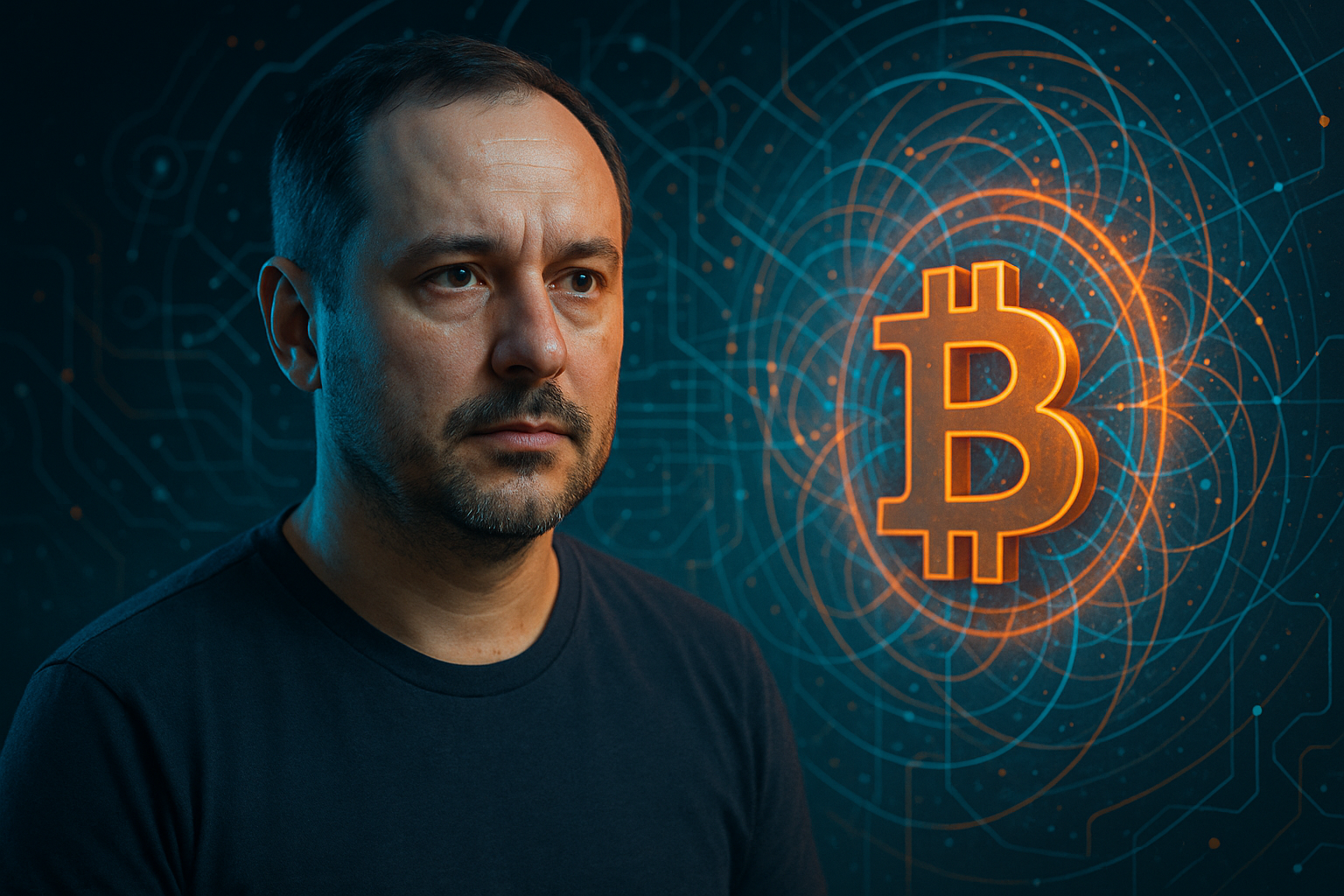
Anatoly Yakovenko urges urgent migration to quantum-resistant cryptography as debate splits the crypto community
Solana co-founder Anatoly Yakovenko has sounded an alarm for the Bitcoin ecosystem, warning that quantum computing breakthroughs could emerge as early as 2030, posing a direct threat to the network’s cryptographic security. Speaking at the All-In Summit 2025, he urged Bitcoin developers to accelerate preparations for a post-quantum era.
Quantum Risks for Bitcoin
Bitcoin’s security currently depends on the Elliptic Curve Digital Signature Algorithm (ECDSA), which safeguards wallets through private and public key pairs. While virtually unbreakable with today’s classical computers, quantum machines could eventually solve the elliptic curve discrete logarithm problem, allowing attackers to derive private keys from public ones.

Yakovenko underscored the urgency: “We should migrate Bitcoin to a quantum-resistant signature scheme. I would try to encourage folks to speed things up.” He added there is a “50/50 chance” of a major quantum leap within the next five years due to rapid advances in artificial intelligence and computing power.
Cybersecurity professionals share similar concerns. David Carvalho, founder of Naoris Protocol, recently warned that quantum machines could plausibly “rip through Bitcoin’s cryptography within less than five years.”
But others argue Yakovenko’s timeline may be overstated. Adam Back, CEO of Blockstream, said that quantum computers are not a “credible threat” today, suggesting the risk may still be two decades away. Samson Mow, founder of Jan3, added: “I think it is a real risk, but the timeline is probably still a decade away, and I would say everything else will fail before Bitcoin fails.”
Upgrading Bitcoin to post-quantum cryptography would likely require a hard fork, a divisive step in a community historically cautious about major protocol changes. Achieving consensus on such a shift could prove more difficult than the technical upgrade itself.
Post-quantum research is already advancing in both academia and blockchain projects. Whether Bitcoin chooses to act now—or waits until the threat becomes imminent—will determine how well it withstands the quantum era.
Disclaimer
This content is for informational purposes only and does not constitute financial, investment, or legal advice. Cryptocurrency trading involves risk and may result in financial loss.