
Buterin backs Coinbase’s Base as a true Layer-2

Ethereum co-founder Vitalik Buterin has come to the defense of Base, Coinbase’s Ethereum layer-2 network, following regulatory doubts over whether sequencers could be treated as exchanges.

Base is doing things the right way: an L2 on top of Ethereum that leverages centralized features to provide stronger UX, while remaining tied to Ethereum’s decentralized base layer for security,” Buterin said on Tuesday.

He stressed that Base does not have custody over user funds — it cannot “steal or stop withdrawals.” According to Buterin, true L2s are non-custodial extensions of Ethereum, not centralized servers disguised as blockchains.
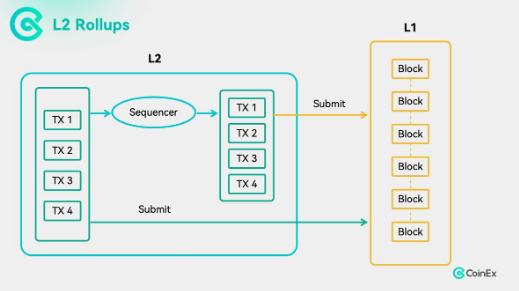
Basic functions of L2 sequencer. : CoinEx

SEC concerns spark centralization debate

The comments follow remarks from SEC Commissioner Hester Peirce on Sept. 7, who questioned whether some layer-2 networks could be classified as “exchanges” if their sequencers resemble centralized matching engines.

Peirce noted that if a single entity controls transaction sequencing in a way similar to order-book matching, regulatory scrutiny could increase. Still, she acknowledged that if the underlying assets aren’t securities, the SEC may not intervene.

This sparked debate across the crypto industry, with critics warning that labeling sequencers as exchanges would burden L2s with securities exchange registration and compliance obligations.

Coinbase legal team: L2s are infrastructure, not exchanges

Paul Grewal, Coinbase’s Chief Legal Officer, argued that calling sequencers “exchanges” misrepresents their function.

The SEC defines an exchange as a marketplace bringing buyers and sellers of securities together. By contrast, L2s are general-purpose blockchains that process payments, smart contract calls, and messages.

Grewal compared layer-2s to Amazon Web Services (AWS): AWS runs code for exchanges, but nobody calls AWS an exchange. Similarly, L2s host decentralized applications but don’t conduct trades themselves.

Sequencers aren’t matching engines

Jesse Pollak, co-founder of Base, added that sequencers simply order transactions before submitting them to Ethereum.

“Matching engines pair buy and sell orders at specific prices. Sequencers don’t do that — they only determine transaction order,” Pollak clarified.

He explained that users retain decentralization and censorship resistance by transacting directly on Ethereum if they choose. Sequencers, he said, function more like traffic controllers than trading venues.

If regulators classify sequencers as exchanges, L2 projects like Base, Optimism, and Arbitrum could face heavy compliance burdens. But Buterin’s defense reinforces the view that layer-2s are critical infrastructure scaling Ethereum, not financial intermediaries.

Disclaimer

This content is for informational purposes only and does not constitute financial, investment, or legal advice. Cryptocurrency trading involves risk and may result in financial loss.

logo

blockto.io

info@blockto.io

Blockto.io Copyright © 2025, All rights reserved

News
Rates
Buy
More
We use cookies to personalize content and ads, provide social media features, and analyze our traffic. In accordance with GDPR/AVG and EU cookie regulations, data is processed only with your consent. We may share information about your use of our website with our social media, advertising, and analytics partners, and you can manage or withdraw your consent at any time. View more
Cookies settings
Accept
Privacy & Cookie policy
Privacy & Cookies policy
Cookie name Active

Privacy Policy

At BitxJournal.com, we respect your privacy and are committed to protecting your personal data. This Privacy Policy explains how we collect, process, store, and protect personal information in accordance with the General Data Protection Regulation (GDPR) and AVG (EU privacy legislation).

1. Data Controller

BitxJournal.com acts as the data controller for all personal data processed through this website.

2. Personal Data We Collect

We may collect and process the following categories of data:

Personal Data

  • Name and email address (when you subscribe to newsletters or contact us)

Technical & Usage Data

  • IP address, browser type, operating system

  • Device information

  • Pages visited, referral sources, and interaction data

This data is collected via cookies, log files, and analytics technologies.

3. Legal Basis for Processing

We process personal data only when a lawful basis exists, including:

  • Consent – when you explicitly agree (e.g., cookies, newsletter sign-up)

  • Legitimate interest – to operate, secure, and improve our website

  • Legal obligation – when required by applicable laws

You may withdraw your consent at any time.

4. Purpose of Data Processing

Your data is processed for the following purposes:

  • Operating and maintaining the website

  • Improving content, usability, and performance

  • Sending newsletters or updates (only with consent)

  • Analyzing traffic and user behavior

  • Responding to inquiries or support requests

5. Cookies & Consent Management

We use cookies and similar technologies in compliance with EU Cookie Law.

  • Non-essential cookies are placed only after explicit user consent

  • Users may accept, reject, or manage cookie preferences at any time

  • Consent can be withdrawn without affecting prior lawful processing

Detailed cookie information is available in our Cookie Settings panel.

6. Third-Party Data Processing

We may share limited data with trusted third-party service providers, including:

  • Analytics providers (e.g., Google Analytics)

  • Advertising partners (for personalized or non-personalized ads)

These third parties act as data processors and process data only under contractual obligations compliant with GDPR/AVG.

7. International Data Transfers

Where data is transferred outside the European Economic Area (EEA), we ensure appropriate safeguards are in place, such as Standard Contractual Clauses (SCCs) or equivalent legal mechanisms.

8. Data Retention

We retain personal data only for as long as necessary to fulfill the purposes outlined in this policy or as required by law.

9. Data Security

We implement appropriate technical and organizational security measures to protect personal data against unauthorized access, alteration, disclosure, or destruction.

10. Your GDPR Rights

Under GDPR/AVG, you have the right to:

  • Access your personal data

  • Rectify inaccurate or incomplete data

  • Request data erasure (“right to be forgotten”)

  • Restrict or object to processing

  • Data portability

  • Withdraw consent at any time

  • Lodge a complaint with a supervisory authority

11. Changes to This Privacy Policy

We reserve the right to update this Privacy Policy at any time. Any changes will be posted on this page with a revised effective date.

12. Contact Information

For privacy-related inquiries or GDPR requests, contact:

📧 Email: support@blockto.io
🌐 Website: https://blockto.io

Save settings
Cookies settings