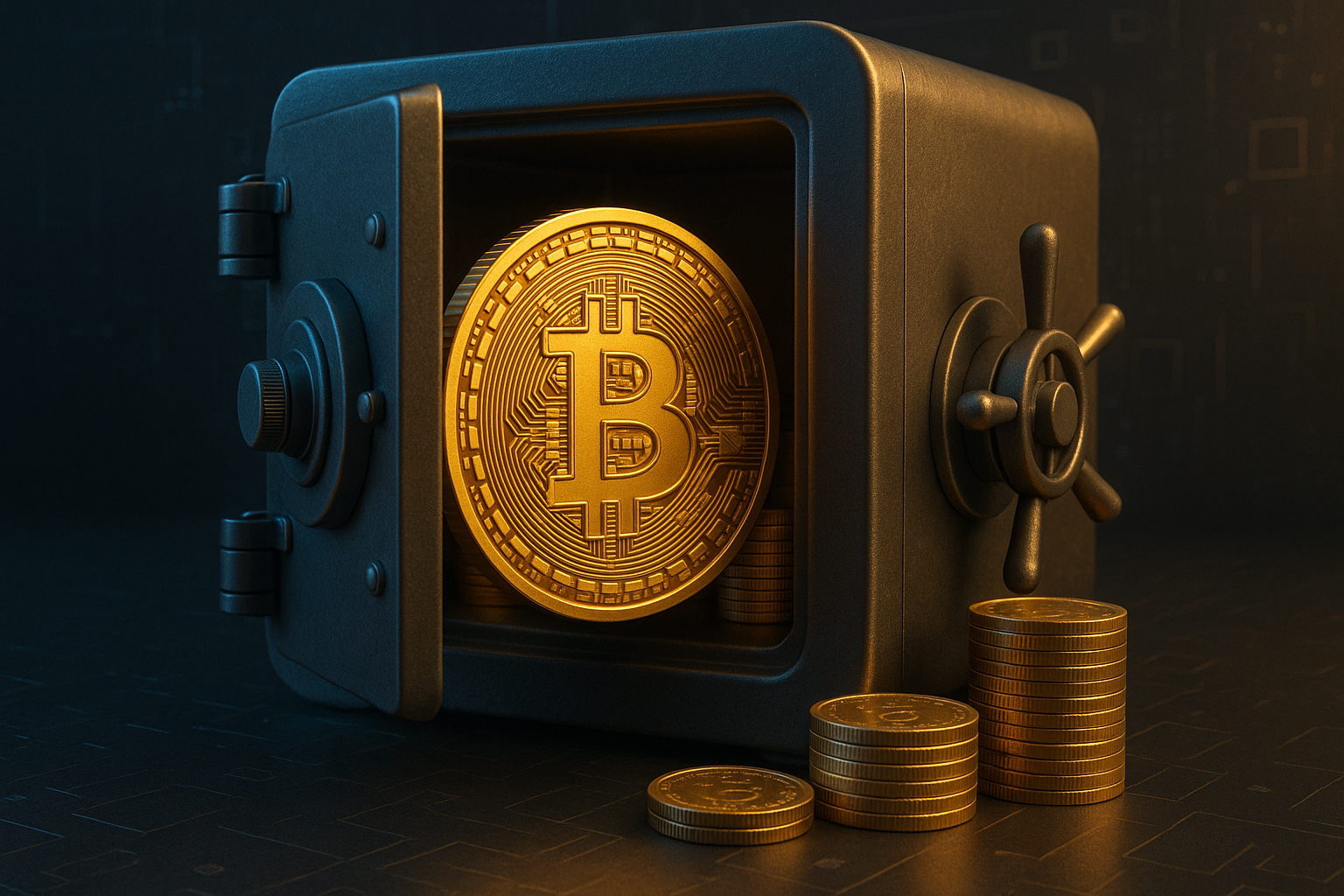
The rise of crypto treasury companies is reshaping how investors view publicly traded firms with significant digital asset holdings. Recently, several treasury-backed firms initiated share buyback programs, signaling confidence in their long-term strategies and igniting what analysts call a “credibility race.”
Share Buybacks Push Stock Prices Higher
Companies holding large crypto reserves are increasingly adopting traditional corporate finance tools to attract investors. For example:
- Thumzup (TZUP), a Trump Jr.-linked media firm holding Bitcoin and Dogecoin, announced an increase in its share repurchase program from $1 million to $10 million. The move boosted its stock by 7% during the session, followed by additional after-hours gains.
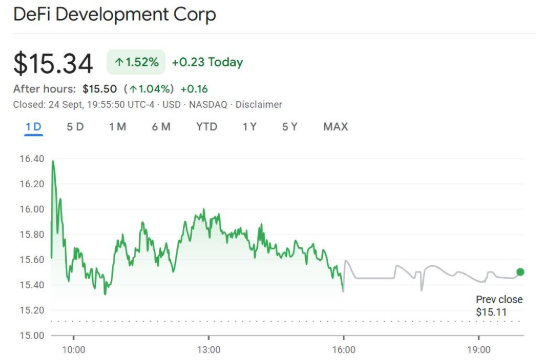
- DeFi Development Corp (DFDV) expanded its buyback from $1 million to $100 million, resulting in a sharp 8% stock surge before stabilizing at over 2% higher.
These actions align with predictions from Coinbase researchers that crypto-focused firms are moving into a “player vs. player” competition for investor attention.
From Bitcoin Holdings to Credibility
According to Ryan McMillin, Chief Investment Officer at Merkle Tree Capital, the shift indicates a new era where holding Bitcoin alone is no longer enough.
“Investors want professional capital allocation — buybacks, dividends, and clear treasury strategies. The fusion of corporate finance with the digital-asset narrative is powerful,” he explained.
Buybacks not only show confidence that a company’s stock is undervalued but also directly enhance shareholder value. This contrasts with simply accumulating more Bitcoin, which exposes firms to added volatility.
Winners and Losers in the Treasury Race
Not all buybacks guarantee success. TON Strategy Company (TONX), formerly Verb Technology, failed to impress investors when it announced a similar plan earlier this month. Instead, its stock fell 7.5%, showing that timing and execution matter as much as intent.
McMillin noted that buybacks can tighten the gap between a company’s stock valuation and its net Bitcoin holdings (mNAV). In essence, investors reward firms that demonstrate capital discipline alongside digital asset exposure.
Komodo Platform CTO Kadan Stadelmann emphasized that these buybacks also reflect a deeper battle between Bitcoin and traditional fiat reserves. By using cash to repurchase shares, companies create scarcity in their stock float, driving prices higher and reinforcing Bitcoin’s role in corporate finance.

He described this trend as part of “hyperbitcoinization” — a slow shift away from the U.S. dollar toward digital assets as reserve tools.
Corporate Bitcoin Treasuries Keep Growing
Currently, companies hold over 1.4 million Bitcoin (around 6.6% of the total supply), according to Bitbo. Michael Saylor’s Strategy leads the pack with nearly 639,000 BTC, continuing regular purchases despite market swings.
Analysts remain divided on whether the corporate Bitcoin treasury model is sustainable long-term. Still, the momentum shows no sign of slowing as more firms, potentially even Fortune 500 companies, consider allocating reserves to crypto.
The crypto treasury race is evolving into a test of credibility and discipline. Investors are no longer satisfied with simple Bitcoin exposure — they are rewarding firms that combine strategic buybacks with strong treasury management.
In this new era, the winners will be companies that not only hold Bitcoin but also prove they can manage their capital efficiently through both bull and bear markets.
Disclaimer
This content is for informational purposes only and does not constitute financial, investment, or legal advice. Cryptocurrency trading involves risk and may result in financial loss.