

Decentralized exchanges (DEXs) are experiencing a surge in adoption, particularly among retail traders and quantitative firms, while institutions continue to favor centralized exchanges (CEXs). This growing divide reflects a broader evolution in crypto market structure, according to Bitget Wallet’s chief marketing officer Jamie Elkaleh.
Retail and Quants Fuel the DEX Boom
Elkaleh explained that platforms like Hyperliquid have become hotspots for different trader segments:
- Retail users are drawn to airdrop incentives and points systems, which promise rewards for activity.
- Quants prefer DEXs for low fees, fast execution, and programmable strategies that allow algorithmic trading at scale.
This dual interest has created a strong user base, even as large institutions hesitate to shift away from centralized rails.
Despite the growth of DEXs, institutional desks remain anchored to CEXs. Their reasons are pragmatic:
- Access to fiat on- and off-ramps
- Compliance and regulatory services
- Prime brokerage offerings that support large-scale liquidity needs
Elkaleh noted that institutions prioritize execution quality and regulatory trust, areas where CEXs still maintain an advantage.
Hyperliquid, Aster and the Race for Onchain Dominance
Order-book DEXs like Hyperliquid, dYdX v4, and GMX are rapidly closing the gap with CEXs in terms of latency and depth. Hyperliquid, which operates on its own chain, provides sub-second finality with full onchain transparency, avoiding gas fees per trade.
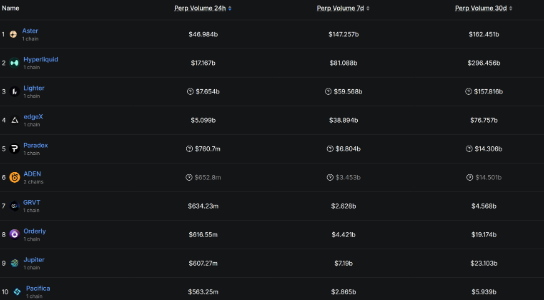
Still, competition is fierce. Aster, running on BNB Chain, recently overtook Hyperliquid’s daily perpetual trading volume. According to DefiLlama:
- Aster logged $47 billion in daily volume
- Hyperliquid managed $17 billion
BNB- and Solana-based perp DEXs collectively reached $60–70 billion daily turnover, underscoring the momentum in alternative ecosystems.
The Risks of DEX Expansion
Despite rapid adoption, DEXs face persistent challenges, including:
- Validator or sequencer centralization
- Oracle manipulation and upgrade key exploits
- Bridge vulnerabilities
- Liquidation engine reliability during volatility
These risks were highlighted recently when Aster reimbursed traders after a glitch in its Plasma (XPL) perp market caused prices to spike unexpectedly, leading to liquidations.
Looking ahead, Elkaleh sees CEXs and DEXs coexisting rather than displacing each other:
He suggested that hybrid models blending CEX efficiency with DEX transparency could define the next decade of digital asset trading.
Disclaimer
This content is for informational purposes only and does not constitute financial, investment, or legal advice. Cryptocurrency trading involves risk and may result in financial loss.