

Aligning With Crypto’s Nonstop Nature
CME Group, the world’s leading derivatives marketplace for institutional investors, has announced plans to introduce 24/7 trading for its cryptocurrency futures and options markets starting in early 2026, pending regulatory approval.
This major shift would bring CME’s operations in line with the always-on nature of crypto markets, which never close, unlike traditional financial exchanges.
Meeting Growing Institutional Demand
“Client demand for around-the-clock cryptocurrency trading has grown as market participants need to manage their risk every day of the week,” said Tim McCourt, CME’s Global Head of Equities, FX, and Alternative Products.
The move ensures that traders will be able to access Bitcoin (BTC) and Ethereum (ETH) derivatives through the CME Globex platform at any time, with the exception of a brief weekly maintenance window.
While trades executed on holidays and weekends will still settle on the next business day, the new model provides continuous access for risk management and strategy execution.
A Competitive Edge Over Offshore Platforms
Currently, CME crypto derivatives pause trading outside of standard business hours and on weekends. This can create gaps in exposure management, especially during volatile periods in the digital asset markets.
By offering regulated 24/7 trading, CME could attract institutions that want the credibility and security of a U.S.-regulated venue while still enjoying the flexibility of nonstop trading — something already available on offshore exchanges.
CME’s Market Position
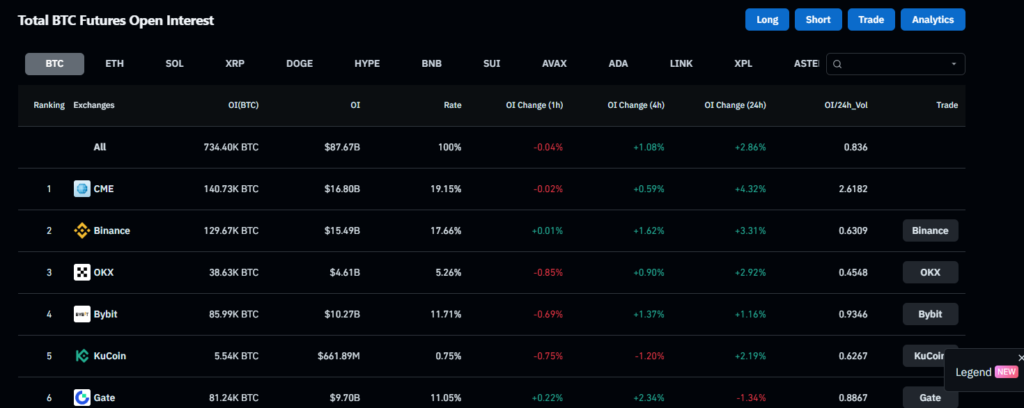
CME Group is already the largest regulated exchange for crypto derivatives, with data from CoinGlass showing:
- $16.8 billion in open interest for Bitcoin futures.
- $9.8 billion in open interest for Ethereum futures.
This dominance makes CME a key institutional gateway into crypto markets, and the shift to 24/7 access could further solidify its leadership position.
What This Means for Investors
For professional traders and institutions, the move offers several advantages:
- Risk hedging at any time, including weekends.
- Greater liquidity alignment with spot crypto markets.
- Reduced reliance on offshore, less-regulated platforms.
If regulators approve the proposal, CME’s decision could mark a turning point in the integration of traditional finance and crypto, creating a framework where institutional trading aligns more closely with the decentralized ethos of digital assets.
Disclaimer
This content is for informational purposes only and does not constitute financial, investment, or legal advice. Cryptocurrency trading involves risk and may result in financial loss.