
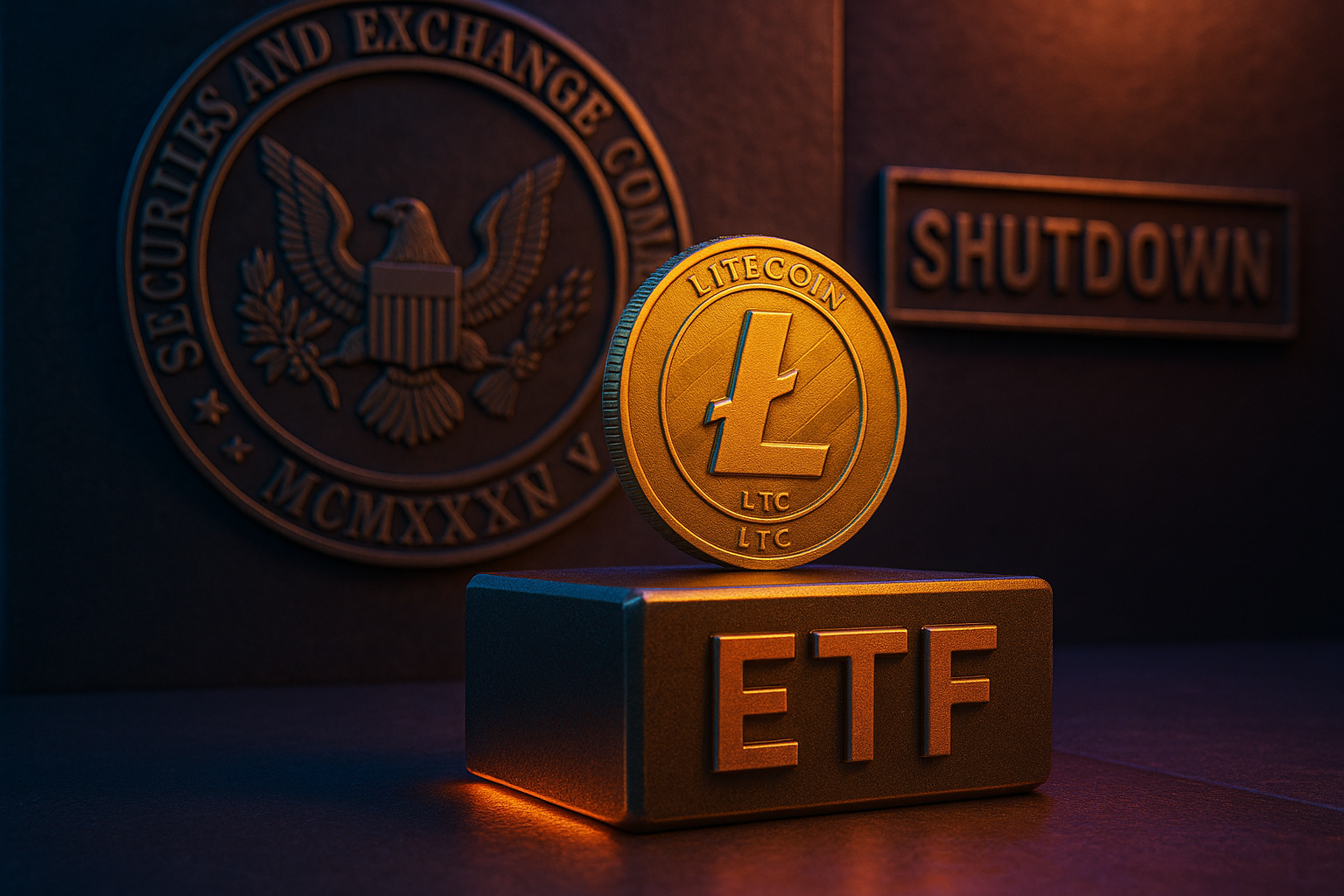
The United States Securities and Exchange Commission (SEC) has remained silent on its decision regarding the Canary Capital spot Litecoin ETF, leaving the proposal in limbo amid a federal government shutdown and confusion over the regulator’s new listing standards.
Missed Deadline Raises Questions
Thursday marked the original decision deadline for the Canary Litecoin ETF. However, the SEC took no action, creating uncertainty among investors and the wider crypto industry.
This silence comes after the SEC asked ETF applicants to withdraw their 19b-4 filings, shifting the focus entirely to the S-1 registration statements for approval. According to Bloomberg ETF analyst James Seyffart and FOX Business reporter Eleanor Terrett, this change means that old ETF deadlines may no longer apply, adding to the confusion.
Impact of Government Shutdown
The timing is complicated by the ongoing US government shutdown, which has left the SEC operating with only a “very limited” staff.
In August, the SEC had released an Operation Plan detailing its approach during a shutdown, stating that it would not review or approve:
- New financial products
- Registration applications
- Rule changes for self-regulatory organizations
This raises the possibility that the delay in the Litecoin ETF decision is tied directly to reduced staff availability.
Canary’s 19b-4 Withdrawal Adds Another Layer
Adding further complexity, Canary Capital withdrew its 19b-4 filing on Sept. 25 at the SEC’s request. Without that filing, it remains unclear how deadlines will be enforced for ETF proposals that still have active 19b-4s.
The lack of clarity has created uncertainty for other firms waiting on ETF approvals, especially for altcoins such as Solana (SOL), XRP, Avalanche (AVAX), Cardano (ADA), Chainlink (LINK), and Dogecoin (DOGE).
Despite these regulatory hurdles, the US spot crypto ETF market continues to grow rapidly. The spot Bitcoin ETF has attracted $61.3 billion in inflows, while the Ether ETF has secured $13.4 billion since their launches.
If approved, Litecoin and other altcoin ETFs could add to the $75 billion ETF market, providing investors with more diversified exposure to digital assets.
While the delay has frustrated many, some analysts remain optimistic. Bloomberg’s Eric Balchunas recently suggested that the SEC’s new generic listing standards have raised the odds of approval for some spot crypto ETFs to 100%.
Under Rule 6c-11, these standards are expected to:
- Simplify the listing process
- Reduce the approval timeline from 240 days
- Lower barriers for investors seeking regulated access to digital assets
SEC Chair Paul Atkins emphasized that the new framework will expand investor choice and make it easier for asset managers to bring digital asset ETFs to market.
The SEC’s silence on the Canary Litecoin ETF reflects the intersection of two major factors: the US government shutdown and the transition to new ETF listing standards.
While this has left the market uncertain in the short term, the long-term outlook remains positive, with analysts projecting a more streamlined approval process that could soon expand the ETF market to include Litecoin and other major altcoins.
Disclaimer
This content is for informational purposes only and does not constitute financial, investment, or legal advice. Cryptocurrency trading involves risk and may result in financial loss.