
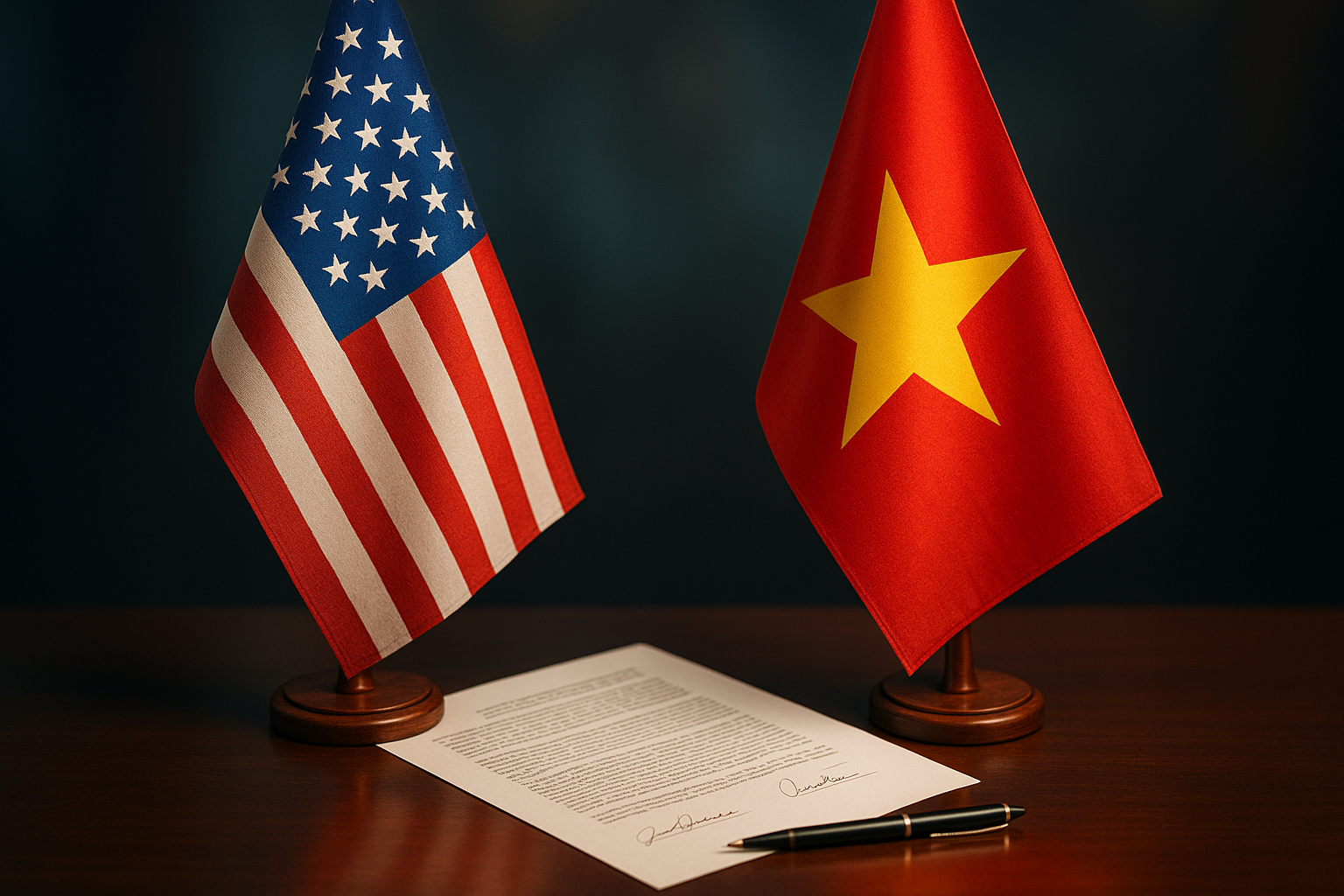
Historic Bilateral Pact Aims to Expand Market Access and Strengthen Economic Ties
In a major step toward deepening economic cooperation, the United States and Viet Nam have jointly announced a Framework for an Agreement on Reciprocal, Fair, and Balanced Trade, designed to enhance bilateral market access and promote equitable trade relations between the two nations.
The framework builds upon the U.S.–Viet Nam Bilateral Trade Agreement of 2000, which has served as a foundation for two decades of growing commercial ties. The new pact seeks to modernize this relationship by providing unprecedented access to each other’s markets, particularly in the industrial and agricultural sectors.
“This agreement marks a new chapter in U.S.–Viet Nam trade relations, ensuring fairness, balance, and mutual benefit for both nations’ exporters,” said a senior U.S. trade official familiar with the negotiations.
Key Provisions and Market Access Commitments
Under the proposed terms, Viet Nam will grant preferential access to substantially all U.S. industrial and agricultural exports, while the United States will maintain reciprocal tariffs at 20 percent for Vietnamese-origin goods as set forth in Executive Order 14257. Additionally, certain Vietnamese products—identified under Annex III of Executive Order 14346—will be eligible for zero-percent tariff treatment.
Both sides have pledged to work collaboratively to eliminate non-tariff barriers. Viet Nam has agreed to recognize U.S. motor vehicle safety and emissions standards, streamline pharmaceutical approvals, and facilitate import licenses for U.S. medical devices. The framework also includes provisions to strengthen intellectual property protection, labor standards, and environmental cooperation.
“These measures reflect a mutual commitment to transparent, rules-based trade that benefits both economies,” commented an international trade analyst in Hanoi.
Expanding Cooperation Beyond Trade
The agreement also emphasizes digital trade, services, and investment, alongside enhanced collaboration on supply chain resilience, export controls, and customs facilitation. Both nations have committed to addressing duty evasion and ensuring the fair operation of state-owned enterprises.
In parallel, major commercial deals highlight the growing partnership: Vietnam Airlines’ purchase of 50 Boeing aircraft valued at over $8 billion and 20 memorandums of understanding worth $2.9 billion between Vietnamese and U.S. companies for agricultural imports.
As both governments move to finalize and sign the agreement in the coming weeks, the framework signals a strategic shift toward balanced, transparent, and mutually beneficial trade, reinforcing the growing economic partnership between Washington and Hanoi.
Disclaimer
This content is for informational purposes only and does not constitute financial, investment, or legal advice. Cryptocurrency trading involves risk and may result in financial loss.