
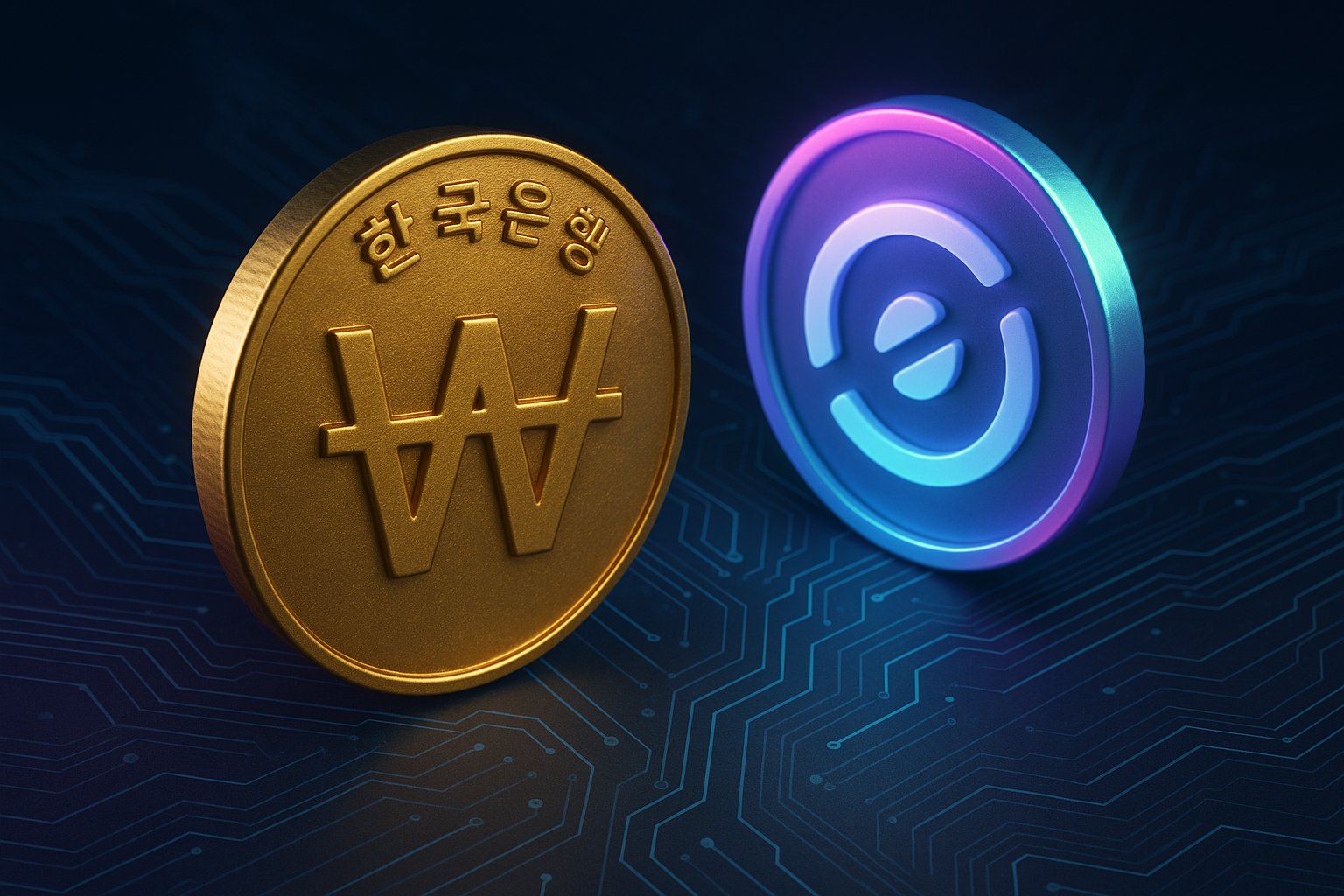
Busan-based BDACS partners with Circle to bring Korean won to the blockchain
Circle’s new blockchain platform, Arc, has quickly gained traction as South Korean crypto custodian BDACS becomes the first to launch a won-backed stablecoin, dubbed “KRW1.” The move positions South Korea as the latest country to experiment with national fiat tokens built on a global stablecoin network.
BDACS signed a memorandum of understanding (MOU) with Circle to deploy KRW1 on Arc, calling it an “organic cooperative framework” designed to link Korean innovation with global blockchain finance.
“This collaboration is a meaningful step forward for Korea’s innovation to reach the global stage,”
said Ryu Hong-yeol, CEO of BDACS.
“By deploying KRW1 on Circle’s Arc, we are opening a gateway for Korean companies to participate in the global stablecoin network.”
The company had registered the KRW1 trademark in December 2023, laying the groundwork for today’s rollout, according to a report from Yonhap News Agency.

Arc Testnet Draws Global Financial Giants
The development follows the launch of Arc’s public testnet earlier this week. Circle described Arc as an “Economic Operating System for the internet,” designed to connect global finance directly onchain.
Arc’s early adoption has been remarkable — with over 100 financial institutions and fintech firms participating, including BlackRock, Goldman Sachs, Visa, Mastercard, and State Street.
The network offers sub-second transaction finality, predictable USD-based fees, and optional privacy layers for enterprises. It also supports USDC and other fiat-pegged assets, enabling seamless interoperability across global markets.
Stablecoin issuers from Japan, Brazil, Mexico, and the Philippines are already testing national tokens on Arc, and Korea’s KRW1 has now joined that list.
Regulatory Debate Over Bank-Led Stablecoins
Not everyone supports the Bank of Korea’s (BOK) approach to limiting stablecoin issuance to banks.
Sangmin Seo, chair of the Kaia DLT Foundation, criticized the BOK’s proposal as “illogical,” arguing that the country should not restrict participation to banks alone.
The BOK maintains that bank-led issuance reduces risks related to capital controls, foreign exchange, and AML compliance. It also proposed creating a joint policy body to oversee issuance limits and issuer licensing.
Seo countered that a broader, rule-based framework for both banking and non-banking entities would be more effective for regulatory innovation and competitive growth in South Korea’s emerging stablecoin economy.
With KRW1 joining Circle’s Arc ecosystem, South Korea becomes a major player in bridging traditional finance and blockchain-based settlement networks — signaling a pivotal step toward real-world tokenization of national currencies.
Disclaimer
This content is for informational purposes only and does not constitute financial, investment, or legal advice. Cryptocurrency trading involves risk and may result in financial loss.