
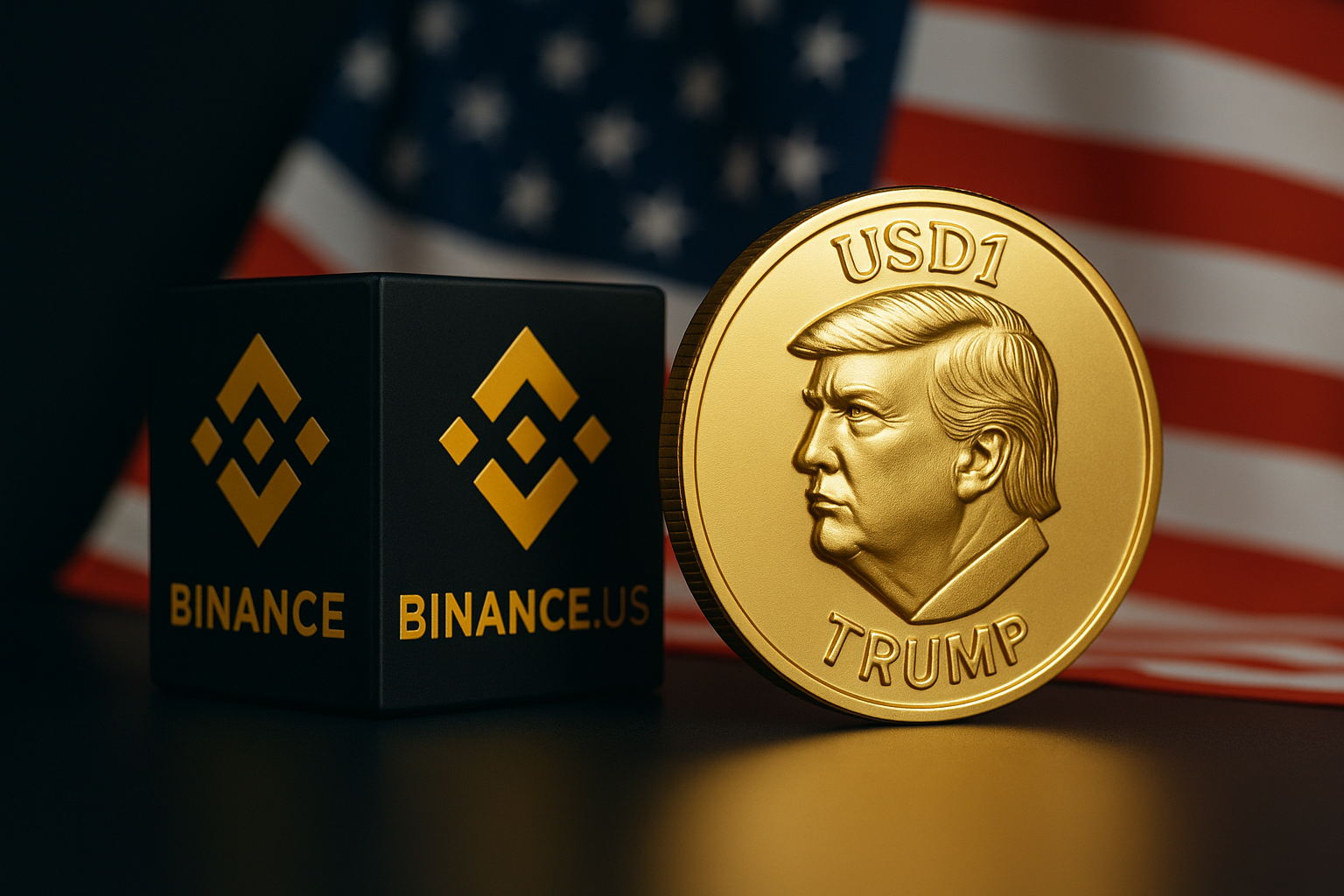
Exchange denies Senator Murphy’s claim that the USD1 listing was “payback” for Trump’s recent pardon of Binance founder Changpeng Zhao.
Binance.US Pushes Back Against Political Allegations
Binance.US has firmly denied allegations that its decision to list the Trump-affiliated USD1 stablecoin was politically motivated, following criticism from Senator Chris Murphy (D-CT).
Murphy alleged that the listing was a “form of payback” after President Donald Trump pardoned Binance founder Changpeng Zhao (CZ) last week. The senator accused Trump of showing favoritism toward crypto figures involved in criminal activity, citing Binance’s past legal troubles.
In a post on X, Murphy wrote:
Binance.US Calls Listing ‘Routine Business’
Responding on Wednesday, Binance.US stated that the USD1 and WLFI tokens were already approved by its listing committee in advance, as part of its ordinary course of business.
The exchange also noted that USD1 and WLFI are available on more than 20 U.S. exchanges, including Coinbase, Robinhood, and Kraken, suggesting the listing was consistent with industry-wide practices, not politically driven.
About USD1 and World Liberty Financial
USD1 is a U.S. dollar–pegged stablecoin issued by World Liberty Financial (WLFI), an entity linked to the Trump family. The token currently ranks as the sixth-largest stablecoin globally, boasting a market capitalization of $2.97 billion.
Critics have questioned Trump’s involvement in World Liberty Financial, warning of potential conflicts of interest as the President continues to promote the growth of U.S.-based stablecoins.
Zhao’s Pardon Sparks Political Controversy
Trump’s pardon of Changpeng Zhao, who pleaded guilty in 2023 to failing to maintain adequate anti-money laundering controls, has drawn heavy criticism from Democrats.
Representative Maxine Waters (D-CA) accused Trump of rewarding “crypto criminals who have helped line his pockets,” claiming Zhao had lobbied Trump and his family while channeling billions into World Liberty Financial.
Zhao, who served four months in prison and paid $50 million in fines, expressed gratitude to Trump after his release, pledging to “help make America the Capital of Crypto and advance Web3 worldwide.”
The controversy underscores the increasingly politicized intersection of crypto and U.S. policy, especially as Trump-affiliated digital assets like USD1 and TRUMP memecoin continue to attract attention from regulators, investors, and lawmakers alike.
As the crypto industry becomes a key election issue, exchanges like Binance.US are working to distance themselves from claims of political favoritism, while maintaining their role in a rapidly expanding digital asset market.
Disclaimer
This content is for informational purposes only and does not constitute financial, investment, or legal advice. Cryptocurrency trading involves risk and may result in financial loss.