
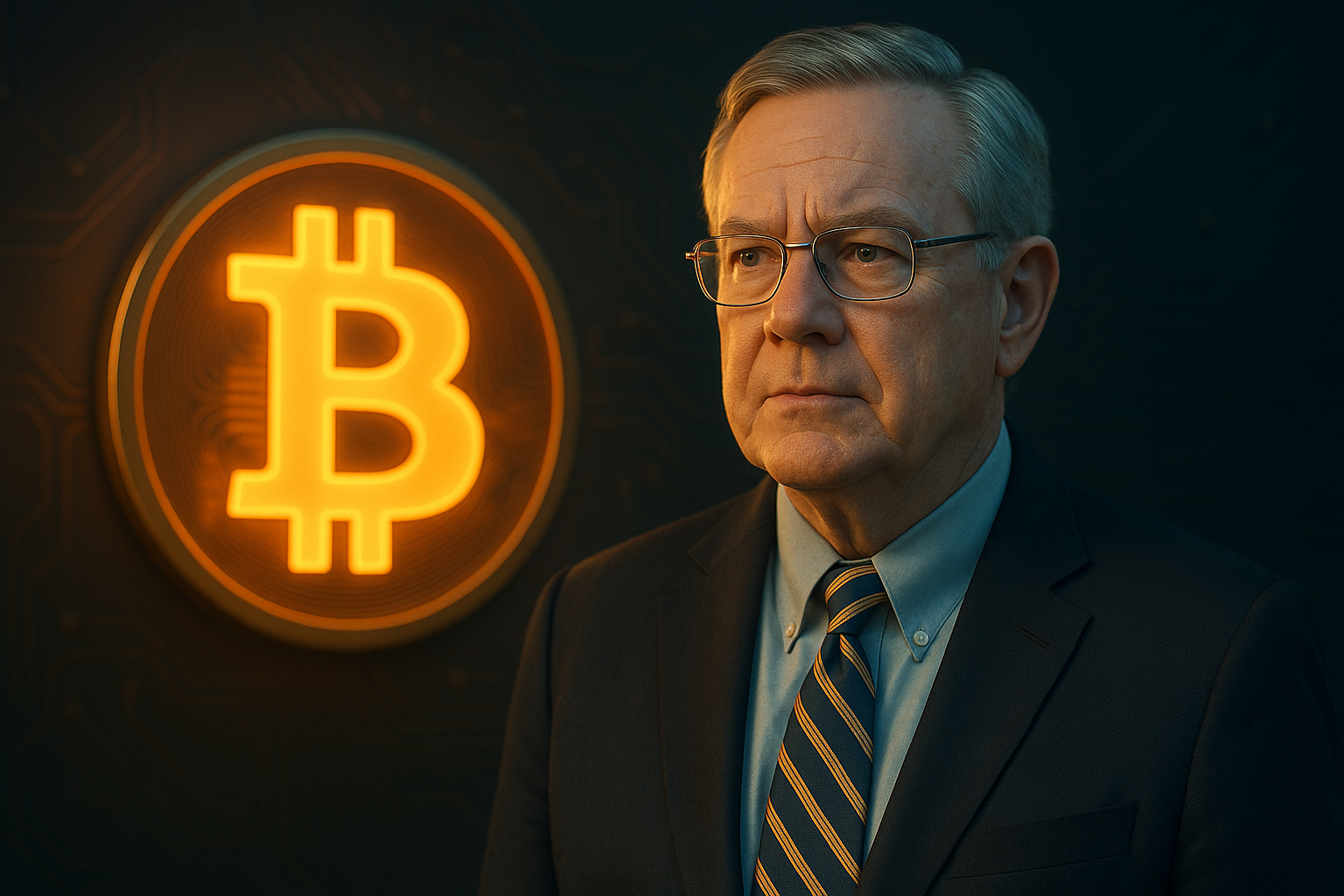
Scott Bessent’s remarks highlight Bitcoin’s resilience while renewing discussion on Treasury’s evolving stance toward digital assets.
‘Bitcoin Never Shuts Down’: U.S. Treasury Secretary Marks White Paper Anniversary, Sparks Political Debate
Scott Bessent’s remarks highlight Bitcoin’s resilience while renewing discussion on Treasury’s evolving stance toward digital assets.
U.S. Treasury Secretary Scott Bessent marked the 17th anniversary of the Bitcoin white paper with a message that blended policy insight and political critique. In an Oct. 31 post on X, Bessent praised Bitcoin’s “never shuts down” design, adding that Washington could “learn something from that” — a pointed reference to the ongoing federal government shutdown.
His statement comes as roughly 900,000 U.S. federal workers remain furloughed, with key agencies such as the NIH and CDC facing operational slowdowns. Against that backdrop, Bessent’s words resonated both as a tribute to Bitcoin’s resilience and as a critique of congressional inefficiency.
Bitcoin’s Legacy and Treasury’s Crypto Messaging
The Bitcoin white paper, released by Satoshi Nakamoto on Oct. 31, 2008, laid out the framework for a peer-to-peer electronic cash system that has since operated continuously since January 2009. For supporters, this anniversary symbolizes the success of a decentralized network that never halts — even when traditional institutions do.
Bessent’s comments align with his broader crypto-forward approach since assuming office. In July 2025, following the passage of the GENIUS Act, he described stablecoins as “a revolution in digital finance,” calling them critical to reinforcing the U.S. dollar’s reserve-currency dominance. Later, in August, he suggested that forfeited Bitcoin could seed a Strategic Bitcoin Reserve, signaling Treasury’s interest in building crypto holdings without fresh appropriations.
Mixed Reactions From the Crypto Community
Bessent’s post reignited familiar divisions within the crypto ecosystem. Developer Luke Dashjr criticized the statement, claiming Bitcoin is “weaker than ever,” while researcher Eric Wall mocked the negativity, joking that “Bitcoin died after the core v30 release.”
Meanwhile, market figures like Simon Dixon and Gabor Gurbacs urged Treasury to act on its rhetoric, with Dixon framing Bitcoin as protection from political debasement and Gurbacs advocating to put Bitcoin on the balance sheet.
Policy Signal Beneath the Politics
While Bessent’s message may appear symbolic, analysts interpret it as a strategic reaffirmation of Treasury’s digital asset agenda. By contrasting Bitcoin’s uninterrupted uptime with a gridlocked Congress, Bessent positioned crypto as a technological model for resilience and efficiency.
In essence, the Treasury chief’s words not only commemorated Bitcoin’s unbroken 17-year run — they underscored Washington’s growing recognition that digital assets are no longer a fringe innovation but a structural part of the global financial system.
Treasury Secretary Praises Bitcoin’s Uptime on Anniversary Post
U.S. Treasury Secretary Scott Bessent marked the 17th anniversary of the Bitcoin white paper with a message that blended policy insight and political critique. In an Oct. 31 post on X, Bessent praised Bitcoin’s “never shuts down” design, adding that Washington could “learn something from that” — a pointed reference to the ongoing federal government shutdown.
His statement comes as roughly 900,000 U.S. federal workers remain furloughed, with key agencies such as the NIH and CDC facing operational slowdowns. Against that backdrop, Bessent’s words resonated both as a tribute to Bitcoin’s resilience and as a critique of congressional inefficiency.
Bitcoin’s Legacy and Treasury’s Crypto Messaging
The Bitcoin white paper, released by Satoshi Nakamoto on Oct. 31, 2008, laid out the framework for a peer-to-peer electronic cash system that has since operated continuously since January 2009. For supporters, this anniversary symbolizes the success of a decentralized network that never halts — even when traditional institutions do.
Bessent’s comments align with his broader crypto-forward approach since assuming office. In July 2025, following the passage of the GENIUS Act, he described stablecoins as “a revolution in digital finance,” calling them critical to reinforcing the U.S. dollar’s reserve-currency dominance. Later, in August, he suggested that forfeited Bitcoin could seed a Strategic Bitcoin Reserve, signaling Treasury’s interest in building crypto holdings without fresh appropriations.
Mixed Reactions From the Crypto Community
Bessent’s post reignited familiar divisions within the crypto ecosystem. Developer Luke Dashjr criticized the statement, claiming Bitcoin is “weaker than ever,” while researcher Eric Wall mocked the negativity, joking that “Bitcoin died after the core v30 release.”
Meanwhile, market figures like Simon Dixon and Gabor Gurbacs urged Treasury to act on its rhetoric, with Dixon framing Bitcoin as protection from political debasement and Gurbacs advocating to put Bitcoin on the balance sheet.
While Bessent’s message may appear symbolic, analysts interpret it as a strategic reaffirmation of Treasury’s digital asset agenda. By contrasting Bitcoin’s uninterrupted uptime with a gridlocked Congress, Bessent positioned crypto as a technological model for resilience and efficiency.
In essence, the Treasury chief’s words not only commemorated Bitcoin’s unbroken 17-year run — they underscored Washington’s growing recognition that digital assets are no longer a fringe innovation but a structural part of the global financial system.
Disclaimer
This content is for informational purposes only and does not constitute financial, investment, or legal advice. Cryptocurrency trading involves risk and may result in financial loss.