
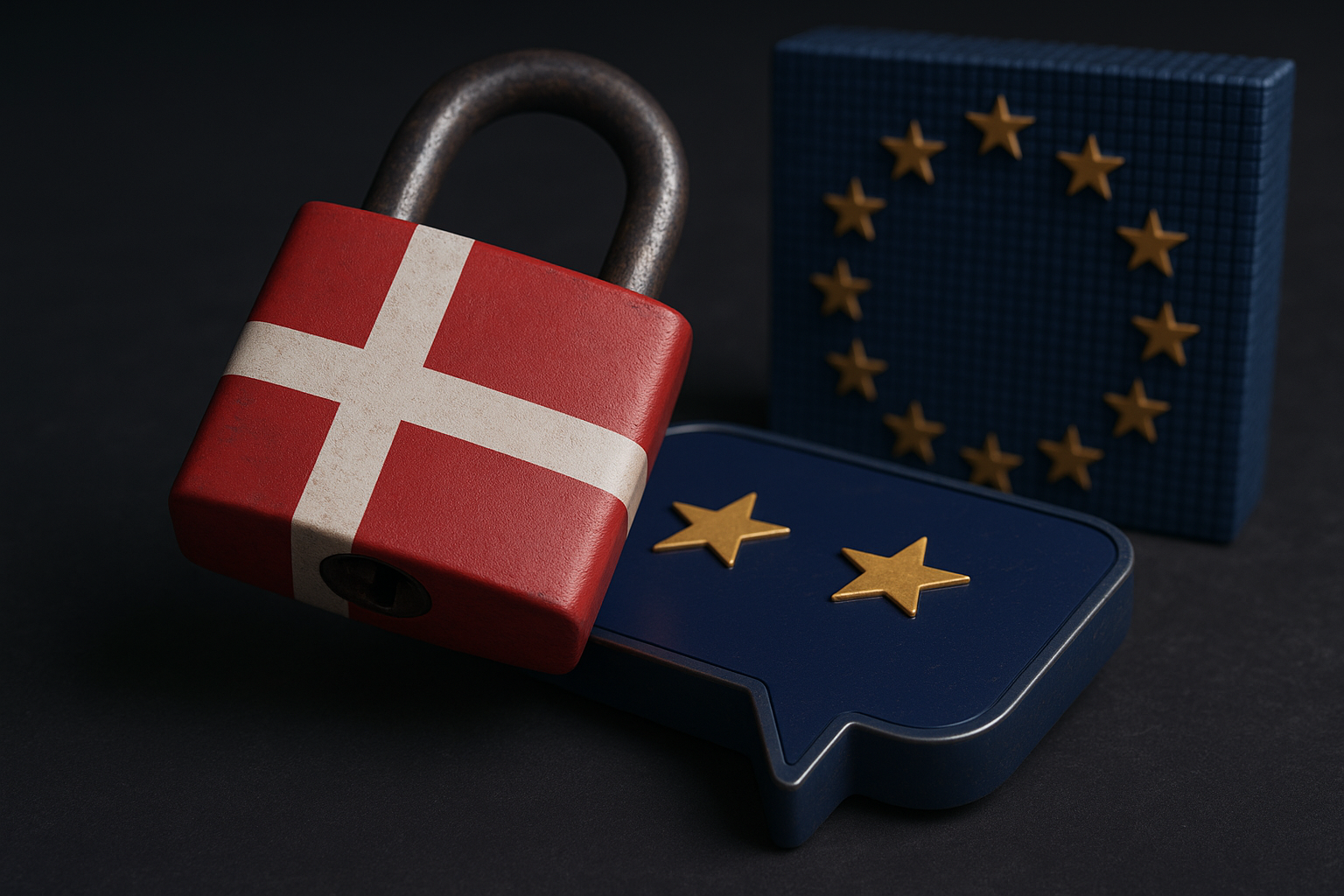
The Danish government withdraws its support for mandatory message scanning, marking a major victory for digital privacy advocates across Europe.
Denmark has officially withdrawn its proposal to mandate the scanning of private messages on encrypted platforms such as WhatsApp, Telegram, and Signal, following intense public and political backlash. The controversial legislation, known as Chat Control, aimed to combat the spread of illegal content online but was criticized for threatening user privacy and encryption standards across the European Union.
End of Mandatory Message Scanning
As the holder of the European Council presidency, Denmark was expected to lead discussions on the proposal this year. However, Justice Minister Peter Hummelgaard confirmed that the plan would no longer be included in the EU’s upcoming compromise draft.
“The proposal will not be part of the EU presidency’s new compromise proposal, and it will continue to be voluntary,” Hummelgaard said, according to the Danish daily Politiken.
This means tech companies can choose whether or not to implement message screening, rather than being legally compelled. The decision effectively halts the push for mandatory pre-encryption scanning — a measure that privacy advocates called “mass surveillance by design.”
Background and Policy Implications
First introduced in May 2022, the Chat Control proposal sought to detect child exploitation and illicit content through automated scanning tools. A revived version resurfaced in 2025 but met with renewed resistance over concerns that it would weaken end-to-end encryption and expose private communications to government access.
The current voluntary framework for content monitoring will expire in April 2026, leaving EU lawmakers under pressure to develop an alternative solution before the deadline. Hummelgaard warned that failure to reach consensus could leave the bloc “without legal tools to combat bad actors using encrypted platforms.”
Privacy Advocates Celebrate a Win
The decision was widely praised by digital rights groups and tech companies.
X’s Global Government Affairs team described Denmark’s withdrawal as a “major defeat for mass surveillance advocates.”
Patrick Hansen, director of EU strategy at Circle, called it a “major win for digital freedoms in the EU.” The Electronic Frontier Foundation (EFF) added that public pressure likely forced the EU Council to back down, calling the reversal “a victory for privacy and human rights.”
Security researcher Thorin Klosowski urged EU lawmakers to abandon surveillance-based proposals entirely, stating that “as long as lawmakers misunderstand encryption, there is no way forward with message-scanning laws.”
Disclaimer
This content is for informational purposes only and does not constitute financial, investment, or legal advice. Cryptocurrency trading involves risk and may result in financial loss.