
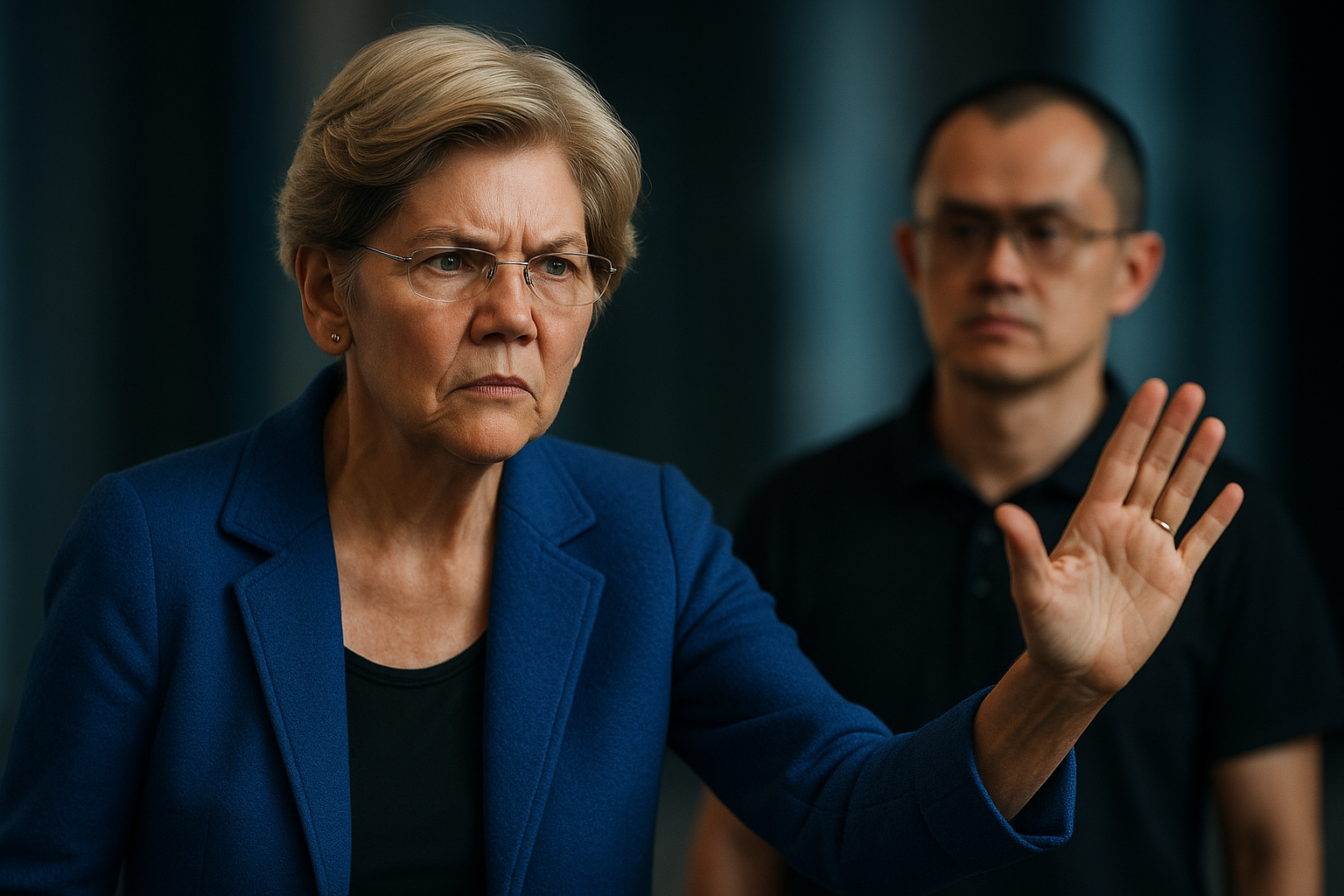
Senator Elizabeth Warren’s legal team says Binance founder Changpeng Zhao’s defamation claim has no basis, arguing her post was factual and based on public records.
A legal standoff has emerged between U.S. Senator Elizabeth Warren and Binance founder Changpeng “CZ” Zhao, following Warren’s public criticism of Zhao’s presidential pardon by Donald Trump. After Zhao’s lawyer threatened legal action over alleged defamation, Warren’s attorney firmly dismissed the claim as “without merit.”
Warren’s Post and Zhao’s Response
The dispute began after Warren posted on X (formerly Twitter), criticizing Trump’s pardon of Zhao and referencing “corruption” tied to the decision. In her post, she wrote that Zhao had “pleaded guilty to a criminal money laundering charge and was sentenced to prison.”
Zhao responded days later, denying the claim and stating that “there were NO money laundering charges.” His lawyer, Teresa Goody Guillén, then sent a letter demanding that Warren retract her statements, arguing they “impugn his reputation” and were “false and defamatory.”
Legal Arguments and Context
According to court records, Zhao pleaded guilty in November 2023 to failing to maintain an effective Anti-Money Laundering program under the Bank Secrecy Act. He was later sentenced to four months in prison by a federal court in Seattle in April 2024.
Warren’s attorney, Ben Stafford, responded that her post was accurate and “based on widely reported facts.” He added that “any threatened defamation claim would be without merit,” emphasizing that public figures like Zhao must prove actual malice to succeed in such cases.
“Her X post simply references the fact that Mr. Zhao pled guilty to a violation of U.S. anti-money laundering law,” Stafford wrote, clarifying that Warren “did not state he pled guilty to any other money laundering charge.”
Tensions Over Trump’s Crypto Pardons
Warren’s comments also linked Zhao to Trump’s stablecoin project, World Liberty Financial, which has faced scrutiny over potential conflicts of interest. Reports indicate that Binance assisted in creating the stablecoin USD1, later used in a $2 billion deal involving the Emirati investment firm MGX.
Political observers note that Zhao’s pardon followed months of lobbying by Binance and its legal team to gain favor within Trump’s circle.
As the controversy unfolds, legal experts suggest the case underscores growing tensions between crypto industry leaders and U.S. lawmakers over accountability and influence — and raises new questions about the ethics of presidential pardons tied to financial interests.
Disclaimer
This content is for informational purposes only and does not constitute financial, investment, or legal advice. Cryptocurrency trading involves risk and may result in financial loss.