
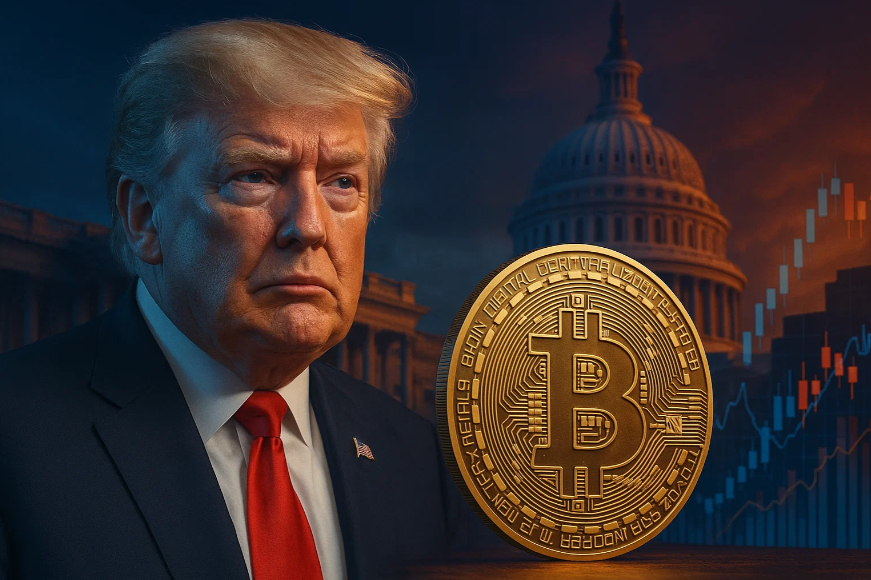
A year into Donald Trump’s return to the White House, the crypto industry has seen major policy wins — but rising political turbulence and economic uncertainty threaten to slow momentum.
One year after Donald Trump’s reelection, the U.S. crypto industry finds itself in a period of both unprecedented progress and political instability. Backed by a pro-crypto administration, digital asset advocates have achieved key policy victories, including landmark legislation and favorable regulatory appointments. Yet, a record-breaking government shutdown, falling approval ratings, and concerns over conflicts of interest have cast shadows over what was meant to be a breakthrough year for blockchain innovation.
Policy Breakthroughs Under Trump’s Pro-Crypto Agenda
Since returning to office, Trump has positioned the U.S. as a global leader in digital asset policy. His administration issued executive orders promoting blockchain integration across federal agencies, emphasizing transparency and technological modernization.
A major milestone came with the passage of the Guiding and Establishing National Innovation for U.S. Stablecoins (GENIUS) Act, the first comprehensive stablecoin framework in the nation’s history. Treasury officials and banking regulators are now drafting implementation guidelines that could shape stablecoin oversight and market innovation for years to come.
“This year has delivered what many thought impossible — a complete reversal of federal crypto policy, transforming America into a leader of the digital economy,” one industry advocate said, pointing to the shift from regulation-by-enforcement to regulation-by-policy.
Key Appointments Bolster Industry Confidence
Trump’s regulatory appointments have further cemented crypto’s foothold in Washington. Paul Atkins, a long-time blockchain supporter, now leads the Securities and Exchange Commission (SEC), promising clear rules for token classification and market operations. Similarly, Jonathan Gould, a former crypto attorney, was appointed to head the Office of the Comptroller of the Currency (OCC) — moves that signal a continued focus on regulatory clarity and innovation.
Political Chaos Threatens Progress
Despite policy wins, Trump’s volatile governance has slowed the pace of further legislative progress. The ongoing federal shutdown — the longest in U.S. history — has frozen crypto-related legislative activity, including the anticipated Digital Asset Market Clarity Act. Lawmakers and regulators tasked with implementing crypto rules have been furloughed, delaying crucial timelines.
Meanwhile, critics question Trump’s personal involvement in crypto-linked ventures, citing potential conflicts of interest after reports surfaced of private meetings with major holders of his own memecoin.
While crypto firms are reshoring operations and expanding under a friendlier policy environment, political instability and declining public approval could threaten bipartisan cooperation. With midterm elections approaching, analysts warn that a shift in congressional control could reshape or stall Trump’s crypto agenda.
Still, industry leaders remain optimistic. “We’ve seen real results — more jobs, more innovation, and a clear regulatory direction,” said one blockchain executive. The U.S. crypto sector, though navigating uncertainty, appears stronger and more legitimized than at any other point in its history.
Disclaimer
This content is for informational purposes only and does not constitute financial, investment, or legal advice. Cryptocurrency trading involves risk and may result in financial loss.