
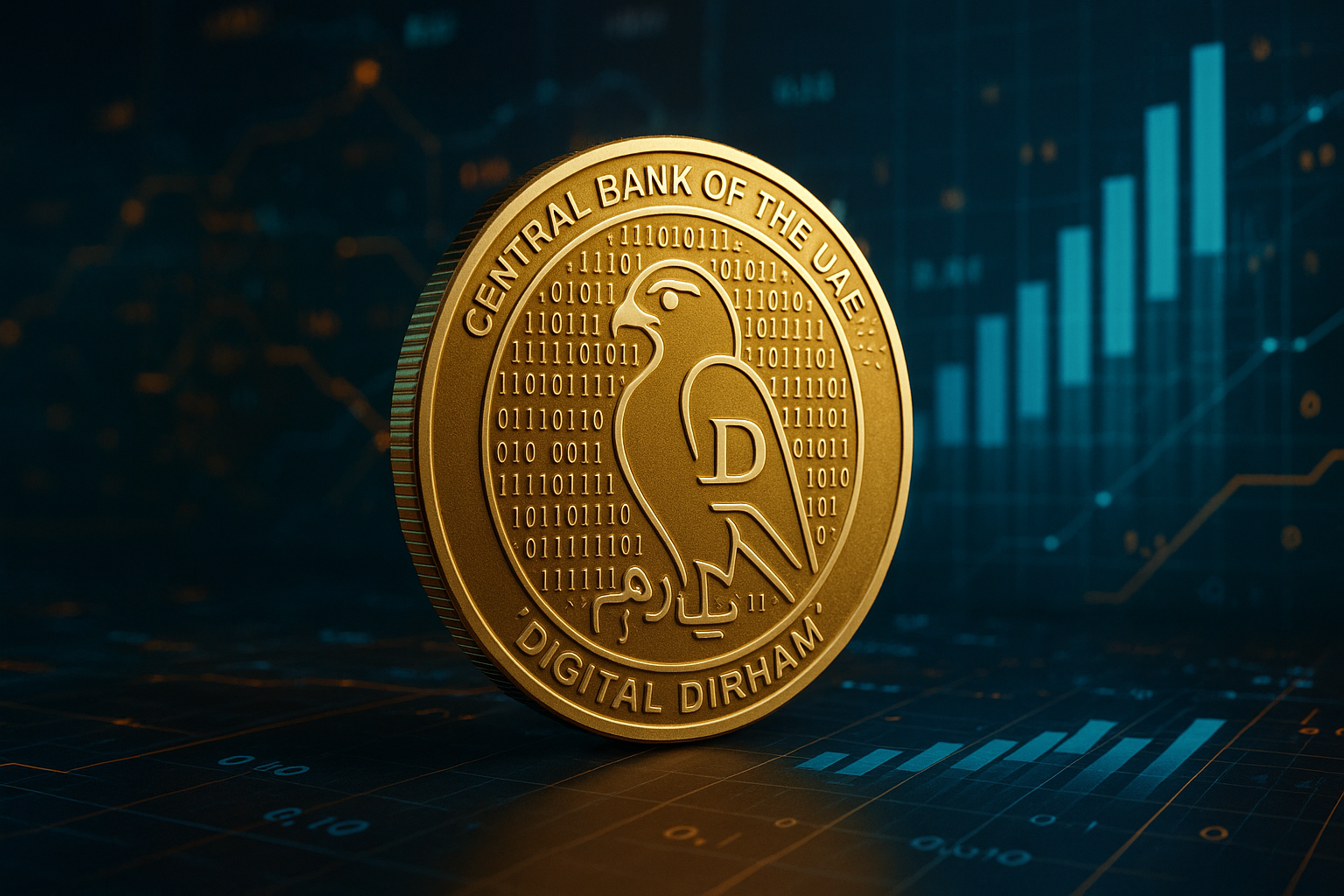
The Central Bank of the United Arab Emirates takes a major step toward a national digital currency with its first successful digital dirham transaction, signaling readiness for broader rollout across government and private sectors.
The United Arab Emirates (UAE) has completed the first transaction of its central bank digital currency (CBDC) — the Digital Dirham — marking a significant milestone in the nation’s move toward financial innovation and digital transformation. The pilot transaction, conducted via the government-backed mBridge platform, was finalized in under two minutes, underscoring the system’s efficiency and operational readiness.
According to the UAE’s Ministry of Finance and Dubai Finance, this inaugural transfer was part of the Digital Dirham’s pilot phase, designed to test the technical integration and payment infrastructure between federal and local government systems.
Ahmed Ali Meftah, Executive Director of Central Accounts at Dubai Finance, stated that the pilot aimed to “test operational readiness and ensure seamless technical integration with the Central Bank’s systems.” He added that the transaction’s completion in less than two minutes demonstrated the technology’s potential to accelerate financial settlements and cross-sector payments.
The Central Bank of the UAE (CBUAE) first announced plans for the Digital Dirham earlier in 2025, with the rollout expected to begin in the fourth quarter of the year. Officials say the CBDC will be introduced gradually, with its initial phase limited to payments to prevent overlap with traditional savings and investment products.
Experts suggest the UAE’s progress reflects a broader global trend in digital currency development. “This pilot shows the UAE is positioning itself at the forefront of central bank innovation,” said one regional fintech analyst. “If successfully deployed, the digital dirham could enhance transparency, efficiency, and financial inclusion across the Gulf economy.”
The CBUAE’s July policy paper described the Digital Dirham as part of efforts to “future-proof central bank money” and adapt to the evolving demands of a digital economy. However, the move comes amid global debate over privacy concerns and the potential implications of central bank-issued digital money.
While only three CBDCs — those in Nigeria, the Bahamas, and Jamaica — have officially launched so far, the UAE’s progress places it among the world’s leading digital currency innovators. The pilot’s success signals a new era of digitized government payments and cross-border efficiency for one of the Middle East’s most dynamic financial centers.
Disclaimer
This content is for informational purposes only and does not constitute financial, investment, or legal advice. Cryptocurrency trading involves risk and may result in financial loss.