
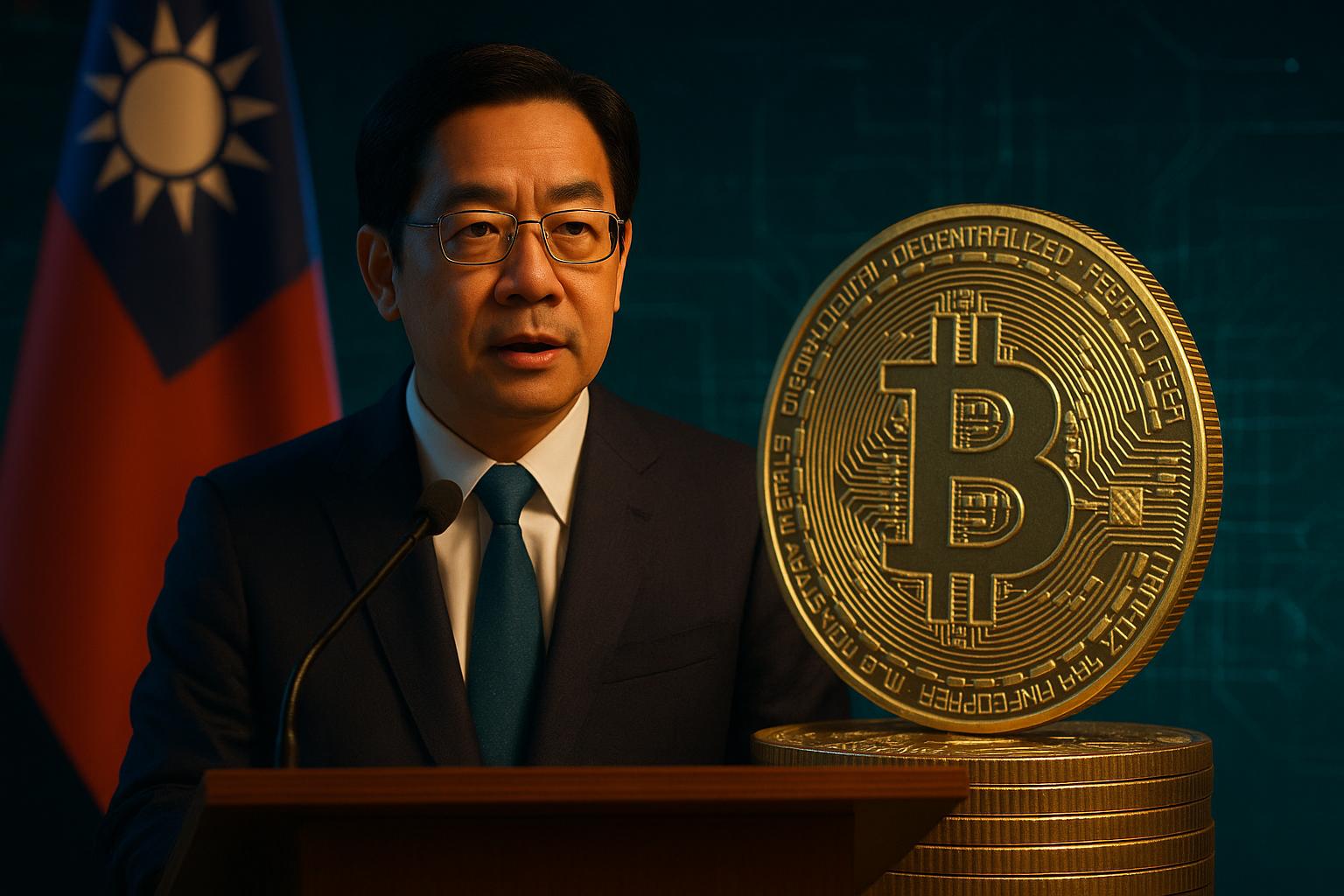
Premier Zhuo Rongtai pledges detailed Bitcoin assessment report by end of 2025
Taiwan’s government is taking a major step toward integrating Bitcoin into its financial framework, as Premier Zhuo Rongtai announced plans to release a comprehensive Bitcoin reserve assessment report before the end of 2025. The move follows growing global interest in treating Bitcoin as a strategic reserve asset, similar to the United States’ newly established Strategic Bitcoin Reserve.
Taiwan’s Bitcoin Reserve Plan
During a recent fiscal inquiry with the Legislative Yuan’s Finance Committee, Premier Rongtai confirmed that authorities are currently assessing the total amount of Bitcoin confiscated by domestic agencies. The report will outline the potential benefits and risks of establishing a national Bitcoin reserve using these seized digital assets.
Legislator Ge Rujun suggested that the government should hold the confiscated Bitcoin unchanged until a final decision is made—whether to liquidate it or integrate it into a long-term reserve. According to local reports, the assessment will include an analysis of the “pros and cons of a strategic Bitcoin reserve”, marking the first time Taiwan’s leadership has formally acknowledged Bitcoin as a possible reserve-grade asset.
Growing Institutional and Political Interest
The initiative gained momentum after U.S. President Donald Trump’s March 2025 executive order, which launched the first national Bitcoin reserve using crypto seized in criminal cases. Following this development, Taiwanese lawmakers began urging similar action to protect the nation’s reserves against global economic uncertainty.
Lawmaker Ko Ju-Chun called the premier’s move a “breakthrough” and urged the government to draft Bitcoin-friendly regulations within six months. Earlier this year, Ju-Chun proposed allocating up to 5% of Taiwan’s $50 billion foreign reserve into Bitcoin as a diversification and risk-hedging measure.
Analysts see Taiwan’s exploration as part of a broader institutional shift toward digital reserve assets. “This signals growing recognition of Bitcoin’s role as a foundational monetary instrument,” noted a digital asset researcher at a Taipei-based investment firm. Experts suggest that formalizing Bitcoin holdings could enhance Taiwan’s fiscal resilience amid global inflation and currency fluctuations.
If Taiwan proceeds with its plan, it would become one of the first Asian economies to formally evaluate Bitcoin as a strategic reserve asset. The upcoming report could determine whether the island nation joins the global shift toward digital monetary reserves—a move that could redefine its financial future.
Disclaimer
This content is for informational purposes only and does not constitute financial, investment, or legal advice. Cryptocurrency trading involves risk and may result in financial loss.