
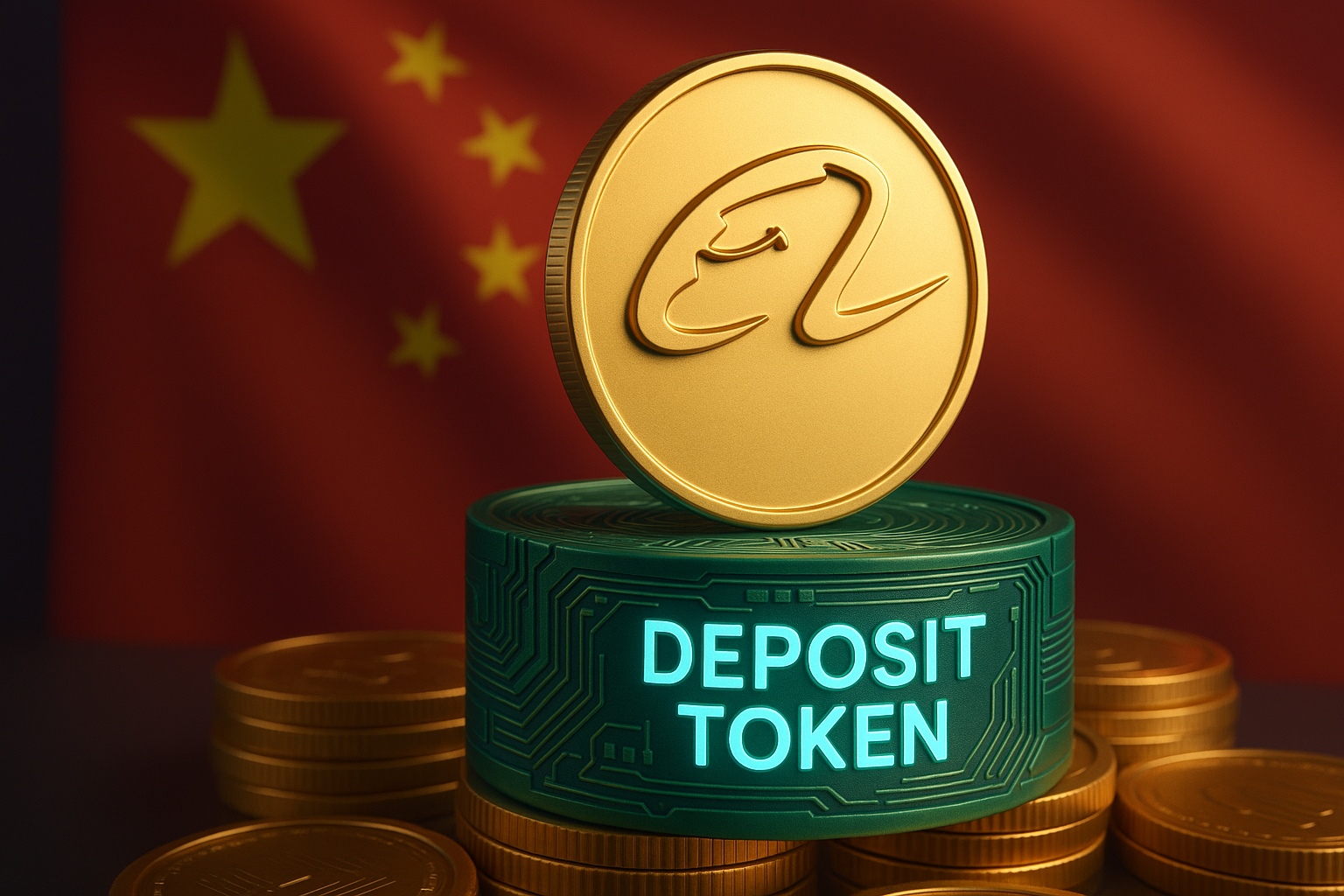
Tech giant considers blockchain-based token for cross-border payments as Beijing tightens regulations on private stablecoins
Alibaba’s cross-border e-commerce arm is reportedly developing a bank-backed deposit token to facilitate international transactions, following China’s stringent crackdown on stablecoins. The initiative could allow Alibaba to leverage blockchain technology while remaining fully compliant with local regulations.
What Is a Deposit Token?
Deposit tokens are blockchain-based instruments representing a direct claim on commercial bank deposits. Unlike traditional stablecoins issued by private entities and backed by assets, deposit tokens are treated as regulated liabilities of the issuing bank, combining blockchain efficiency with legal certainty.
“Deposit tokens provide a regulated path for companies to adopt stablecoin-like technology without violating mainland Chinese law,” said a blockchain analyst familiar with Chinese regulations.
The model mirrors JPMorgan’s recent rollout of deposit tokens to institutional clients, highlighting growing interest among global banks and tech firms in regulated digital assets.
China’s Stablecoin Restrictions
China has repeatedly signaled resistance to a private stablecoin industry onshore. Earlier this year, regulators instructed local firms to cease research, seminars, and other activities related to stablecoins, citing concerns over fraud and financial instability.
“China is unlikely to issue stablecoins onshore,” said Joshua Chu, Co-Chair of the Hong Kong Web3 Association.
The regulatory stance has already affected major tech companies: Ant Group, JD.com, and other Chinese giants reportedly suspended their stablecoin plans in Hong Kong after Beijing expressed disapproval.
Focus on Cross-Border and Offshore Use
Alibaba’s deposit token initiative is likely aimed at cross-border transactions, serving foreign clients rather than domestic users. Similarly, other Chinese stablecoins launched in Hong Kong or tied to the offshore yuan primarily target international trade and the Belt and Road Initiative, rather than mainland circulation.
“The deposit token approach allows Alibaba to streamline overseas payments while remaining compliant with Beijing’s rules,” the analyst added.
As China tightens control over stablecoins, deposit tokens emerge as a viable alternative for regulated, blockchain-based financial solutions. Alibaba’s initiative illustrates how major Chinese firms are exploring innovative digital payment mechanisms while navigating strict domestic regulations.
By adopting bank-backed tokens, Alibaba aims to combine the efficiency of blockchain with regulatory compliance, focusing on global transactions rather than domestic stablecoin issuance.
Disclaimer
This content is for informational purposes only and does not constitute financial, investment, or legal advice. Cryptocurrency trading involves risk and may result in financial loss.