

ETF inflows and crypto treasury demand that powered Bitcoin’s rally are now acting as headwinds, yet analysts say the broader institutional trajectory remains firmly intact.
Bitcoin’s surge to an all-time high earlier this year was fueled by powerful structural demand—from spot ETF inflows to rapid growth in digital asset treasuries. According to new analysis from NYDIG, those same forces are now reversing, contributing to the cryptocurrency’s decline to multi-month lows. However, despite the sharp shift in flows, researchers argue that Bitcoin’s long-term trajectory is still fundamentally strong.
ETF and Treasury Demand Shift Into Reverse
NYDIG head of research Greg Cipolaro explained that Bitcoin’s recent downturn is not just a matter of sentiment, but “actual capital flight” as core demand engines unwind. He said the liquidation wave in early October triggered a sequence of stress signals:
- ETF inflows flipped to outflows
- Digital asset treasury premiums collapsed
- Stablecoin supply began contracting
Cipolaro described these shifts as “classic signs the loop was losing momentum,” noting that once the reflexive cycle breaks, the market follows a predictable pattern.
“The story changes, but the mechanics don’t,” he said.

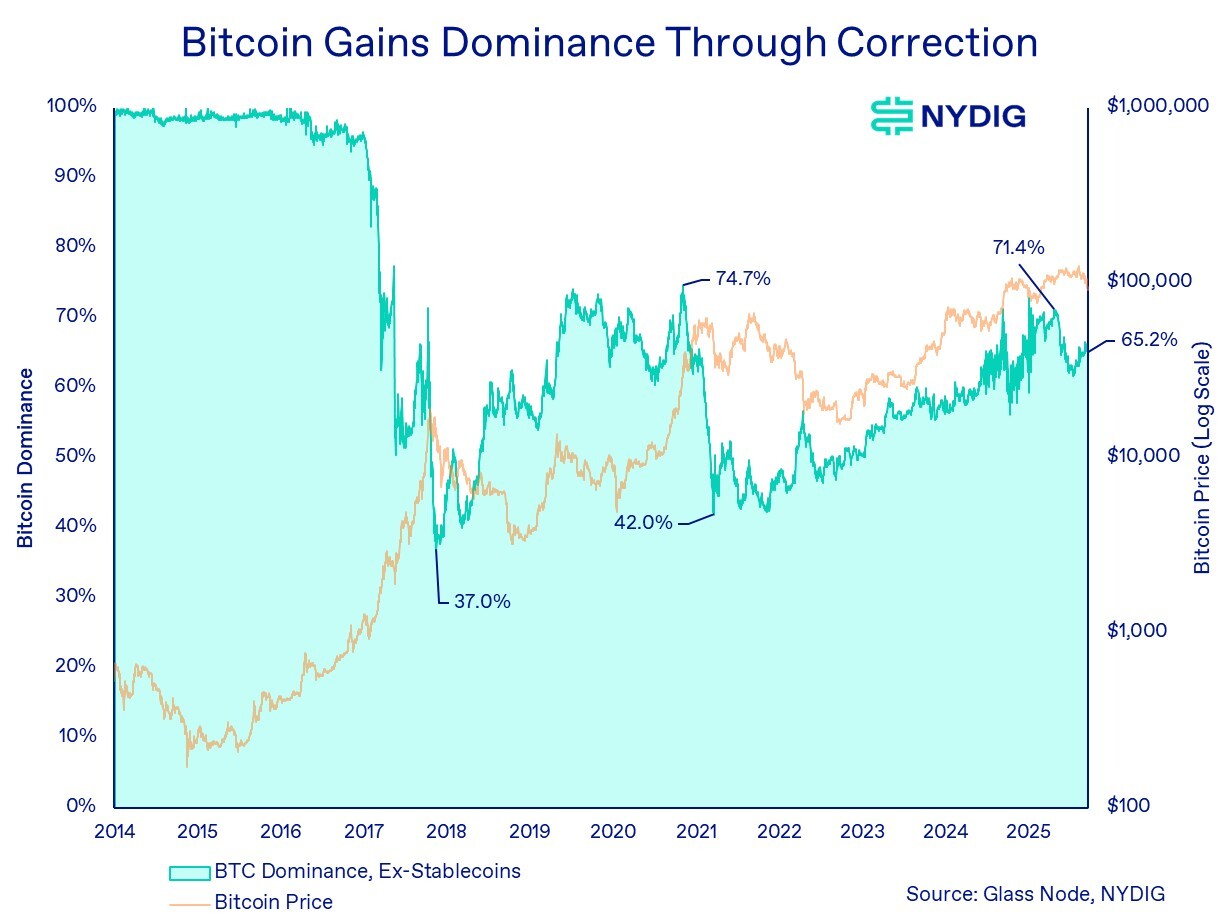
ETF Outflows Become a Headwind as Dominance Climbs
Spot Bitcoin ETFs—one of the biggest success stories of this cycle—have transitioned from a reliable inflow engine into a significant drag on the market. Cipolaro emphasized that broader macro pressures, global liquidity trends, and market structure stress are all contributing to the reversal.
Yet even during the drawdown, Bitcoin’s market position strengthened.
He noted that “Bitcoin dominance tends to surge during cyclical drawdowns,” as capital exits speculative assets and consolidates into the ecosystem’s most liquid and established asset. Dominance recently climbed above 60% before easing to around 58%.
Treasury Demand and Stablecoin Liquidity Falter
Digital asset treasuries and stablecoins, once steady buyers of Bitcoin, have also weakened. Premiums for treasury products have compressed, while stablecoin supply declined for the first time in months, signaling liquidity is leaving the system.
Still, Cipolaro stressed that no treasury vehicle has shown financial distress, with leverage remaining low and structures allowing issuers flexibility if necessary.
Long-Term Outlook Remains Strong
Despite the recent downturn, Cipolaro argues the “secular story for Bitcoin remains intact.” Institutional adoption continues to rise, sovereign interest is gradually building, and Bitcoin’s role as a neutral, programmable monetary asset remains a powerful long-term narrative.
“Nothing in the past few weeks changes that long-horizon trajectory,” he said, though he warned that the coming months may be uneven and emotionally challenging, consistent with previous market cycles.
NYDIG’s analysis underscores a familiar dynamic in Bitcoin’s history: powerful demand cycles that accelerate both rallies and corrections. While the flow-based feedback loop is now firmly in reverse, the broader structural case for Bitcoin remains resilient—setting the stage for a new cycle once liquidity and confidence eventually return.
Disclaimer
This content is for informational purposes only and does not constitute financial, investment, or legal advice. Cryptocurrency trading involves risk and may result in financial loss.