

Despite the rise of bitcoin ETFs, gold remains the preferred asset for central banks and institutional allocators


Gold has taken a decisive lead over bitcoin in 2025, not only in price performance but also in global investor confidence. While bitcoin was expected to rally strongly following the launch of spot ETFs, its decline alongside tightening liquidity has highlighted a deeper issue: gold still holds the trust, infrastructure, and utility that major institutions rely on.


Gold’s Institutional Advantage in 2025

Since early 2024, bitcoin has fallen around 12%, while gold has surged by more than 58%. This divergence reflects structural realities. Gold benefits from centuries of trust, established settlement networks, and active use in global trade. Central banks, sovereign wealth funds, and asset allocators already operate within gold-based systems, making it a natural fit for reserves.
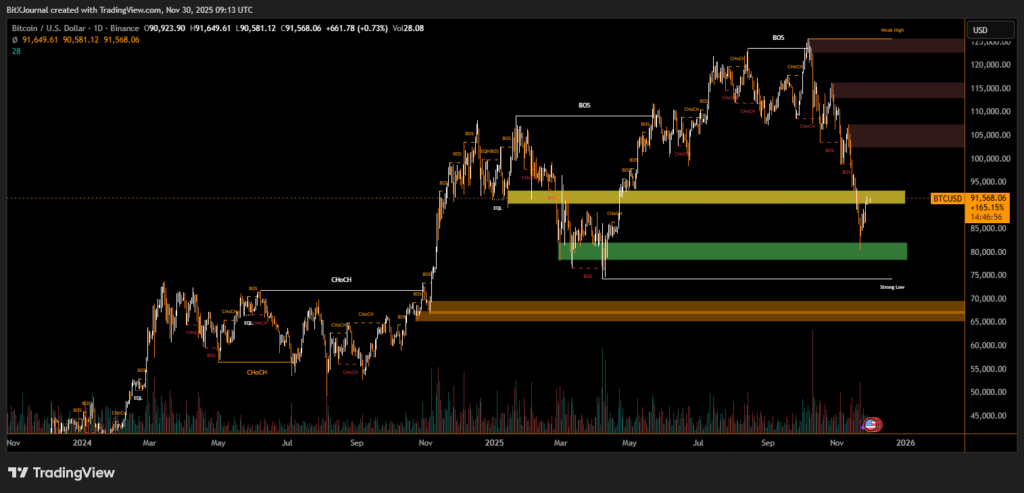
Since early 2024, bitcoin has fallen around 12%,

Bitcoin, despite its technological strengths, remains outside these channels. Large institutions have not begun integrating bitcoin into existing trade or settlement frameworks, limiting its adoption at the reserve level. Gold, on the other hand, continues to play a direct role in physical trade — particularly among BRICS nations, where gold is increasingly used to settle energy transactions.
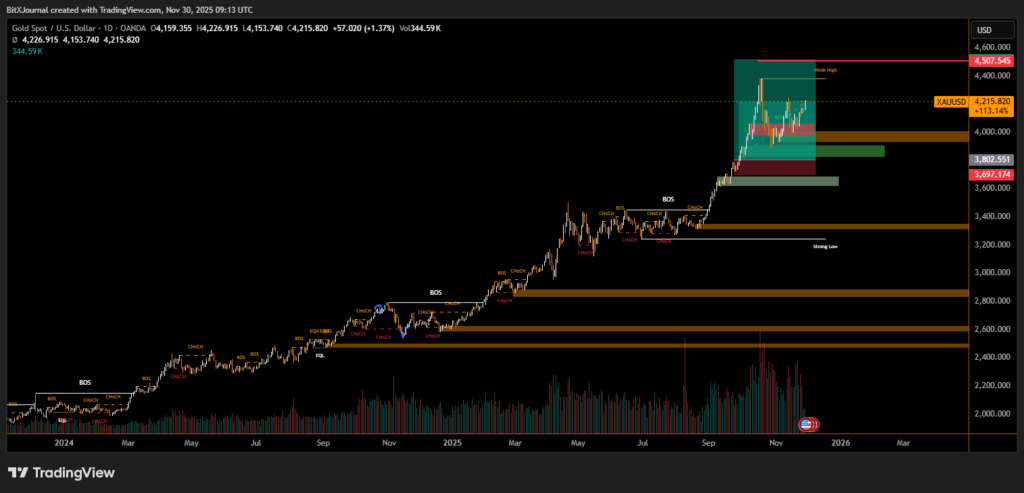
gold has surged by more than 58%

Bitcoin’s Decline Driven by Liquidity, Not Confidence

Bitcoin’s steep drop since July is tied to a global liquidity squeeze. U.S. fiscal delays, including slowed Treasury spending after the federal shutdown, reduced dollar flows across markets.
Bitcoin, being highly sensitive to liquidity shifts due to its leverage dynamics—especially in Asia—declined more sharply than traditional assets.

Gold, by contrast, climbed steadily past $4,100 per ounce, reinforced by demand from central banks and long-term allocators.


A Longer Path for Bitcoin’s Institutional Adoption

Although liquidity may return as U.S. fiscal activity resumes, bitcoin still faces a gradual road toward becoming a reserve asset. Institutions allocate based on mandates, not speculation — and gold currently fits those mandates in ways bitcoin does not.

While bitcoin may eventually gain traction as fiat confidence erodes in emerging economies, the asset is still maturing. The comparison between the two often oversimplifies reality: institutions are not choosing between gold and bitcoin — they are choosing what aligns with their operational and regulatory systems.


The 2025 divergence underscores a simple truth: gold’s established role in global finance continues to outweigh bitcoin’s potential. Bitcoin may still grow into a reserve asset, but trust, infrastructure, and trade utility remain firmly in gold’s favor — at least for now.

Disclaimer

This content is for informational purposes only and does not constitute financial, investment, or legal advice. Cryptocurrency trading involves risk and may result in financial loss.

logo

blockto.io

info@blockto.io

Blockto.io Copyright © 2025, All rights reserved

News
Rates
Buy
More
We use cookies to personalize content and ads, provide social media features, and analyze our traffic. In accordance with GDPR/AVG and EU cookie regulations, data is processed only with your consent. We may share information about your use of our website with our social media, advertising, and analytics partners, and you can manage or withdraw your consent at any time. View more
Cookies settings
Accept
Privacy & Cookie policy
Privacy & Cookies policy
Cookie name Active

Privacy Policy

At BitxJournal.com, we respect your privacy and are committed to protecting your personal data. This Privacy Policy explains how we collect, process, store, and protect personal information in accordance with the General Data Protection Regulation (GDPR) and AVG (EU privacy legislation).

1. Data Controller

BitxJournal.com acts as the data controller for all personal data processed through this website.

2. Personal Data We Collect

We may collect and process the following categories of data:

Personal Data

  • Name and email address (when you subscribe to newsletters or contact us)

Technical & Usage Data

  • IP address, browser type, operating system

  • Device information

  • Pages visited, referral sources, and interaction data

This data is collected via cookies, log files, and analytics technologies.

3. Legal Basis for Processing

We process personal data only when a lawful basis exists, including:

  • Consent – when you explicitly agree (e.g., cookies, newsletter sign-up)

  • Legitimate interest – to operate, secure, and improve our website

  • Legal obligation – when required by applicable laws

You may withdraw your consent at any time.

4. Purpose of Data Processing

Your data is processed for the following purposes:

  • Operating and maintaining the website

  • Improving content, usability, and performance

  • Sending newsletters or updates (only with consent)

  • Analyzing traffic and user behavior

  • Responding to inquiries or support requests

5. Cookies & Consent Management

We use cookies and similar technologies in compliance with EU Cookie Law.

  • Non-essential cookies are placed only after explicit user consent

  • Users may accept, reject, or manage cookie preferences at any time

  • Consent can be withdrawn without affecting prior lawful processing

Detailed cookie information is available in our Cookie Settings panel.

6. Third-Party Data Processing

We may share limited data with trusted third-party service providers, including:

  • Analytics providers (e.g., Google Analytics)

  • Advertising partners (for personalized or non-personalized ads)

These third parties act as data processors and process data only under contractual obligations compliant with GDPR/AVG.

7. International Data Transfers

Where data is transferred outside the European Economic Area (EEA), we ensure appropriate safeguards are in place, such as Standard Contractual Clauses (SCCs) or equivalent legal mechanisms.

8. Data Retention

We retain personal data only for as long as necessary to fulfill the purposes outlined in this policy or as required by law.

9. Data Security

We implement appropriate technical and organizational security measures to protect personal data against unauthorized access, alteration, disclosure, or destruction.

10. Your GDPR Rights

Under GDPR/AVG, you have the right to:

  • Access your personal data

  • Rectify inaccurate or incomplete data

  • Request data erasure (“right to be forgotten”)

  • Restrict or object to processing

  • Data portability

  • Withdraw consent at any time

  • Lodge a complaint with a supervisory authority

11. Changes to This Privacy Policy

We reserve the right to update this Privacy Policy at any time. Any changes will be posted on this page with a revised effective date.

12. Contact Information

For privacy-related inquiries or GDPR requests, contact:

📧 Email: support@blockto.io
🌐 Website: https://blockto.io

Save settings
Cookies settings