

UNIfication upgrade introduces token burns and revised fee mechanics
The Uniswap community is preparing for one of the most significant protocol changes in its history as the long-awaited Uniswap fee switch moves closer to activation. A governance proposal known as UNIfication has surpassed the required voting threshold, paving the way for changes that could reshape the protocol’s token economics and long-term incentives.
The proposal crossed the critical 40 million vote requirement, with more than 62 million votes cast in favor ahead of the scheduled voting deadline. The overwhelming support signals strong consensus among token holders for modifying how protocol fees are handled across Uniswap’s ecosystem.
Following the vote, a short timelock period will precede activation, after which fee switches on Uniswap v2 and v3 will be enabled on the Unichain mainnet.
A core component of UNIfication is the burning of 100 million UNI tokens from the foundation’s treasury. This mechanism is designed to reduce circulating supply and strengthen supply-demand dynamics for the UNI token. In parallel, the proposal introduces a Protocol Fee Discount Auctions system, aimed at improving returns for liquidity providers while maintaining competitive trading costs.
The combined effect targets long-term value accrual rather than short-term incentives, aligning token holders, traders, and liquidity providers more closely.

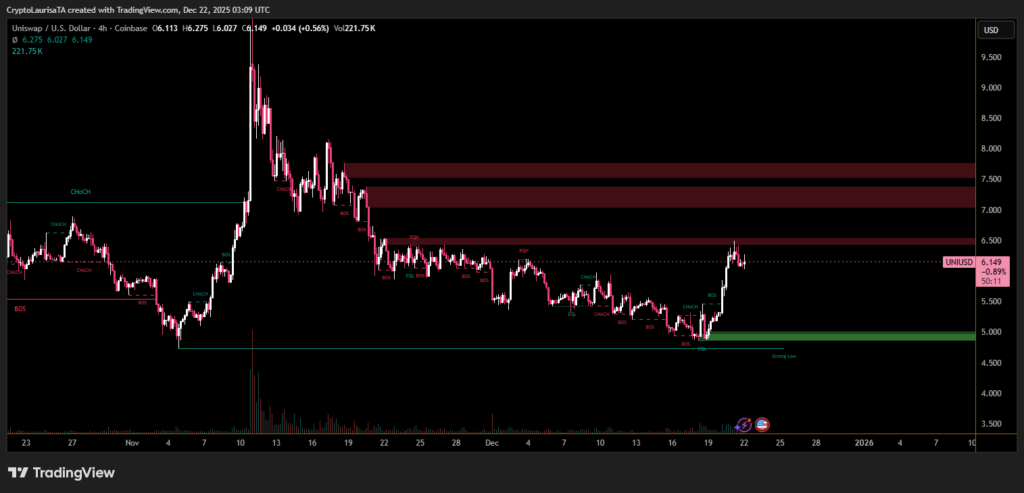
UNI has responded positively since the vote began, rising roughly 25% from recent lows. Earlier news of the proposal triggered an even stronger rally, reflecting market expectations of improved token utility.
Despite the token burns, the protocol will continue funding development. A dedicated growth budget supported by additional UNI allocations is planned to ensure ongoing innovation and ecosystem expansion.
Disclaimer
This content is for informational purposes only and does not constitute financial, investment, or legal advice. Cryptocurrency trading involves risk and may result in financial loss.