

Blacklist Systems and Wallet Warnings Proposed to Stop Crypto Phishing Scams
Address poisoning scams have resurfaced as one of the most damaging threats in crypto, prompting renewed calls for stronger user protections. The latest alarm was raised after a single investor lost $50 million in a stablecoin transfer, highlighting how sophisticated phishing tactics continue to exploit common wallet behaviors.
Address poisoning works by sending small, misleading transactions to a victim’s wallet, causing the attacker’s address to appear in transaction history. When users later copy and paste an address from past activity, they may unknowingly send funds to the scammer. This method requires no protocol breach — only human error.
Proposed Security Measures
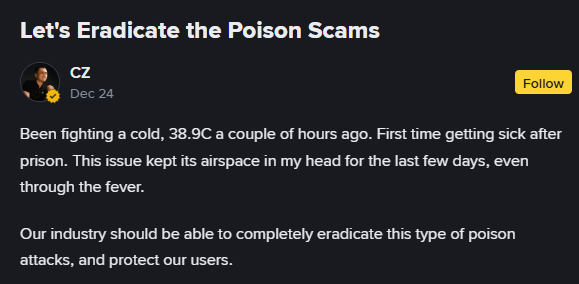
To counter the threat, Changpeng Zhao has urged the industry to implement automated wallet-level defenses. Suggested measures include:
- Blacklist databases for known poison addresses
- Real-time warnings when a user attempts to send funds to suspicious wallets
- Filtering or hiding low-value spam transactions from wallet histories
According to recent data, phishing scams drained more than $7.7 million from over 6,300 victims in November alone, with losses expected to spike due to the recent $50 million incident.
Security firms report that phishing was the most financially damaging crypto scam category in recent years, with address poisoning rapidly growing in frequency. In response, exchanges and wallet providers are developing detection algorithms that have already identified millions of compromised or deceptive addresses.

As scams increasingly target user behavior rather than software flaws, proactive wallet protections and automated safeguards are becoming essential to preventing large-scale crypto losses.
Disclaimer
This content is for informational purposes only and does not constitute financial, investment, or legal advice. Cryptocurrency trading involves risk and may result in financial loss.