

Fee-Burning Mechanism Goes Live as Token Supply Is Permanently Reduced
Uniswap has executed a major reduction in its token supply after community governance approved a long-awaited proposal to activate protocol fee burning. The decentralized exchange permanently removed 100 million UNI tokens from circulation, representing one of the largest token burns ever carried out within decentralized finance.
Governance Approval and Onchain Execution
The burn was completed onchain in the early hours of Dec. 28, confirming the first large-scale implementation of the governance initiative commonly referred to as UNIfication. The proposal passed with overwhelming support, as nearly all participating votes favored the change, signaling strong alignment among UNI holders.
By removing approximately $596 million worth of UNI from the treasury, the protocol significantly reduced its circulating supply. The move introduces a deflationary element to Uniswap’s token economics, aimed at aligning long-term value with protocol usage.
Fee Switch Activation and Tokenomics Impact
As part of the update, interface fees were set to zero, while protocol fees were activated on Uniswap v2 and selected v3 liquidity pools on the Ethereum mainnet. In addition, fees generated through Unichain will contribute to future UNI burns after covering network and data costs.
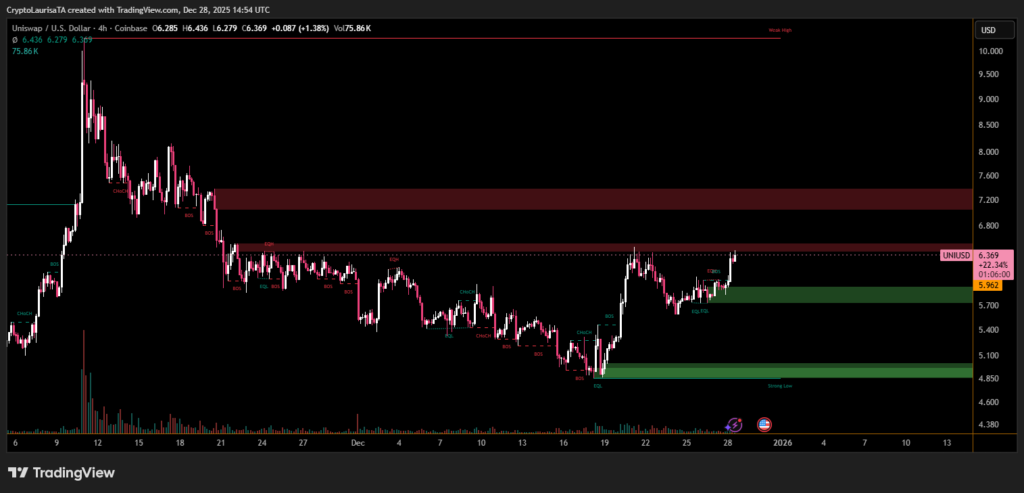
Following the burn, UNI’s price rose more than 5% within 24 hours, alongside increased trading activity. The circulating supply now stands at roughly 730 million UNI, out of a fixed maximum supply of 1 billion tokens.
Despite the supply reduction, ecosystem funding remains a priority. The Uniswap Foundation plans to allocate 20 million UNI toward a growth budget designed to support developers, infrastructure, and continued expansion of the protocol.
The execution of the UNI burn marks a pivotal shift in Uniswap’s economic model, reinforcing governance-driven decision-making while introducing sustainable, usage-based value dynamics for the network.
Disclaimer
This content is for informational purposes only and does not constitute financial, investment, or legal advice. Cryptocurrency trading involves risk and may result in financial loss.