
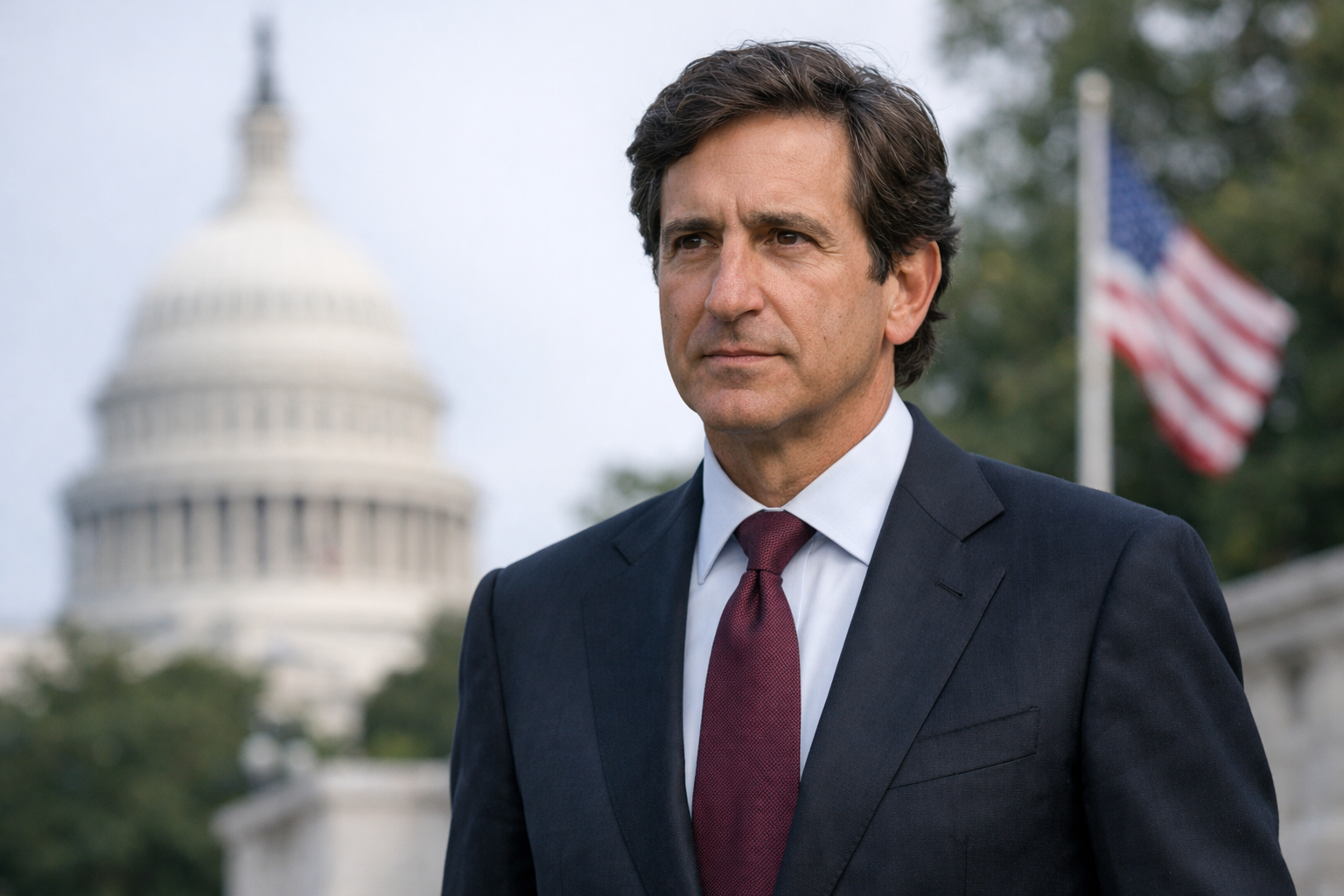
US President Donald Trump is expected to nominate Kevin Warsh as the next chair of the Federal Reserve, according to reports ahead of a formal announcement scheduled for Friday. Warsh would replace current Fed Chair Jerome Powell, whose term concludes in May, marking a potential shift toward a more hawkish stance on inflation and monetary policy.
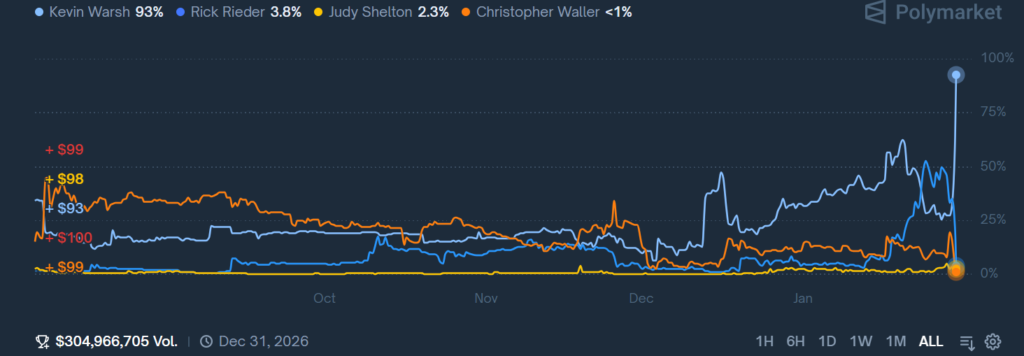
Warsh, a former Federal Reserve governor who served from 2006 to 2011, has reportedly emerged as the clear frontrunner following meetings with the president this week. Market-based prediction platforms showed a sharp rise in the probability of Warsh’s nomination, while expectations for other candidates fell rapidly.
Markets React to Hawkish Expectations
Anticipation of Warsh’s appointment has already begun to influence financial markets. The US dollar strengthened and Treasury yields moved higher as investors priced in a Federal Reserve leadership more focused on fiscal discipline, inflation control, and a reduced reliance on quantitative easing.
Warsh has long been associated with a policy approach favoring tighter financial conditions compared with more accommodative central banking strategies seen in recent years.
Warsh’s Views on Bitcoin and Market Discipline
Unlike many traditional policymakers, Warsh has expressed a relatively constructive view of Bitcoin. He has previously argued that Bitcoin can act as a form of market feedback, helping signal when fiscal and monetary policies may be misaligned.
Rather than seeing digital assets as a threat to central banking, Warsh has suggested they can reinforce accountability by reflecting investor confidence, or lack thereof, in economic decision-making.
If confirmed, Warsh’s nomination would be closely watched by investors across equities, bonds, and crypto markets as signals emerge on interest rates, liquidity, and the future direction of US monetary policy.
Disclaimer
This content is for informational purposes only and does not constitute financial, investment, or legal advice. Cryptocurrency trading involves risk and may result in financial loss.