
Gold prices fell sharply on Friday, dropping more than 8% toward the $4,900 per ounce level, as investors locked in profits following a historic rally. The decline came just one day after bullion surged to an all-time high of $5,608 per ounce, marking one of the strongest moves in decades for the precious metal.
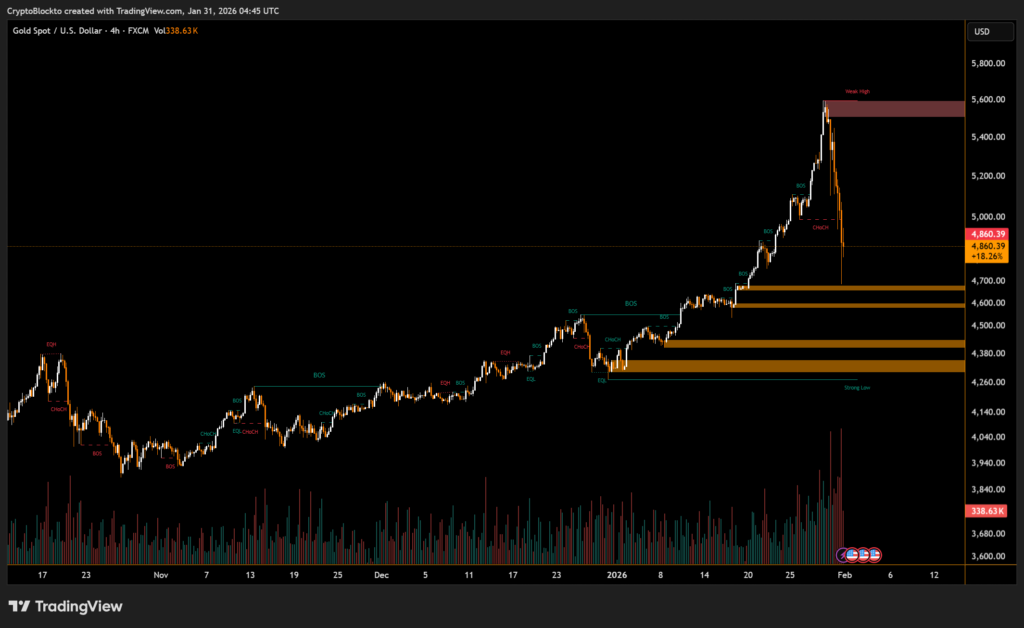
Despite the steep pullback, gold remains on track for a sixth consecutive monthly gain and its strongest monthly performance since the 1980s. The rally has been driven by a combination of global economic uncertainty, ongoing geopolitical tensions, and sustained weakness in the US dollar. These factors have reinforced gold’s appeal as a hedge during periods of instability, even as short-term corrections emerge.
Geopolitical Risks Continue to Support Safe-Haven Demand
Geopolitical tensions remain elevated. President Donald Trump signed an executive order imposing tariffs on goods from countries that supply oil to Cuba, a move that increases pressure on Mexico and adds to trade-related uncertainty. In the Middle East, tensions intensified after Trump urged Iran to re-enter nuclear negotiations, while Iranian officials warned of retaliation and promised a rapid response.
Adding to market attention, Trump announced the nomination of former Federal Reserve governor Kevin Warsh as the next Fed chair. The decision ends months of speculation over future US monetary policy leadership and is likely to influence expectations around interest rates, inflation, and the broader outlook for gold prices.
Disclaimer
This content is for informational purposes only and does not constitute financial, investment, or legal advice. Cryptocurrency trading involves risk and may result in financial loss.