

Stablecoin dusting activity on Ethereum has sharply increased following the Fusaka network upgrade, according to new analysis from Coin Metrics. The study found that small-value stablecoin transfers, often below $1, now make up a significant portion of Ethereum’s daily activity, reflecting both network growth and the rise of dusting attacks.
Fusaka Upgrade Drives Increased Activity
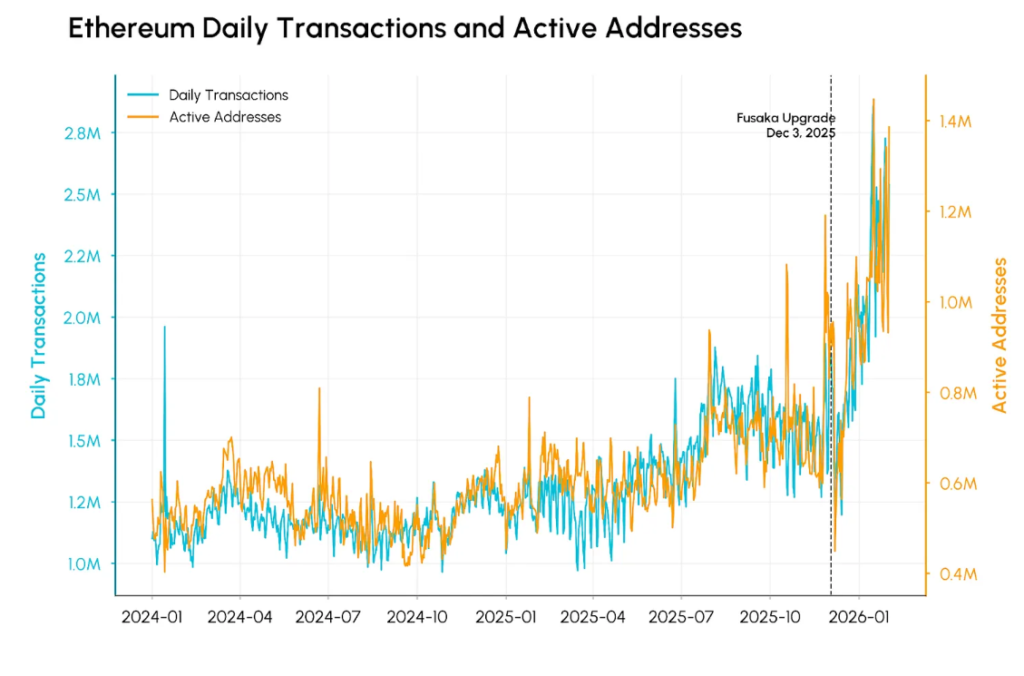
The Fusaka upgrade, implemented in December 2025, reduced transaction costs and improved onchain data handling, making it easier to post information from layer-2 networks back to Ethereum. As a result, Ethereum now averages over 2 million daily transactions, with daily active addresses reaching 1.4 million, a 60% rise compared to prior levels.
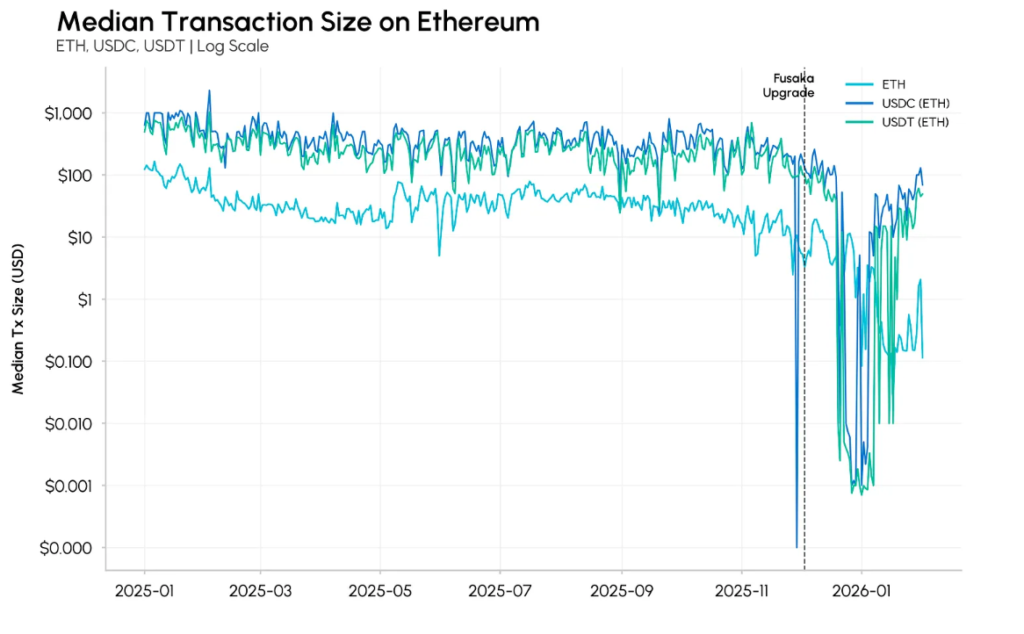
Coin Metrics analyzed 227 million balance updates for USDC and USDT from November 2025 to January 2026, finding that 43% of transfers involved amounts under $1, and 38% were below a single cent. Pre-Fusaka, these small transfers accounted for only 3–5% of transactions and 15–20% of active addresses. Post-upgrade, the figures jumped to 10–15% of transactions and 25–35% of active addresses, representing a 2–3x increase.
Address Poisoning and Security Risks
These micro-transfers, or “dust,” are often used in address poisoning attacks, where malicious actors send tiny amounts of stablecoins to wallets in order to trick users into sending funds to incorrect addresses. Security reports indicate that attackers executed millions of dust transactions at minimal cost, with estimated losses exceeding $740,000.
While dust activity has grown, Coin Metrics emphasized that the majority of network usage remains organic, reflecting genuine Ethereum adoption despite the rise of micro-transfer attacks.
Disclaimer
This content is for informational purposes only and does not constitute financial, investment, or legal advice. Cryptocurrency trading involves risk and may result in financial loss.