
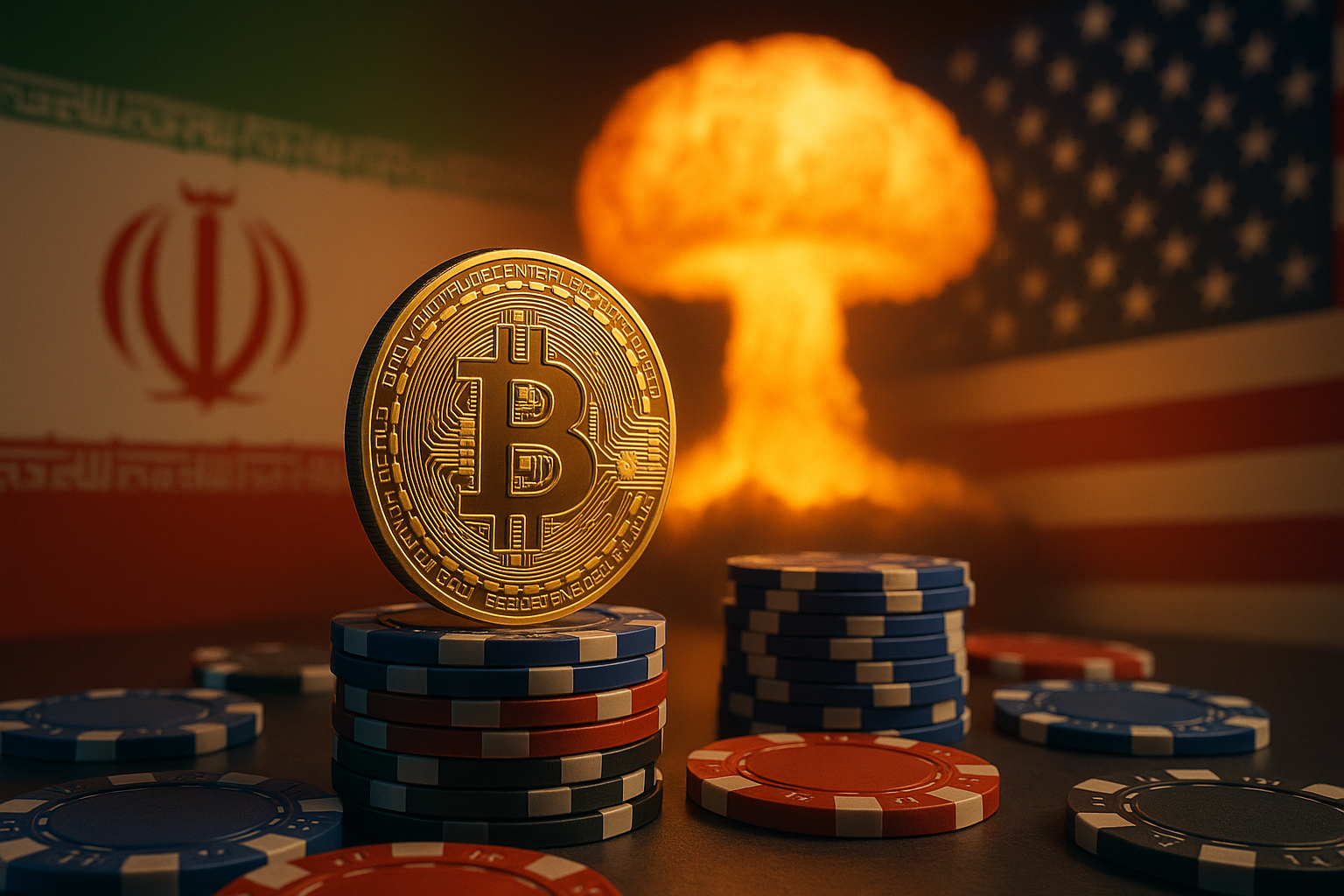
Renewed attention on U.S.–Iran tensions is injecting fresh uncertainty into already fragile cryptocurrency markets. A U.S. government advisory urging American citizens to leave Iran, first issued in mid-January, has resurfaced online just days before planned nuclear discussions between Washington and Tehran in Oman. While officials have clarified that the warning itself is not new, its reappearance has heightened geopolitical anxiety among global investors.
Bitcoin Reacts Like a High-Risk Asset
Bitcoin’s recent price action suggests that traders are treating it less like a defensive hedge and more like a high-beta risk asset. After weeks of sharp swings driven by forced liquidations and thin liquidity, digital assets remain highly sensitive to macro headlines. In leveraged markets, especially perpetual futures, even ambiguous geopolitical developments can trigger rapid sell-offs as traders rush to reduce exposure.
Geopolitical Headlines and Crypto Volatility
Historically, periods of Middle East tension have pushed investors toward traditional safe havens such as gold and government bonds. Cryptocurrencies, by contrast, have tended to see increased volatility rather than sustained inflows during such episodes. With market sentiment still fragile, traders are largely viewing geopolitical news as a catalyst for short-term price swings rather than a clear signal of long-term direction.
If diplomatic talks proceed without escalation, market stress may ease. However, until leverage normalizes and liquidity improves, bitcoin and broader crypto markets are likely to remain vulnerable to sudden moves sparked by global political developments.
Disclaimer
This content is for informational purposes only and does not constitute financial, investment, or legal advice. Cryptocurrency trading involves risk and may result in financial loss.