

Bitcoin’s mining network has recorded its sharpest negative difficulty adjustment in more than four years, underscoring the growing strain on miners amid falling prices and operational disruptions.
Bitcoin Mining Difficulty Sees Historic Decline
Bitcoin mining difficulty dropped by 11.16% to roughly 125.9 trillion at block height 935,424, marking the largest single downward adjustment since China’s 2021 mining ban. The adjustment ranks among the ten steepest declines in the network’s history and followed a prolonged slowdown in block production, with average block times drifting well above the protocol’s 10-minute target.
Hashrate Drops as Miners Power Down
The difficulty reduction reflects a sharp contraction in network hashrate, which has fallen by about 20% over the past month. Total computing power declined rapidly after reaching record highs late last year, as many miners shut down equipment. A key factor has been Bitcoin’s price slump of more than 45% from its peak, which pushed mining economics deep into unprofitable territory for older hardware.
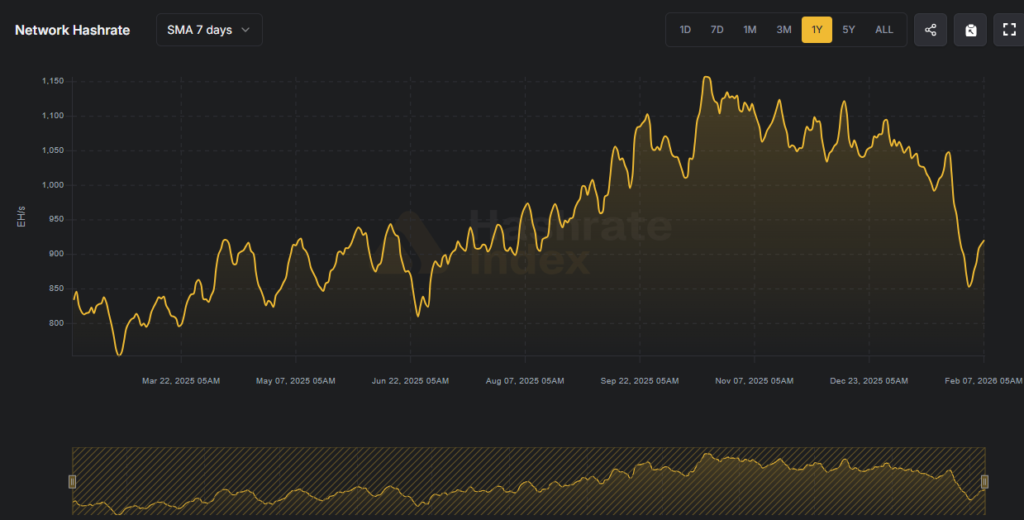
Severe winter weather in the United States also played a role. Widespread power curtailments during Winter Storm Fern forced miners offline to relieve pressure on regional energy grids.
Mining Profitability Hits Record Lows
Mining revenue metrics deteriorated sharply alongside the hashrate decline. Hashprice, a key measure of miner earnings per unit of computing power, fell to all-time lows in early February. With average production costs now exceeding Bitcoin’s spot price, only the most efficient, next-generation mining machines remain meaningfully profitable.
While the difficulty drop offers some relief to miners still operating, long-term sustainability remains closely tied to Bitcoin’s price recovery.
Disclaimer
This content is for informational purposes only and does not constitute financial, investment, or legal advice. Cryptocurrency trading involves risk and may result in financial loss.