

A new working paper from the Federal Reserve outlines a proposal to treat cryptocurrencies as a distinct asset class within initial margin frameworks for uncleared derivatives. The move reflects growing recognition that digital assets do not fit neatly into existing risk categories such as interest rates, equities, foreign exchange, or commodities under the Standardized Initial Margin Model (SIMM).
The paper argues that crypto markets exhibit significantly higher volatility and different trading dynamics compared to traditional financial instruments. As a result, applying conventional risk-weighting approaches may underestimate potential exposure in over-the-counter derivatives markets.
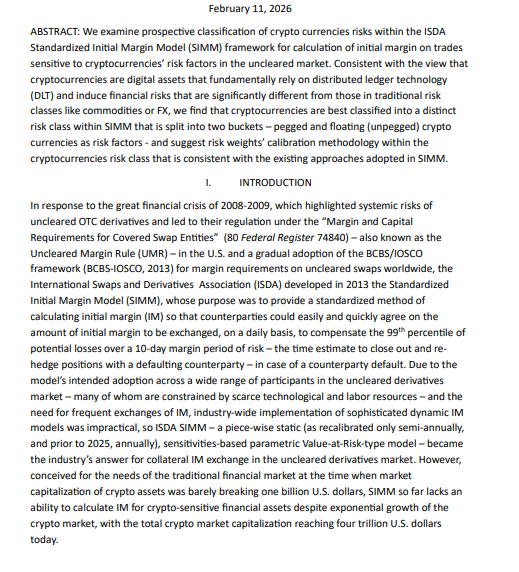
Proposed Risk Weights for Floating and Pegged Cryptocurrencies
The proposal suggests assigning separate risk weights to “floating” cryptocurrencies, including Bitcoin, Ether and other major tokens, as well as to pegged digital assets such as stablecoins. Researchers also recommend the creation of a benchmark index composed equally of floating cryptocurrencies and stablecoins to better capture overall market behavior.
Such an index could serve as a reference point for calibrating more accurate margin requirements, ensuring that counterparties post sufficient collateral to cover potential losses.
Regulatory Shift Signals Crypto Market Maturity
Initial margin requirements play a critical role in safeguarding derivatives markets against counterparty default. By introducing tailored risk weights, regulators aim to strengthen market resilience as digital assets continue to integrate into mainstream financial infrastructure.
Disclaimer
This content is for informational purposes only and does not constitute financial, investment, or legal advice. Cryptocurrency trading involves risk and may result in financial loss.