

Crypto use in human trafficking networks rose sharply in 2025, with inflows to suspected operations increasing by 85% year over year, according to a report by Chainalysis. The firm noted that total transaction volumes to these networks, primarily based in Southeast Asia, reached hundreds of millions of dollars across identified services.
Types of Trafficking and Payment Methods
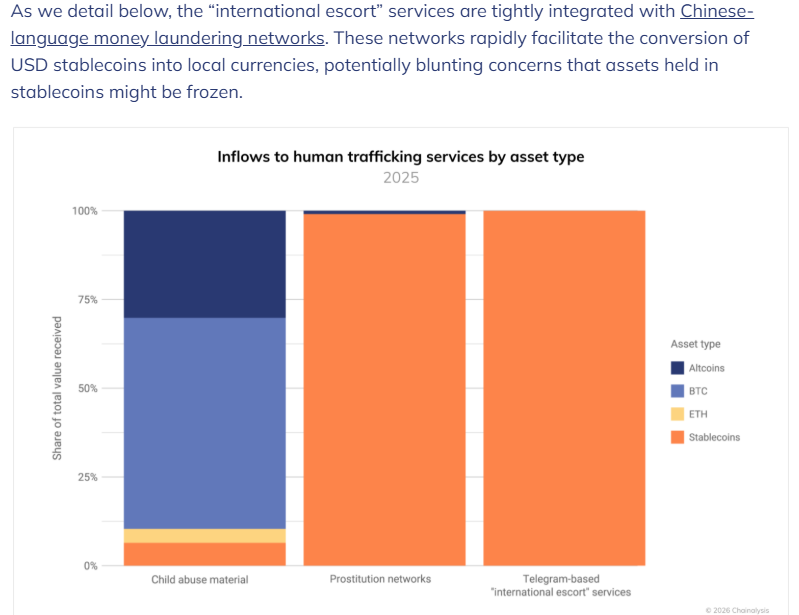
The report highlighted that crypto facilitated a range of illicit activities, including international escort services on Telegram, forced labor placements at scam compounds, prostitution networks, and vendors distributing child sexual abuse material. Stablecoins were the dominant payment method for escort and prostitution networks, while other traffickers employed a mix of crypto assets. Many networks were linked to online scams, casinos, and Chinese-language money laundering operations.
Blockchain Transparency as a Tool
Despite the rise in crypto use, Chainalysis emphasized that blockchain transparency provides a unique opportunity for law enforcement. Transaction patterns, wallet clusters, and stablecoin conversion activity can help authorities identify and disrupt trafficking operations. Successful interventions in 2025 included German authorities dismantling a child sexual exploitation platform with the aid of blockchain analytics.
The report underlines that while cryptocurrencies can facilitate criminal activity, their traceable nature offers law enforcement a powerful tool to track and combat human trafficking networks globally.
Disclaimer
This content is for informational purposes only and does not constitute financial, investment, or legal advice. Cryptocurrency trading involves risk and may result in financial loss.