
The Aptos Foundation has unveiled a sweeping proposal to restructure the tokenomics of Aptos, aiming to transition from a subsidy-driven emission model toward a more deflationary and performance-based framework. The initiative includes introducing a hard cap of 2.1 billion APT tokens, marking a major change for a network that currently has no maximum supply. Approximately 1.196 billion APT are in circulation.
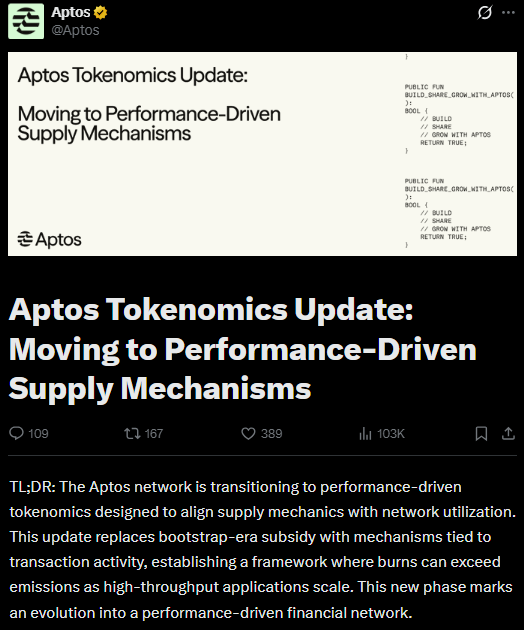
According to the foundation, the revised structure would align token issuance more closely with onchain activity. Under the new approach, transaction-related burns could eventually exceed token emissions as network usage scales.
In an X post on Wednesday, the Aptos Foundation said ;
Staking Rewards Reduction and Gas Fee Increase
The proposal also calls for reducing annual staking rewards from 5.19% to 2.6%, while offering stronger incentives for longer lock-up periods. This adjustment is designed to curb inflation while encouraging long term participation.
In addition, the foundation is advocating a tenfold increase in gas fees. Even with higher fees, stablecoin transfers are expected to remain among the lowest cost globally at roughly $0.00014 per transaction. Since gas fees are burned, the change would further support supply reduction.
Other measures include permanently locking 210 million APT for staking, tightening grant distribution criteria, and exploring a token buyback or reserve mechanism to strengthen long-term sustainability.
Disclaimer
This content is for informational purposes only and does not constitute financial, investment, or legal advice. Cryptocurrency trading involves risk and may result in financial loss.