
US President Donald Trump announced a new 10% global tariff hours after the Supreme Court of the United States ruled that he cannot use emergency powers to impose tariffs during peacetime. The decision curtails the administration’s reliance on the International Emergency Economic Powers Act (IEEPA) as a legal basis for sweeping trade measures.
10% Global Tariff Under Trade Act Authorities
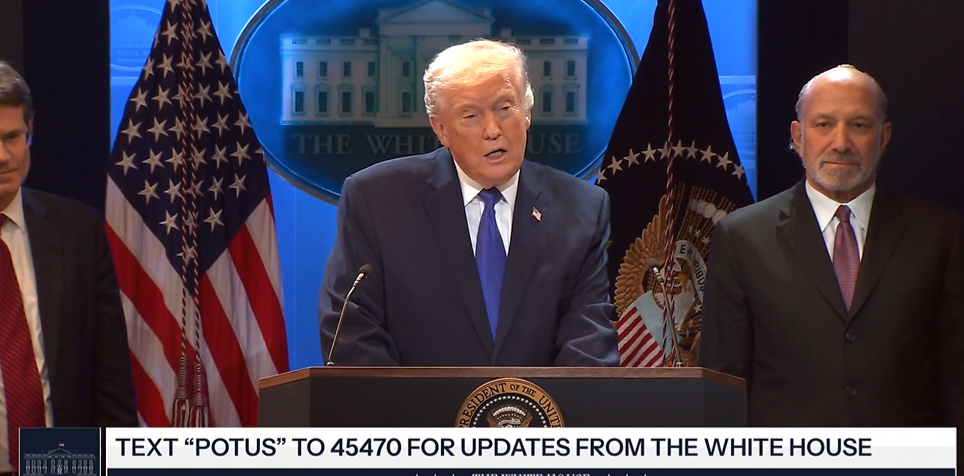
Speaking at a press conference, Trump criticized the court’s ruling and said the administration would shift to alternative statutory tools. He confirmed that tariffs imposed under Section 232 of the Trade Expansion Act of 1962 and Section 301 of the Trade Act of 1974 would remain in force.
In addition, he announced plans to implement a 10% global tariff under Section 122 authority, on top of existing baseline tariffs. The move signals a broader trade strategy aimed at maintaining pressure on foreign imports despite legal setbacks.
Supreme Court Limits Executive Tariff Powers
The Supreme Court held that IEEPA does not authorize the president to impose tariffs, emphasizing that Congress retains constitutional authority over taxes and duties under Article I, Section 8. The justices noted that no prior president had used IEEPA to enact tariffs of similar scope.
Financial markets, including equities and cryptocurrencies, have shown heightened sensitivity to tariff developments, with previous announcements triggering volatility amid concerns over global trade stability.
Disclaimer
This content is for informational purposes only and does not constitute financial, investment, or legal advice. Cryptocurrency trading involves risk and may result in financial loss.