
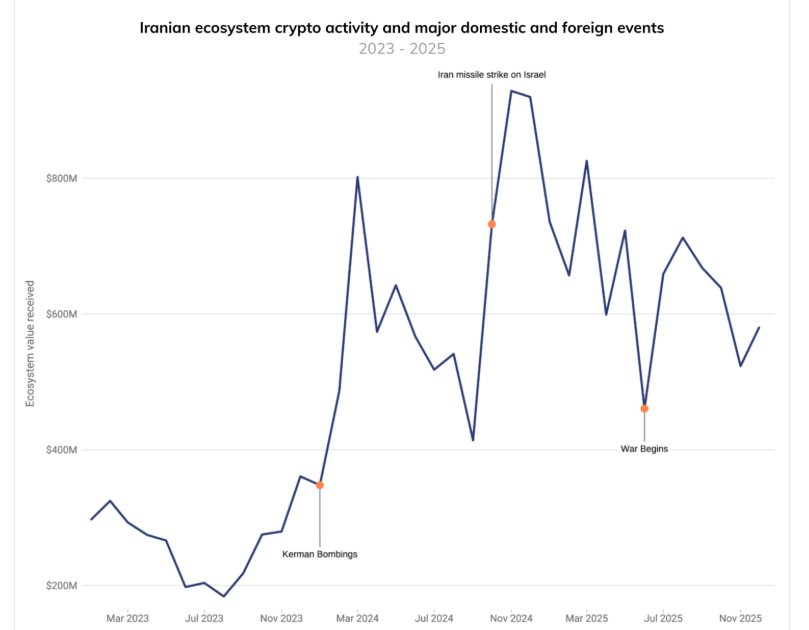
Iran’s growing crypto ecosystem, valued at approximately $7.78 billion in 2025, is drawing renewed scrutiny as military tensions intensify in the region. Built in response to sanctions and banking restrictions, the country’s parallel crypto economy relies heavily on Bitcoin mining and stablecoin transactions to facilitate international trade outside the U.S. dollar system.
State Sponsored Bitcoin Mining and Sanctions Evasion
Iran legalized cryptocurrency mining in 2019, allowing licensed operators to access subsidized electricity in exchange for selling mined Bitcoin to the central bank. Estimates suggest Iran accounts for between 2% and 5% of global Bitcoin hash power, though much of the activity operates discreetly.
The Islamic Revolutionary Guard Corps (IRGC) plays a central role. Blockchain data indicates IRGC-linked wallets received more than $3 billion in 2025, representing over half of Iranian crypto inflows in the final quarter of the year.
Stablecoin Usage and Rial Devaluation
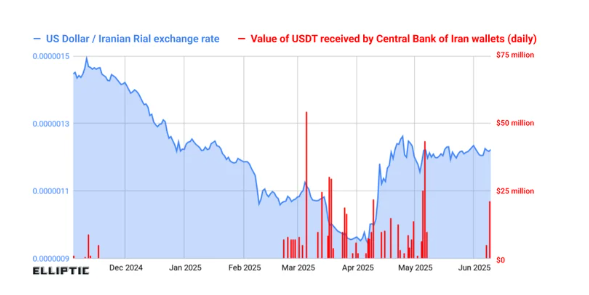
Stablecoins have become equally significant. Analysis shows Iran’s central bank accumulated at least $507 million in Tether (USDT) in 2025, aiming to stabilize trade flows as the rial has lost more than 96% of its value against the U.S. dollar
Mining operations, reportedly producing Bitcoin at roughly $1,300 per coin, depend on steady electricity supplies. Escalating conflict raises concerns about infrastructure damage that could disrupt output. While the global Bitcoin network would likely rebalance, sustained grid instability could temporarily weaken Iran’s crypto-driven financial channel.
Disclaimer
This content is for informational purposes only and does not constitute financial, investment, or legal advice. Cryptocurrency trading involves risk and may result in financial loss.