

Bitcoin appears to be approaching a cyclical bottom as its well-known four year halving pattern moves toward completion. According to Jan van Eck, chief executive of VanEck, the recent weakness in Bitcoin’s price action may be less about deteriorating fundamentals and more about historical cycle behavior.
Bitcoin operates on a fixed supply model capped at 21 million coins, with mining rewards reduced by half approximately every four years. Historically, the asset has recorded three consecutive years of gains followed by a sharp correction in the fourth year. Market participants often associate this correction phase with broader bearish sentiment.
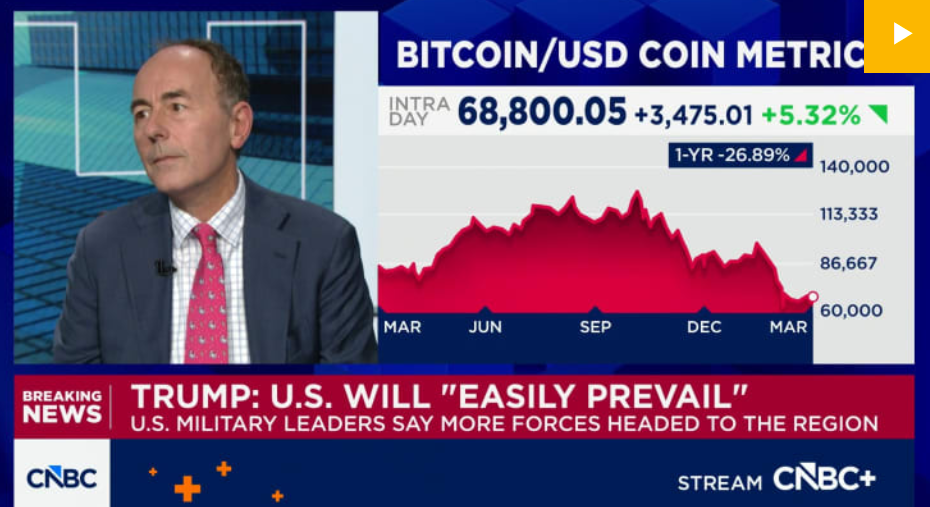
Van Eck argues that this recurring pattern has played a significant role in shaping current price trends. With the cycle nearing its end, he suggests Bitcoin may be forming a base before gradually regaining upward momentum.
Bitcoin Price Movement and Market Context
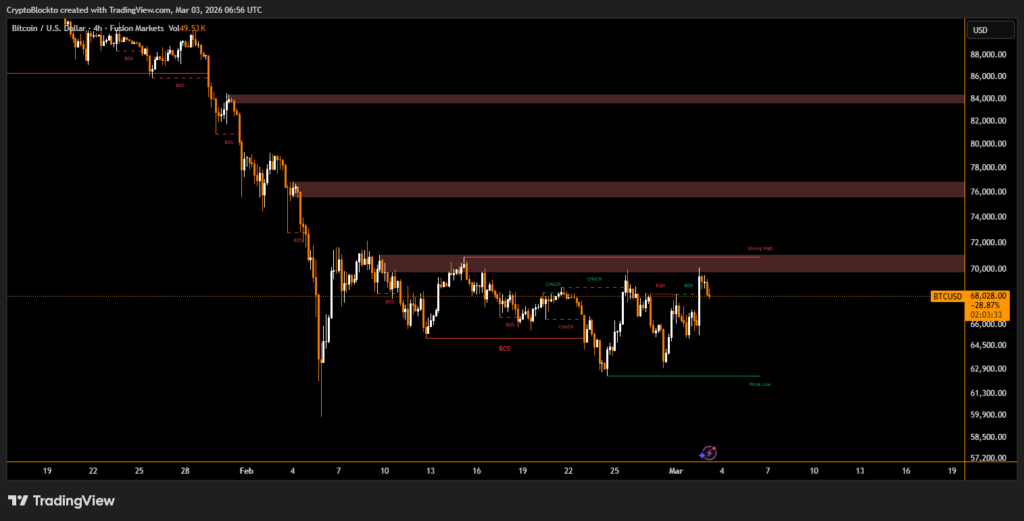
Bitcoin recently traded near $68,400, marking a steady weekly recovery after a period of volatility. Analysts remain divided on whether the traditional four year cycle still holds the same influence amid growing institutional adoption, exchange-traded fund demand, and evolving global regulations.
Geopolitical tensions have also contributed to renewed interest in digital assets. In periods of economic uncertainty, decentralized payment networks can offer alternative channels for capital movement, reinforcing Bitcoin’s appeal as a non-sovereign financial instrument.
As 2026 approaches, investors are closely monitoring whether historical patterns will once again guide the market’s next phase.
Disclaimer
This content is for informational purposes only and does not constitute financial, investment, or legal advice. Cryptocurrency trading involves risk and may result in financial loss.