

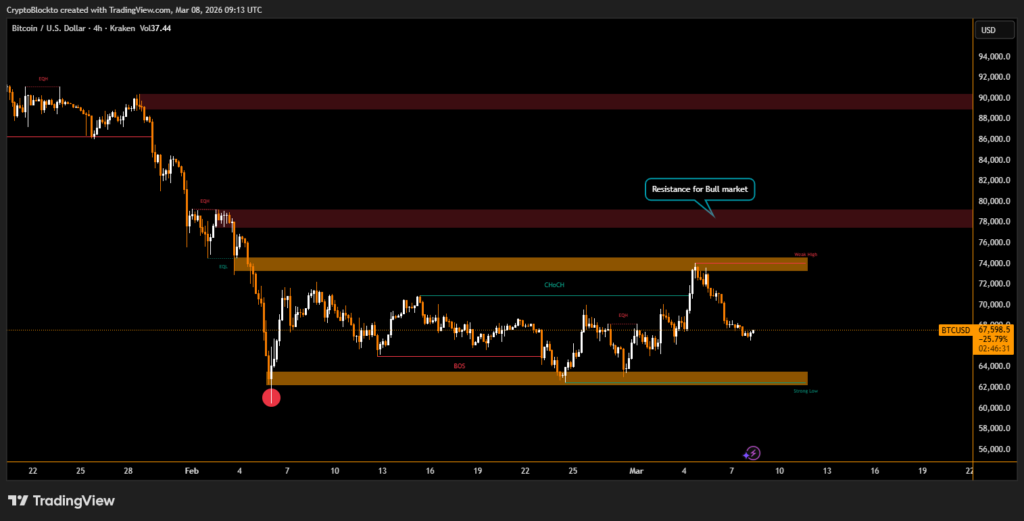
Bitcoin experienced a 7% correction between Thursday and Friday, retreating from a failed attempt to reclaim $74,000 and settling near $67,517. The pullback was driven by a combination of rising oil prices, weak U.S. macroeconomic data, and ongoing conflict between Israel and Iran. U.S. retail sales fell 0.2% in January, while the economy shed 92,000 jobs in February, reinforcing risk-off sentiment.
Impact of Private Credit Market and Institutional Flows
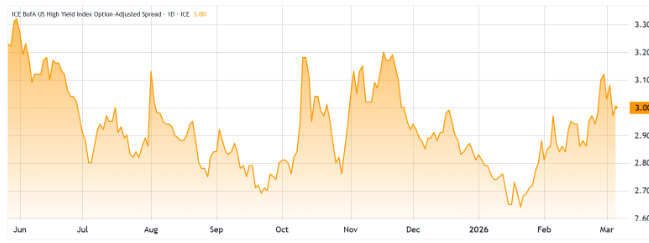
Redemption spikes in private credit funds from BlackRock and Blackstone highlighted growing investor anxiety. Blackstone processed record 7.9% tender requests in its flagship credit fund, while BlackRock limited withdrawals on one of its largest credit vehicles. Although the 3% option-adjusted spread remains within a six-month range, investors remain cautious about potential liquidity shocks.
Risk-Off Environment Supports Safe-Haven Assets
Investors rotated into gold, while equities, including the Russell 2000 Small Cap Index, reached two-month lows. Shipping disruptions by Maersk, caused by Middle East conflict, added to concerns about logistics and commodity cost inflation. Technical support near $65,000 is under scrutiny, but analysts note that current weakness reflects macro uncertainty rather than structural collapse.
Overall, Bitcoin’s near term trajectory remains sensitive to geopolitical developments, energy prices, and private credit market stress, suggesting heightened volatility in the coming weeks.
Disclaimer
This content is for informational purposes only and does not constitute financial, investment, or legal advice. Cryptocurrency trading involves risk and may result in financial loss.