

Bitcoin climbed above $73,000 during the week and managed to hold the $70,000 support level, showing resilience amid global economic uncertainty. The move came as weaker economic data from the United States Department of Commerce indicated that the US economy expanded only 0.7% between October and December 2025, raising concerns about a potential recession.
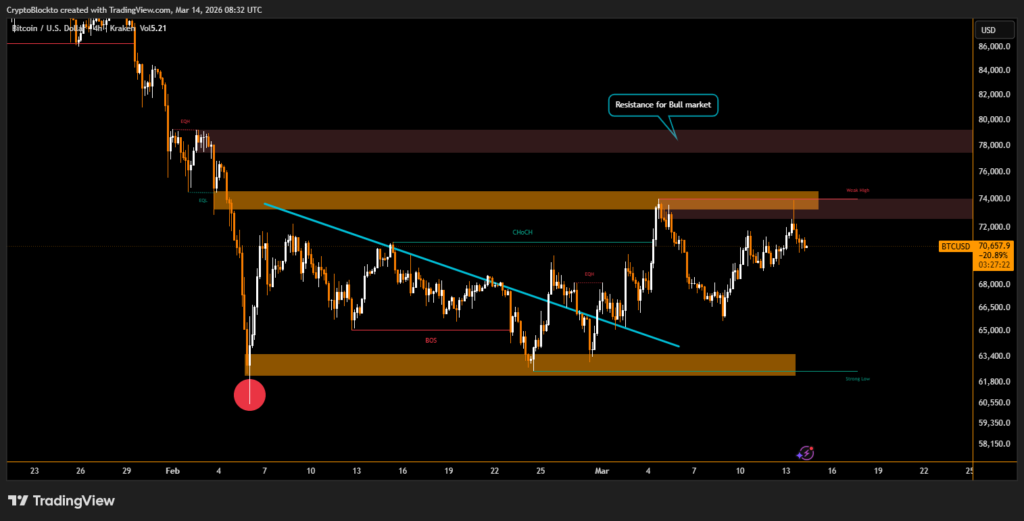
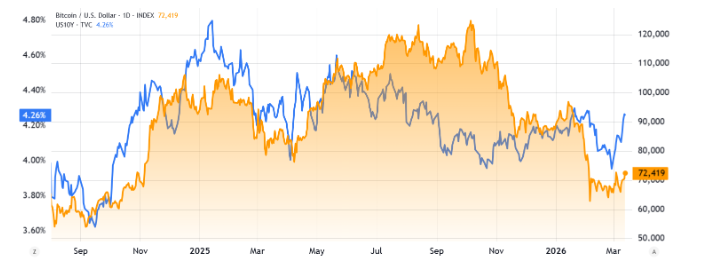
At the same time, geopolitical tensions related to the conflict involving Iran and Israel have pushed investors toward scarce assets. Rising yields on the US 10-year Treasury, which climbed to around 4.26%, also signal growing caution among investors.
Institutional Demand and ETF Flows
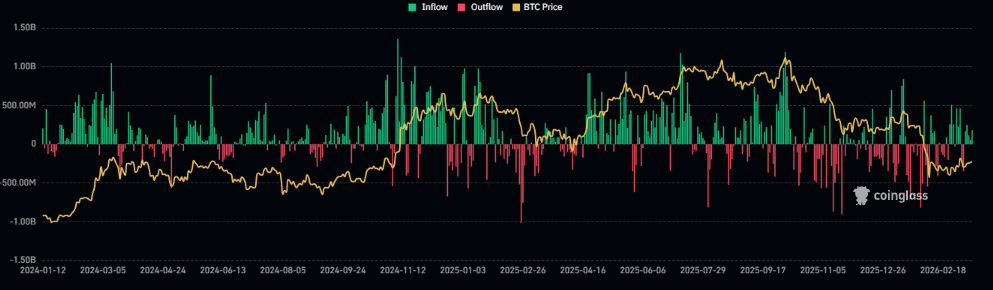
Institutional activity has supported Bitcoin’s recent price strength. US-listed spot Bitcoin exchange-traded funds recorded several days of inflows totaling hundreds of millions of dollars, while software firm Strategy reportedly accumulated more than $900 million worth of Bitcoin exposure through its yield-focused STRC instrument.
Market Signals Suggest Correction May Persist
Despite the rally, several indicators suggest the broader correction may not be over. Bitcoin’s correlation with the Nasdaq 100 currently stands near 84%, indicating that movements in technology stocks could still strongly influence crypto prices.
Additionally, higher global oil prices and fluctuating ETF flows suggest that Bitcoin may remain in a consolidation phase unless stronger macroeconomic catalysts emerge.
Disclaimer
This content is for informational purposes only and does not constitute financial, investment, or legal advice. Cryptocurrency trading involves risk and may result in financial loss.