

The rise of autonomous artificial intelligence agents is beginning to reshape how digital payments could function online. Industry leaders argue that AI systems may soon execute far more transactions than humans, particularly as software increasingly handles research, logistics, data processing and automated services.
Brian Armstrong has suggested that AI agents could eventually outnumber humans in online transaction activity, largely because software systems can easily use crypto wallets while traditional bank accounts require identity verification and compliance checks.
Crypto based systems rely on private keys rather than identity documentation, allowing automated programs to transact instantly without waiting for account approvals or regulatory verification.
Micropayments Favor Blockchain Infrastructure
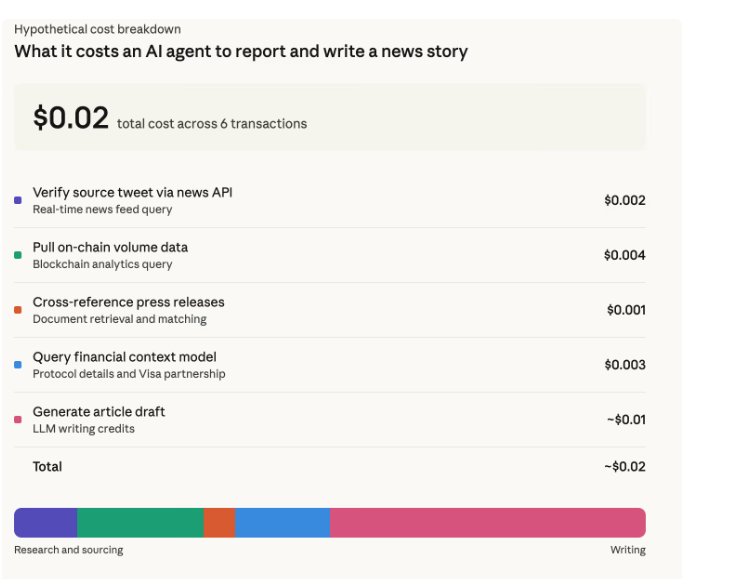
The economics of AI-driven services also favors blockchain-based payments. Autonomous agents often perform tasks that require multiple small transactions, such as accessing APIs, purchasing compute power or retrieving datasets.
Protocols like Coinbase’s x402 enable stablecoin payments to be embedded directly into internet requests, making sub-cent transactions possible. These payments are typically settled using digital assets such as USDC, allowing machine-to-machine transfers to occur instantly.
Traditional card networks were not designed for this type of activity. Minimum processing fees on card rails often exceed the value of the micropayments required by automated services.
Card Networks Develop Their Own AI Payment Tools
Established payment companies are also preparing for AI-driven commerce. Firms including Visa and Mastercard have begun developing tools that allow AI agents to conduct transactions within regulated financial systems.
The likely outcome could be a divided digital economy where traditional card rails continue supporting human commerce, while stablecoin infrastructure powers high-frequency payments between autonomous machines.
Disclaimer
This content is for informational purposes only and does not constitute financial, investment, or legal advice. Cryptocurrency trading involves risk and may result in financial loss.