
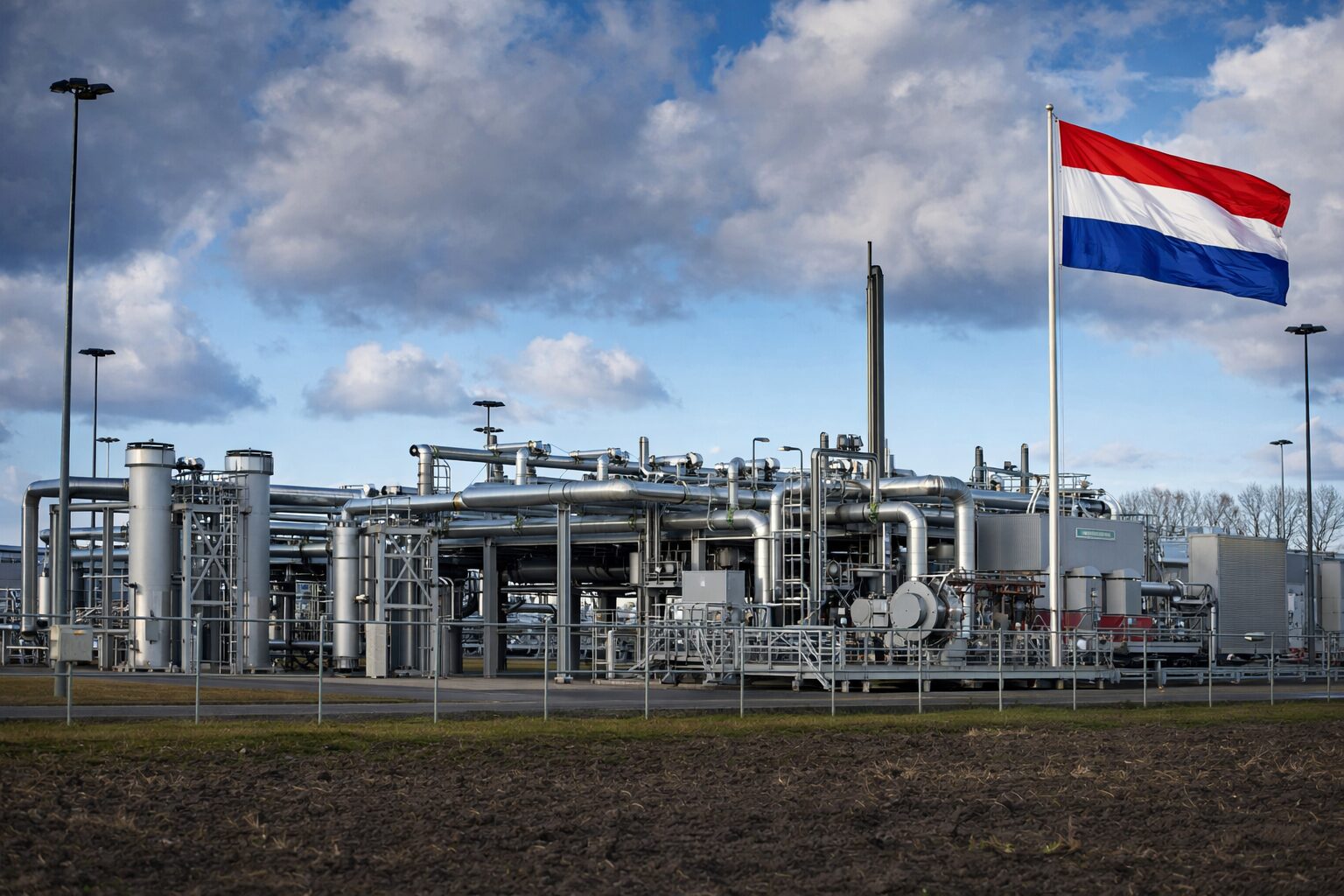
The Dutch government has reaffirmed its decision to permanently seal the Groningen gas fields, despite holding over 500 billion cubic meters of natural gas still underground. The move involves filling the depleted reservoir with concrete to prevent future extraction, a policy that has drawn criticism as global energy markets face increasing volatility and supply shortages.
Energy Security and Safety Concerns
Authorities argue that the cementing project is necessary to mitigate ongoing safety risks, including earthquakes triggered by gas extraction in the Groningen region. Over the past decade, induced seismic activity has caused significant property damage and public concern, prompting partial shutdowns and reduced production. Officials maintain that long-term structural stability and community safety outweigh the potential short-term benefits of continued gas extraction.
Groningen Gas Field: Europe’s Largest Natural Gas Reserve
The Groningen gas field, located in the northeastern Netherlands near Slochteren, is Europe’s largest natural gas reserve and one of the world’s biggest, with an estimated 2,740 billion cubic meters of recoverable gas. Discovered in 1959, it became central to the country’s energy supply and post-war development. By 2013, over 2,057 billion cubic meters had already been extracted, fueling economic growth.
Global Energy Context
The decision comes as the world grapples with a tightening energy landscape. Rising demand, geopolitical tensions, and the transition away from fossil fuels are putting additional pressure on energy supply. Critics argue that permanently sealing Groningen removes a domestic energy resource that could have provided relief during the current crisis, while supporters emphasize safety and the need to invest in renewable alternatives.
While controversial, the Dutch government views the cementing of Groningen as a strategic step in managing both regional risks and the country’s broader energy transition strategy.
Disclaimer
This content is for informational purposes only and does not constitute financial, investment, or legal advice. Cryptocurrency trading involves risk and may result in financial loss.